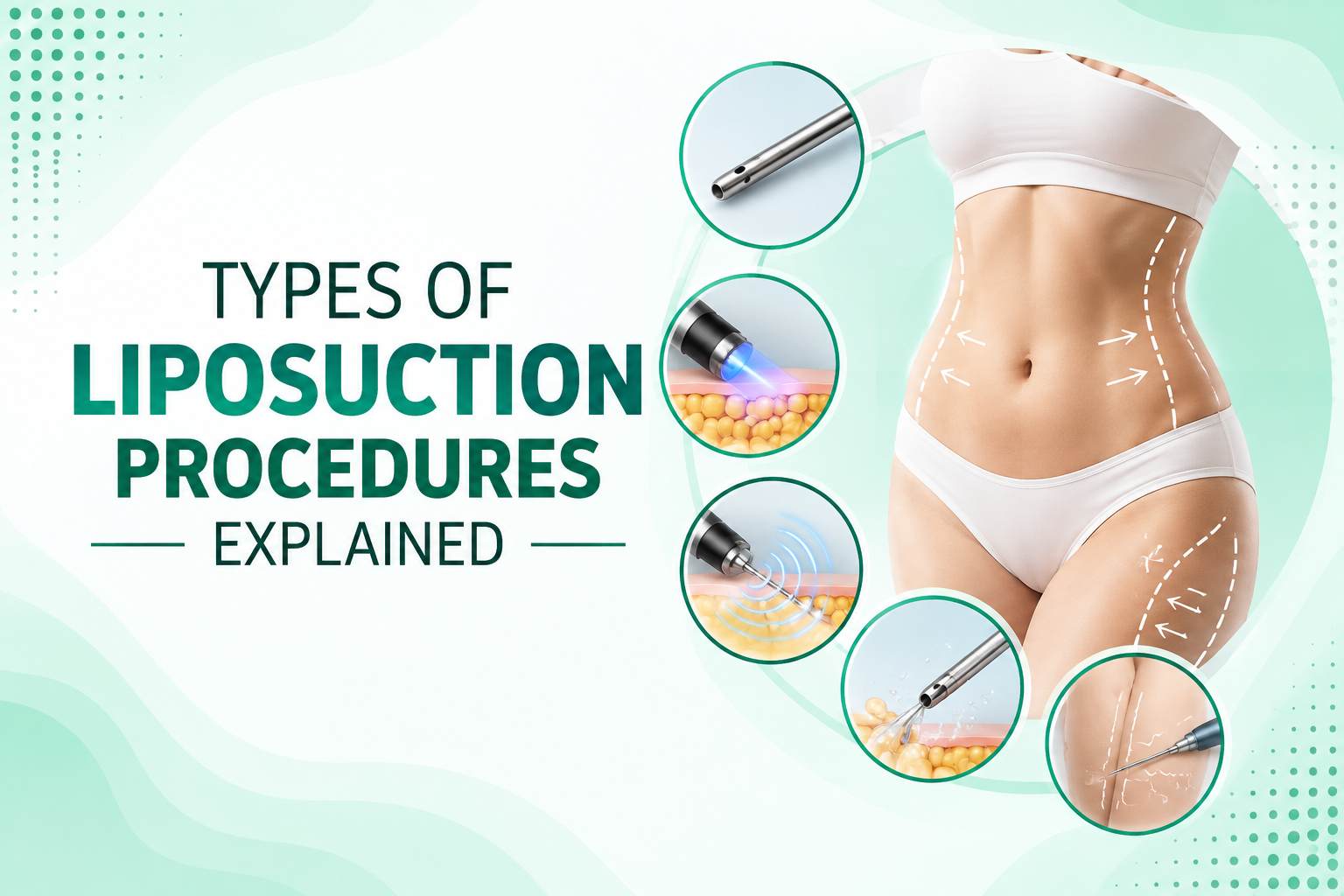
Liposuction is a popular body contouring procedure designed to remove stubborn pockets of fat that may not respond well to diet and exercise. Understanding the types of liposuction procedures can help you learn how different techniques work and what may make one approach different from another. If you are considering body contouring in Thrissur, knowing the available options can help you have a more informed discussion during a consultation.
Liposuction is not primarily a weight-loss treatment. Instead, it is generally used to improve body shape by selectively removing excess subcutaneous fat from specific areas. Different techniques use different methods to loosen, break down, or remove fat before it is suctioned from the body.
This guide explains the major types of liposuction procedures, their uses, benefits, limitations, recovery considerations, and frequently asked questions in simple language.
What Is Liposuction
Liposuction is a surgical body contouring procedure that removes unwanted fat deposits from selected areas of the body. A thin tube called a cannula is generally used to help remove fat through controlled suction.
The procedure may be considered for areas such as:
- Abdomen
- Waist and flanks
- Thighs
- Hips
- Arms
- Back
- Chin and neck
- Chest
- Buttocks
- Calves
The exact technique depends on factors such as the amount and location of fat, skin quality, treatment area, and the individual’s overall health.
It is important to understand that liposuction does not prevent future weight gain. Maintaining a stable weight and healthy lifestyle can help preserve the result.
Why Do Stubborn Fat Deposits Develop
Before comparing the types of liposuction procedures, it helps to understand why localized fat can be difficult to reduce.
Genetics
Genetic factors influence where the body tends to store fat. Some people may naturally accumulate more fat around the abdomen, thighs, hips, arms, or other areas.
Hormonal Changes
Hormonal fluctuations can affect fat distribution. Changes associated with ageing and other normal physiological processes may alter body composition over time.
Ageing
As people age, metabolism, muscle mass, skin elasticity, and fat distribution can change. These factors may contribute to persistent localized fat.
Weight Changes
Weight gain can increase fat stores throughout the body. Even after losing weight, certain areas may retain disproportionate fat deposits.
Lifestyle Factors
Dietary habits and physical activity influence overall body fat. However, exercise cannot always selectively remove fat from one particular body area.
Types of Liposuction Procedures
There are several established liposuction techniques. While the fundamental goal is fat removal and body contouring, the method used to prepare and remove fat can differ.
1. Tumescent Liposuction
Tumescent liposuction is one of the most commonly used liposuction techniques.
A special fluid is introduced into the treatment area before fat removal. The fluid typically contains saline along with medications that help reduce bleeding and discomfort during the procedure.
After the area has been prepared, a cannula is inserted through small openings and controlled suction is used to remove fat.
Potential advantages include:
- Effective removal of localized fat
- Ability to treat different body areas
- Controlled fat removal
- Widely established surgical technique
- Can be adapted to different treatment needs
The amount of fluid and the surgical approach depend on the treatment plan.
2. Power-Assisted Liposuction
Power-assisted liposuction uses a specialized cannula that moves rapidly with mechanical assistance.
The movement can help loosen fat and make the removal process more controlled, particularly when treating areas with denser or more fibrous fat.
This technique may be useful when a surgeon needs greater mechanical assistance during fat removal.
Possible benefits include:
- Efficient fat removal
- Mechanical assistance for the surgeon
- Useful for fibrous fat deposits
- May support more controlled contouring
The suitability of power-assisted liposuction depends on the individual treatment area and surgical assessment.
3. Laser-Assisted Liposuction
Laser-assisted liposuction uses laser energy to help disrupt fat cells before they are removed.
The energy is delivered through a small instrument beneath the skin. Once the fat has been treated, it can be removed using suction.
Laser-assisted techniques are sometimes discussed in connection with skin tightening because thermal energy may influence surrounding tissue. However, the degree of skin contraction can vary significantly between individuals.
Key points include:
- Uses laser energy
- Helps liquefy or disrupt fat
- Can be used for selected smaller treatment areas
- May have an additional tissue-tightening effect
- Requires appropriate patient selection
Laser-assisted liposuction is not automatically better than other techniques. The best option depends on individual circumstances.
4. Ultrasound-Assisted Liposuction
Ultrasound-assisted liposuction uses ultrasonic energy to help break down fat before suction.
The technique can be particularly useful in areas where fat is more fibrous or difficult to remove using conventional methods.
The surgeon carefully applies the energy before using suction to remove the treated fat.
Potential benefits include:
- Helps break down fat before suction
- May be useful for fibrous areas
- Can support contouring in selected body regions
- May make fat removal more efficient in certain cases
Because ultrasound generates energy and heat, appropriate technique and careful tissue handling are important.
5. VASER Liposuction
VASER liposuction is a form of ultrasound-assisted liposuction that uses specialized ultrasonic energy to help separate fat from surrounding tissues.
The goal is to facilitate selective fat removal while preserving other tissues as much as possible.
VASER may be considered for body contouring where detailed sculpting is desired. It is sometimes used for areas such as the abdomen, waist, thighs, arms, back, or chest.
Possible advantages include:
- Ultrasound-assisted fat separation
- Focused body contouring
- Can be used for selected areas
- May support more detailed shaping
The final result depends on factors such as skin elasticity, fat distribution, surgical technique, and healing.
6. Water-Assisted Liposuction
Water-assisted liposuction uses a controlled stream of fluid to help loosen fat tissue.
The fluid is delivered through the cannula, while suction removes the loosened fat and fluid.
This approach can allow the surgeon to work through fat tissue using a fluid-assisted technique.
Potential features include:
- Uses a controlled fluid stream
- Helps loosen fat tissue
- Combines fluid delivery and suction
- Can be used for selected body contouring procedures
As with other techniques, suitability depends on the treatment area and individual requirements.
7. High-Definition Liposuction
High-definition liposuction focuses on creating greater definition in selected body areas rather than simply removing a large amount of fat.
It may involve carefully sculpting fat around natural anatomical structures to enhance visible contours. This approach is generally more demanding than basic fat reduction and requires careful patient selection.
High-definition contouring may be considered when a person has relatively good skin elasticity and wants more visible muscular definition.
Important considerations include:
- Focuses on detailed body sculpting
- Requires careful planning
- Depends strongly on skin quality
- May involve multiple contouring areas
- Results vary according to anatomy and healing
High-definition liposuction should not be confused with a general weight-loss procedure.
Which Types of Liposuction Procedures Are Most Suitable
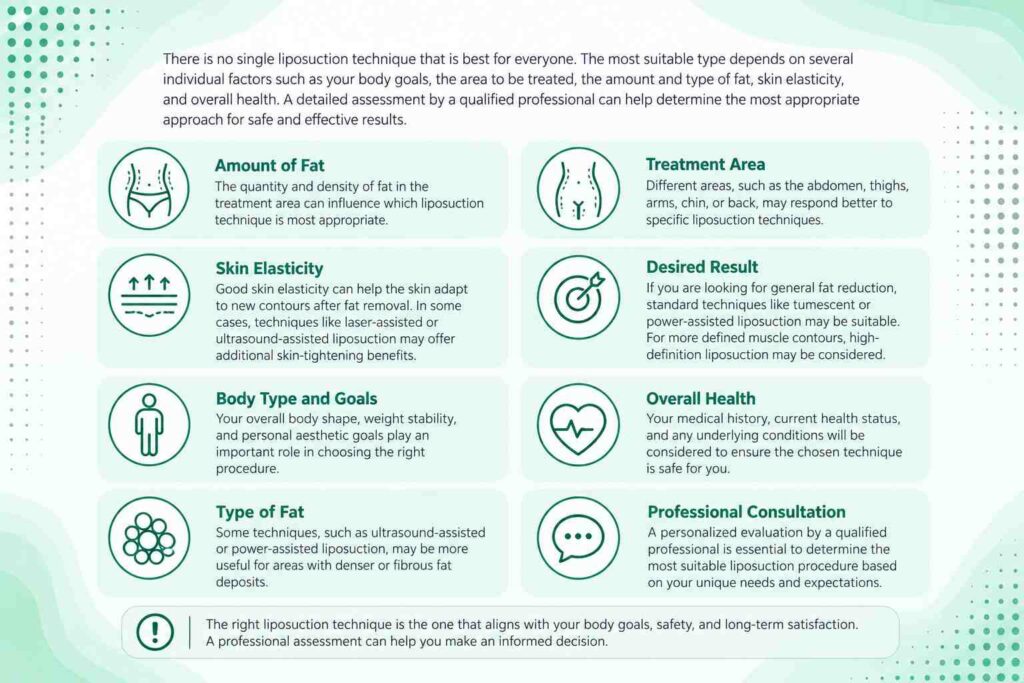
There is no single technique that is best for everyone. The appropriate option depends on several factors.
Amount of Fat
The quantity and density of fat can influence which technique is considered appropriate.
Treatment Area
The abdomen may require a different approach from the chin, arms, thighs, or back.
Skin Elasticity
Good skin elasticity can help the skin adapt to the body’s new contours after fat removal.
Loose skin may not improve simply because fat is removed. In some cases, another procedure may need to be considered.
Desired Result
Someone seeking general fat reduction may have different requirements from someone seeking highly detailed body sculpting.
Overall Health
A person’s medical history, medications, lifestyle, and general health should be reviewed before surgery.
Common Areas Treated With Liposuction
Liposuction can be performed on several areas where localized fat deposits occur.
Abdomen and Waist
The abdomen and waist are common areas for body contouring. Removing selected fat deposits can help create a more defined waistline.
Thighs and Hips
Liposuction may be used to improve the contour of the inner or outer thighs and surrounding areas.
Arms
Localized fat around the upper arms may be treated when appropriate.
Chin and Neck
Small areas of fat beneath the chin can sometimes be treated to improve the neck and jawline profile.
Back
Liposuction may be used to address localized fat around the upper or lower back.
Symptoms and Signs of Localized Fat Deposits
Localized fat is not a disease, so it does not have symptoms in the traditional medical sense. Instead, people may notice certain physical characteristics.
Common concerns include:
- Fat that remains despite weight loss
- Uneven fat distribution
- Bulges around the waist
- Persistent fullness around the thighs
- Excess fat under the chin
- Localized fullness around the arms
- Difficulty achieving desired body proportions
These concerns should be assessed individually because not every contour issue is caused by excess fat.
Benefits of Liposuction
Understanding the types of liposuction procedures also means understanding what liposuction can realistically accomplish.
Improved Body Contours
Liposuction can reduce selected fat deposits and improve body proportions.
Targeted Fat Reduction
Unlike general weight loss, liposuction focuses on specific areas.
Clothing Fit
Some people find that clothing fits differently after body contouring because certain localized bulges have been reduced.
Enhanced Body Proportion
Removing disproportionate fat from selected areas may create a more balanced silhouette.
Long-Lasting Fat Reduction
Fat cells removed during liposuction are permanently removed. However, remaining fat cells can enlarge with future weight gain, so maintaining a stable weight remains important.
Liposuction Treatment and Recovery
The recovery period depends on the extent of surgery, the number of treatment areas, the technique used, and individual healing.
Common temporary effects can include:
- Swelling
- Bruising
- Tenderness
- Numbness
- Mild discomfort
- Fluid drainage from small incision sites
A compression garment may be recommended to support the treated area during recovery.
Patients should follow their surgical team’s instructions regarding bathing, exercise, medication, wound care, and returning to normal activities.
When Do Results Become Visible
Some improvement may be noticeable relatively early, but swelling can temporarily hide the final contour.
As healing progresses, the treated areas generally become more defined. Final results may take several weeks or longer depending on the procedure and individual recovery.
Risks and Limitations
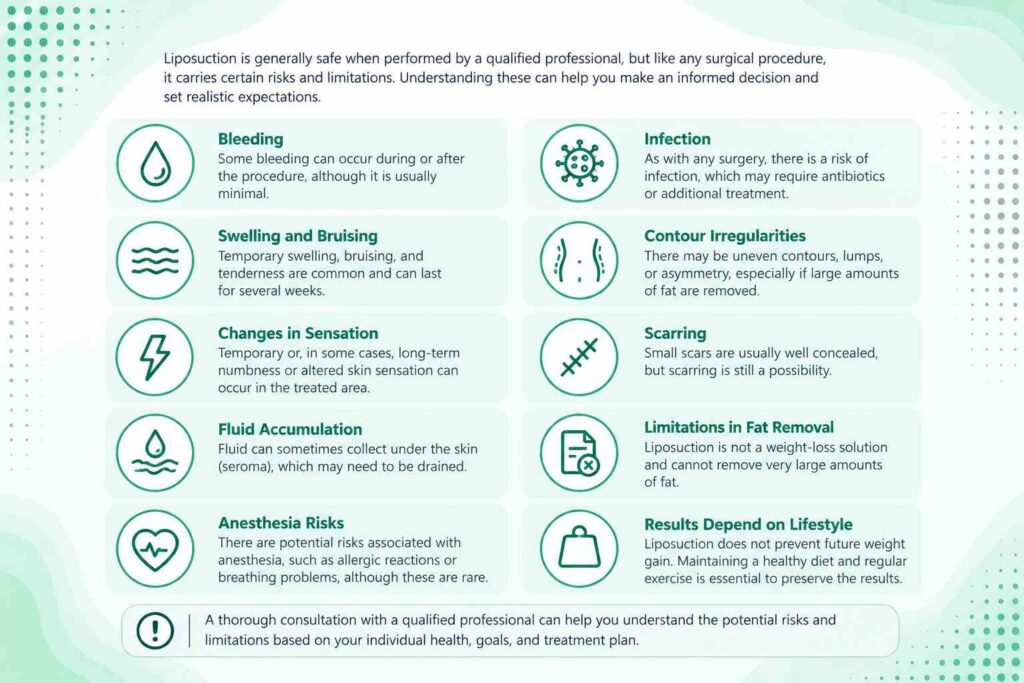
Liposuction is a surgical procedure and therefore carries potential risks.
Possible complications can include:
- Infection
- Bleeding
- Fluid accumulation
- Changes in sensation
- Contour irregularities
- Asymmetry
- Skin changes
- Scarring
- Anaesthesia-related complications
- Blood clots or other serious complications
The risk profile varies according to the procedure and individual circumstances.
A qualified medical professional should assess whether liposuction is appropriate and explain the specific risks before treatment.
Tips for Maintaining Liposuction Results
Liposuction can provide long-lasting contour improvement, but lifestyle habits remain important.
Maintain a Stable Weight
Significant weight gain can change the appearance of the treated area.
Eat a Balanced Diet
Include vegetables, fruits, whole grains, protein sources, and other nutrient-rich foods as appropriate.
Stay Physically Active
Regular physical activity supports overall fitness and healthy weight management.
Follow Recovery Instructions
Do not rush back into strenuous exercise or other activities before receiving appropriate clearance.
Attend Follow-Up Appointments
Follow-up visits allow the surgical team to assess healing and address concerns.
Who May Consider Liposuction
Liposuction may be considered by adults who:
- Have localized fat deposits
- Are relatively close to a stable, healthy weight
- Have realistic expectations
- Understand that liposuction is body contouring rather than a primary weight-loss method
- Are medically suitable for surgery
- Are willing to follow recovery instructions
A consultation is essential to determine suitability.
Conclusion
Learning about the types of liposuction procedures is an important first step when considering surgical body contouring. Tumescent, power-assisted, laser-assisted, ultrasound-assisted, VASER, water-assisted, and high-definition techniques each have different characteristics and potential applications.
The right approach depends on your anatomy, fat distribution, skin elasticity, health, treatment goals, and expected outcome. Liposuction can effectively target localized fat, but it should be viewed as a contouring procedure rather than a substitute for healthy weight management.
If you are considering liposuction in Thrissur, discuss your goals and expectations with a qualified medical professional who can explain which technique may be appropriate for your individual needs. Liposuction techniques vary depending on the treatment area and individual goals; for a detailed overview of the procedure and available techniques, visit the American Society of Plastic Surgeons’ liposuction guide.
Frequently Asked Questions
Sushrutha Institute of Plastic, Reconstructive & Aesthetic Surgery

Dr Pradeep Kumar
Plastic, Reconstructive & Aesthetic Surgeon
SIPRAS, Elite Mission Hospital, Thrissur