Table of Contents
- What Is Liposuction?
- How Does Liposuction Work?
- Why Do Localized Fat Deposits Develop?
- Who Is Liposuction Suitable For?
- What Areas Can Liposuction Treat?
- Types of Liposuction
- What Happens During Liposuction?
- Benefits of Liposuction
- Liposuction vs Weight Loss
- Preparing for Liposuction
- Recovery After Liposuction
- Results After Liposuction
- Risks and Possible Complications
- How to Maintain Results
- Questions to Ask Your Plastic Surgeon
- Frequently Asked Questions
- Conclusion
What Is Liposuction?
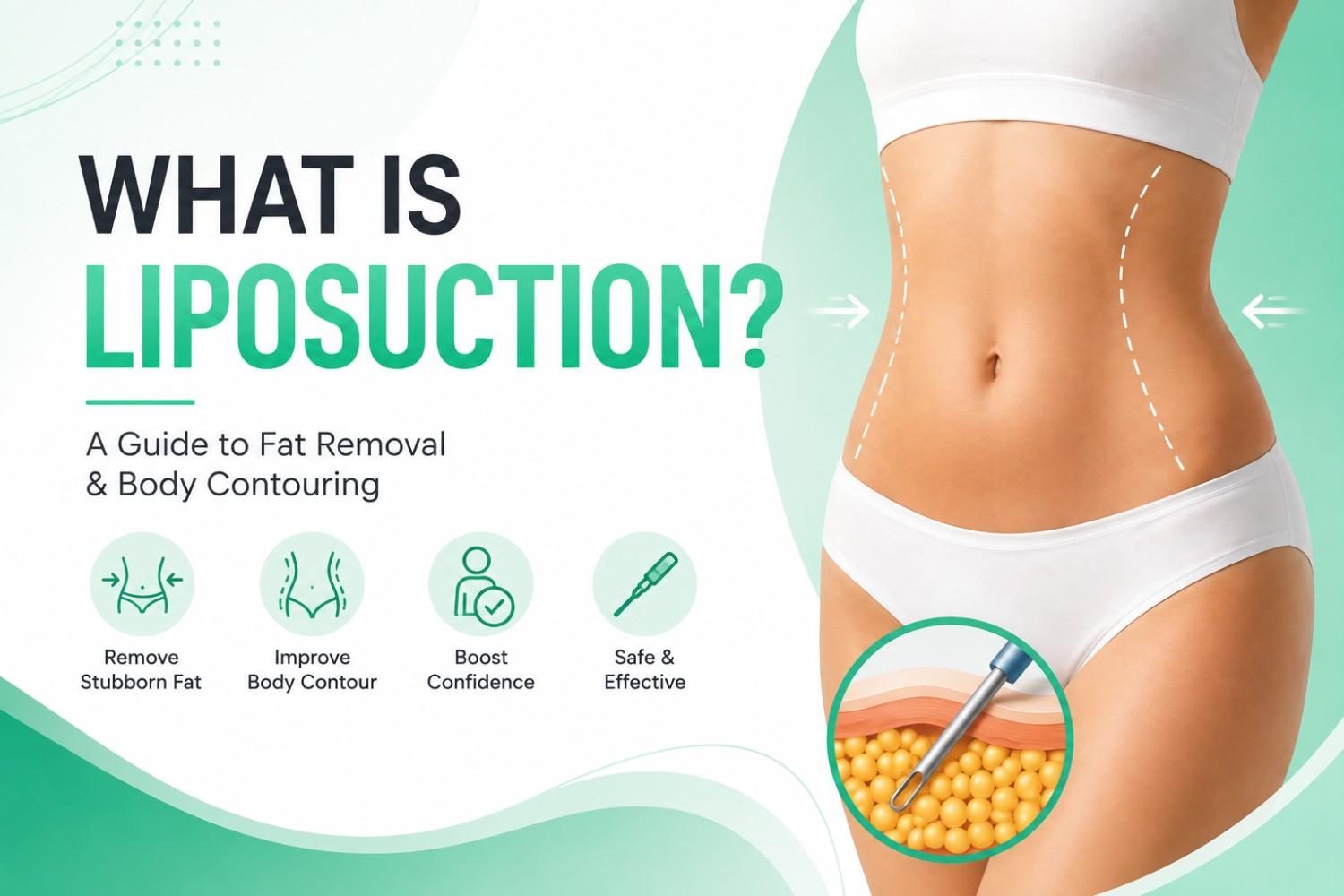
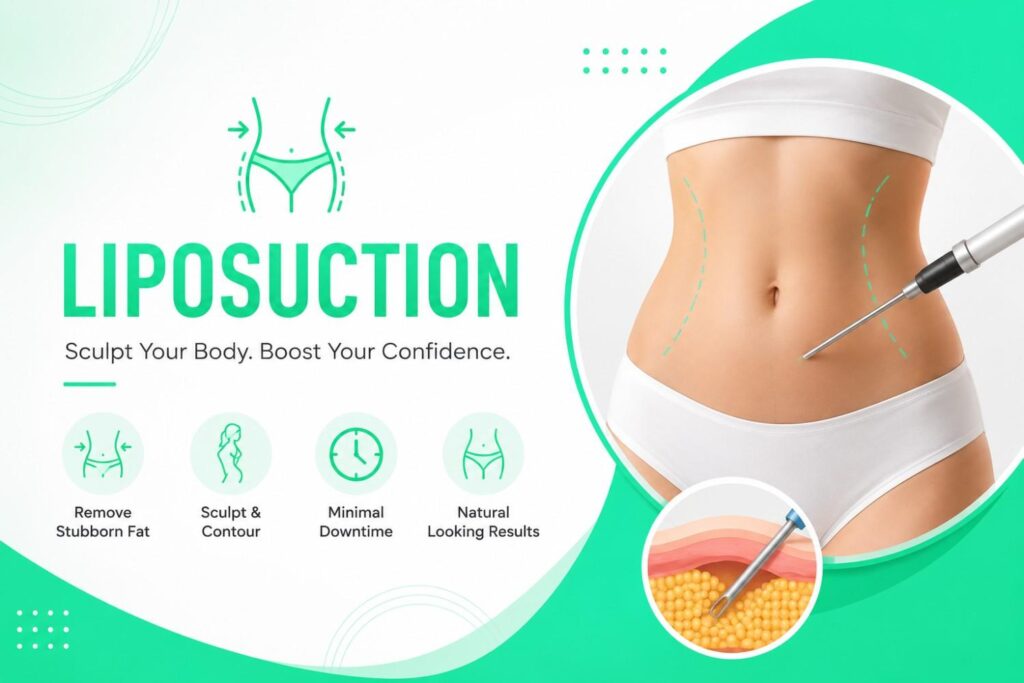
What is liposuction? Liposuction is a surgical body-contouring procedure designed to remove localized deposits of fat from specific areas of the body. It is commonly considered when diet and exercise have not reduced certain stubborn fat pockets. The procedure uses a thin tube called a cannula to loosen and suction fat from selected areas, helping improve body contour and proportion.
What is liposuction in practical terms? It is not simply a method for losing weight. Instead, it is a procedure used to reshape particular areas where excess fat remains despite healthy lifestyle habits. Common treatment areas include the abdomen, waist, thighs, hips, buttocks, back, upper arms, chest, chin and neck. For people considering a liposuction hospital in Thrissur, understanding what is liposuction, what it can realistically achieve, and what it cannot do is an important first step.
What Is Liposuction and How Does It Work?
What is liposuction from a surgical perspective? During the procedure, a surgeon makes small incisions near the area being treated. A cannula is inserted through these openings, and fat is loosened before being removed with controlled suction.
Before fat removal, a special fluid may be introduced into the treatment area. This is commonly known as the tumescent technique. The fluid can contain saline, a local anaesthetic and a medicine that constricts blood vessels. It helps prepare the fat tissue for removal and can reduce blood loss and discomfort during the procedure.
The surgeon carefully moves the cannula through the fatty layer to create a smoother contour rather than simply removing as much fat as possible.
The exact technique depends on:
- The treatment area
- The amount of localized fat
- Skin quality
- Overall health
- Previous procedures
- The surgeon’s assessment
- The desired body contour
Why Do Localized Fat Deposits Develop?
One reason people ask what is liposuction is because they have fat pockets that seem resistant to their usual lifestyle efforts.
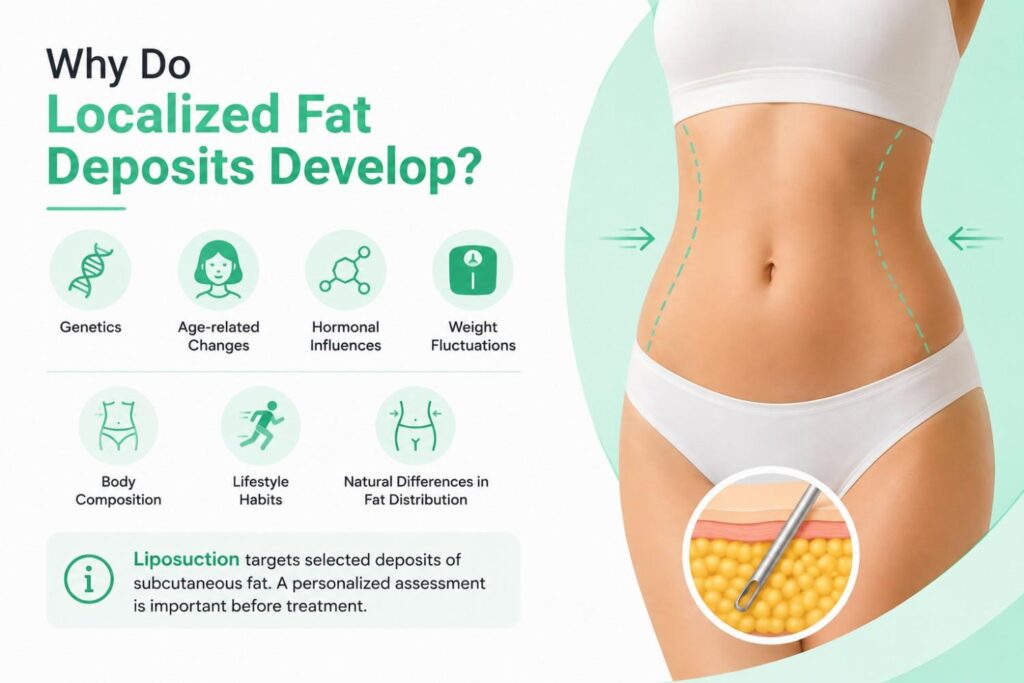
Localized fat can be influenced by several factors, including:
- Genetics
- Age-related changes
- Hormonal influences
- Weight fluctuations
- Body composition
- Lifestyle habits
- Natural differences in fat distribution
Even people who maintain a healthy weight may have areas where fat accumulates more easily.
Liposuction does not correct every cause of weight gain or body-fat accumulation. It specifically targets selected deposits of subcutaneous fat. This is why an individual assessment is important before treatment.
Who Is Liposuction Suitable For?
Knowing what is liposuction also means understanding who may benefit from it.
Liposuction may be considered for adults who:
- Have localized fat deposits
- Are relatively close to their healthy weight
- Have reasonably firm and elastic skin
- Are generally healthy enough for surgery
- Have realistic expectations
- Understand that the procedure is for body contouring rather than general weight loss
The quality of the skin matters because liposuction removes underlying fat but does not automatically remove large amounts of loose skin. Skin with good elasticity is generally better able to adapt to the new contour.
A consultation is therefore important before deciding whether liposuction is appropriate.
What Areas Can Liposuction Treat?
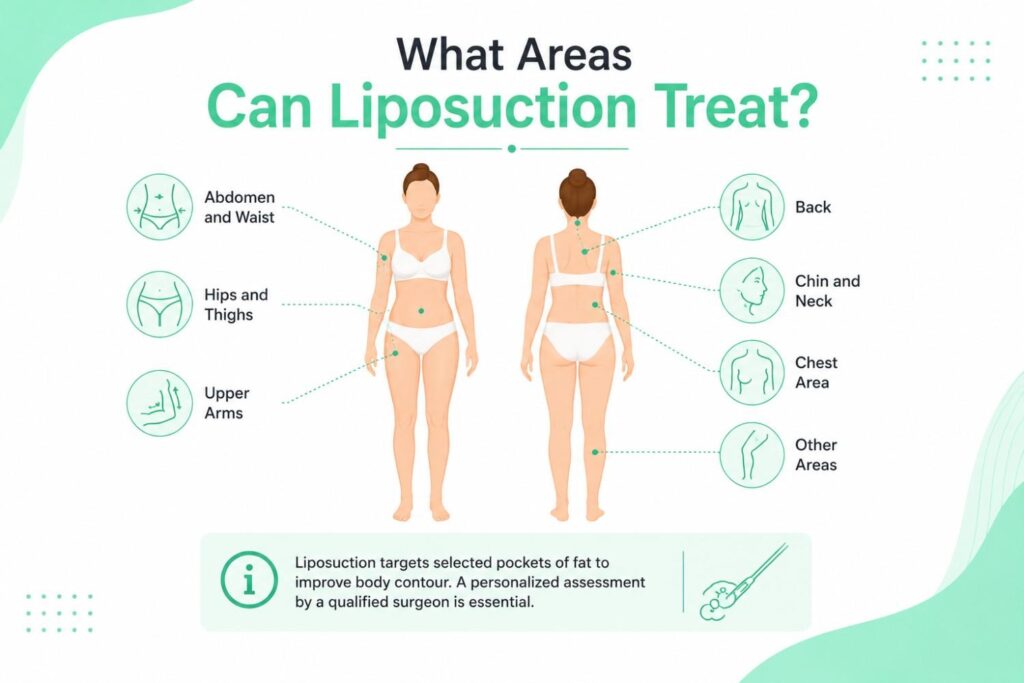
When people search what is liposuction, they often also want to know where it can be performed.Depending on individual anatomy and surgical assessment, liposuction may be used on:
- Abdomen and Waist
The abdomen and waist are common areas for localized fat deposits. Liposuction may help improve the contour of these areas when excess fat is present beneath otherwise suitable skin.
- Hips and Thighs
Liposuction can address selected areas of the inner or outer thighs and hips. The surgeon plans the treatment carefully to maintain natural proportions.
- Back
Localized fat around the back and flanks can sometimes affect body contour. Liposuction may be used to reduce these deposits.
- Upper Arms
Fat deposits around the upper arms can be treated in selected patients. However, significant loose skin may require a different or additional body-contouring procedure.
- Chin and Neck
Liposuction may be considered for selected fat deposits beneath the chin and around the neck. Skin elasticity is particularly important in this area.
- Chest Area
In selected cases, liposuction can be used to reduce excess fatty tissue around the chest. The underlying cause should be assessed before choosing treatment.
- Other Areas
Depending on the patient’s anatomy, liposuction may also be considered around the inner knees, calves and other localized areas.
Types of Liposuction
There is more than one liposuction technique. The basic principle remains the removal of localized fat through a cannula, but different technologies may assist the process.
- Tumescent Liposuction
Tumescent liposuction involves injecting a solution into the fatty tissue before suction. The solution generally contains saline, local anaesthetic and a medication that helps reduce bleeding.This technique is widely used as part of modern liposuction procedures.
- Power-Assisted Liposuction
Power-assisted liposuction uses a cannula that moves rapidly to help loosen fat before suction. This may assist the surgeon when treating certain areas.The technique can provide controlled fat removal while reducing some of the physical effort required to move the cannula manually.
- Ultrasound-Assisted Liposuction
Ultrasound-assisted techniques use energy to help loosen or liquefy fat before it is removed. These methods require appropriate equipment and careful surgical technique.Ultrasound-assisted liposuction can have specific risks, including thermal injury, so the technique should be selected and performed by an appropriately trained surgeon.
- Laser-Assisted Liposuction
Laser-assisted techniques use laser energy to affect fatty tissue before removal. Like other assisted techniques, suitability depends on the treatment area and individual circumstances.The choice of technique should be based on the patient’s anatomy, goals and surgeon’s assessment rather than simply choosing the newest technology.
Benefits of Liposuction
Understanding what is liposuction also involves understanding its potential benefits.
- Improved Body Contour
The primary purpose of liposuction is to reshape selected areas by reducing localized fat deposits.
- More Proportional Appearance
Carefully planned fat removal can help create better proportion between different areas of the body.
- Treatment of Stubborn Fat
Some localized deposits may remain even when a person maintains healthy eating and exercise habits.
- Targeted Treatment
Unlike general weight-loss approaches, liposuction focuses on specific areas.
- Long-Lasting Contour Changes
The fat cells removed during liposuction are permanently removed. However, remaining fat cells can enlarge with significant weight gain, so maintaining a stable weight remains important.
- Combination With Other Procedures
Liposuction may sometimes be performed alongside other cosmetic procedures, such as a tummy tuck or facelift, when clinically appropriate.
Liposuction vs Weight Loss
One of the most important points when learning what is liposuction is that it should not be confused with weight-loss treatment.
Liposuction is designed for body contouring, not for treating obesity.
It does not replace:
- Healthy eating
- Regular physical activity
- Medical weight-management treatment
- Weight-loss surgery when medically indicated
A person may lose some weight after fat removal, but the main objective is improvement in body shape and contour rather than achieving a particular number on the weighing scale.Liposuction also does not reliably remove cellulite or correct significant loose skin.
Preparing for Liposuction
Before undergoing what is liposuction treatment, preparation is an important part of the process.
Your surgeon may recommend:
- A medical evaluation
- Laboratory tests when appropriate
- Reviewing current medicines
- Discussing allergies and previous surgeries
- Avoiding smoking or vaping
- Adjusting certain medicines or supplements when medically advised
- Arranging transportation after surgery
- Organizing help at home during the initial recovery period
Some medicines and supplements can increase bleeding risk, so you should tell your surgeon about everything you take. Do not stop prescribed medication unless your healthcare professional tells you to do so.You should also receive clear instructions about eating, drinking, bathing, medication and activity before surgery.
Results After Liposuction
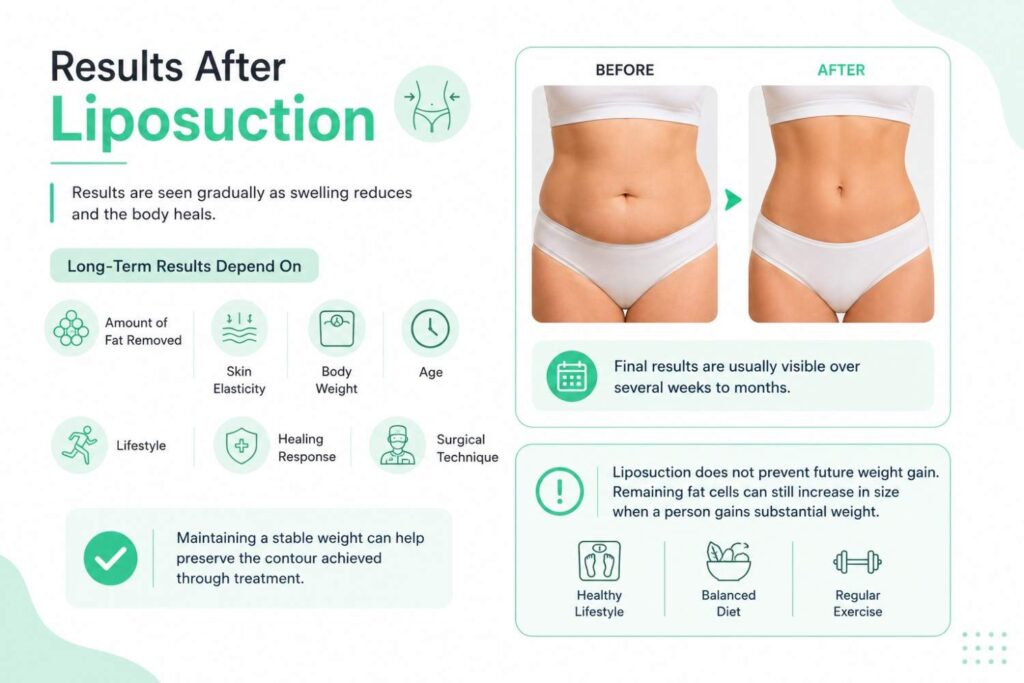
The result of what is liposuction treatment is generally assessed gradually rather than immediately.
Swelling can temporarily hide the final contour. As the body heals, the treated areas may become more defined.
The long-term appearance depends on several factors:
- Amount of fat removed
- Skin elasticity
- Body weight
- Age
- Lifestyle
- Healing response
- Surgical technique
Maintaining a stable weight can help preserve the contour achieved through treatment.
Liposuction does not prevent future weight gain. Remaining fat cells can still increase in size when a person gains substantial weight.
Tips for a Better Liposuction Recovery
After learning what is liposuction, patients often want to know how they can support recovery.
Useful general tips include:
- Follow your surgeon’s instructions carefully.
- Wear compression garments when instructed.
- Take prescribed medicines as directed.
- Keep incisions clean according to your care instructions.
- Walk gently when your surgeon permits it.
- Avoid strenuous exercise until cleared.
- Avoid smoking because it can interfere with healing.
- Attend scheduled follow-up appointments.
- Maintain adequate nutrition and hydration.
- Contact your surgical team if unexpected symptoms develop.
Do not compare your recovery with someone else’s. Healing varies considerably between individuals.
How to Choose a Plastic Surgeon
Choosing the right surgeon is one of the most important parts of the process.
When researching what is liposuction, look beyond photographs or advertisements.
Consider asking:
- Is the surgeon appropriately qualified?
- How frequently does the surgeon perform liposuction?
- Where will the procedure take place?
- What type of anaesthesia will be used?
- What technique is recommended for my case?
- What are the specific risks for me?
- What should I expect during recovery?
- What follow-up care is provided?
- What happens if a complication occurs?
- Is another procedure ever required?
A proper consultation should give you enough information to make an informed decision rather than pressuring you to proceed.
Conclusion
So, what is liposuction? It is a surgical body-contouring procedure that removes selected localized fat deposits to improve body shape and proportion. It is not a replacement for weight management, and it cannot guarantee a particular appearance.
Understanding what is liposuction, the available techniques, suitable treatment areas, preparation, recovery, benefits and possible risks can help you approach the decision with realistic expectations. A qualified plastic surgeon can assess your individual anatomy, health and goals and explain whether liposuction is an appropriate option.
If you are considering what is liposuction treatment, a detailed consultation at a qualified plastic surgery centre can help you understand the procedure and recovery process before making an informed decision.To learn more about cosmetic and reconstructive plastic surgery, visit the American Society of Plastic Surgeons (ASPS).
Sushrutha Institute of Plastic, Reconstructive & Aesthetic Surgery

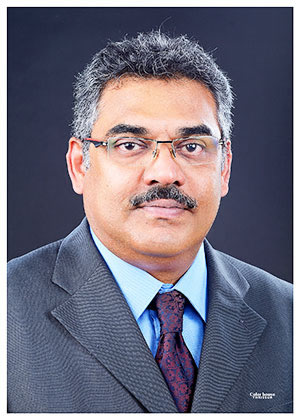
Dr Pradeep Kumar
Plastic, Reconstructive & Aesthetic Surgeon
SIPRAS, Elite Mission Hospital, Thrissur