Liposuction is a popular body-contouring procedure designed to remove stubborn fat deposits that do not respond easily to diet and exercise. If you are considering liposuction in Thrissur, one of the most common questions you may have is, is liposuction a permanent solution for fat removal? The answer is both yes and no, depending on what you mean by permanent.
Liposuction permanently removes the fat cells treated during the procedure. However, it does not prevent the remaining fat cells from becoming larger if you gain weight in the future. This means that maintaining a stable weight and following healthy lifestyle habits are important for preserving the result.
Understanding how fat cells behave, what liposuction can achieve, and what you need to do after treatment can help you develop realistic expectations.
Is Liposuction a Permanent Solution for Fat Removal
Is liposuction a permanent solution for fat removal? In terms of removing the treated fat cells, liposuction can provide a long-lasting result. During the procedure, unwanted fat is physically removed from selected areas of the body.
Once mature fat cells are removed, they generally do not grow back in the same area. However, the body still contains many fat cells elsewhere. If you gain a significant amount of weight after liposuction, these remaining cells can enlarge.
Therefore, liposuction should be viewed as a long-term body-contouring treatment rather than a permanent guarantee against future weight gain.
What Liposuction Actually Does
Liposuction focuses on localized fat deposits rather than overall weight loss. It is commonly used to improve body contours in areas such as:
- Abdomen
- Waist
- Hips
- Thighs
- Arms
- Back
- Flanks
- Under the chin
- Other areas with localized fat deposits
The procedure removes fat from targeted areas to create a more proportionate body shape.
How Fat Cells Behave After Liposuction
To understand is liposuction a permanent solution for fat removal, it helps to understand how fat cells work.
Adults have a relatively stable number of fat cells. Weight gain usually occurs because existing fat cells become larger as they store more energy. Liposuction removes some of these cells from specific areas.
After treatment, the remaining fat cells can still increase in size if you consume more calories than your body uses.
This is why maintaining a healthy weight is an important part of preserving liposuction results.
Can Removed Fat Cells Come Back
Fat cells that have been physically removed do not typically regenerate in the same way as untreated cells. However, this does not mean that the treated area is completely protected from future fat accumulation.
If substantial weight gain occurs, fat can accumulate in the remaining cells. It may also become more noticeable in other parts of the body.
This distinction is important when considering the long-term effects of liposuction.
Why Do People Consider Liposuction
Liposuction is generally considered by people who have stubborn areas of fat despite making reasonable lifestyle efforts.
Some fat deposits may be resistant to changes in diet and exercise. Genetics, age, hormonal changes, body composition, and lifestyle can influence where the body stores fat.
Common reasons people consider liposuction include:
- Difficulty reducing specific fat deposits
- Desire for improved body proportions
- Localized abdominal fat
- Fat around the hips or waist
- Persistent thigh or arm fat
- Desire for more defined body contours
- Improvement in clothing fit
- Body-contouring goals after weight stabilization
Liposuction is not intended to replace healthy eating, physical activity, or medically appropriate weight-management strategies.
Types of Liposuction
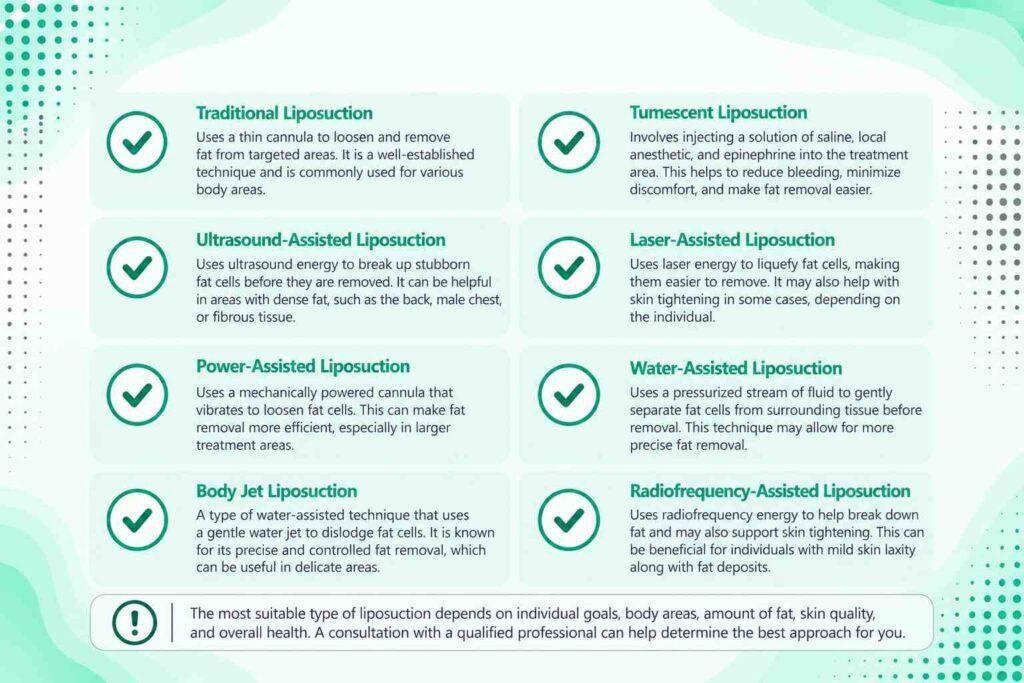
Several liposuction techniques are available. The most appropriate approach depends on factors such as the treatment area, amount of fat, skin quality, and individual goals.
Traditional Liposuction
Traditional liposuction uses a thin cannula to loosen and remove fat from selected areas. It remains one of the established approaches to surgical fat removal.
Tumescent Liposuction
Tumescent liposuction involves placing a specialized fluid into the treatment area before fat removal. This can help facilitate the procedure and manage bleeding and discomfort.
Power-Assisted Liposuction
Power-assisted techniques use a vibrating cannula to help break up and remove fat. This may be useful in certain treatment situations.
Laser-Assisted Liposuction
Laser-assisted approaches use laser energy as part of the fat-removal process. Depending on the technique, the energy may also affect surrounding tissues.
Ultrasound-Assisted Liposuction
Ultrasound-assisted liposuction uses ultrasound energy to help break down fat before it is removed.
The technique selected should be based on individual anatomy and treatment goals rather than simply choosing the newest technology.
What Liposuction Does Not Treat
Understanding the limitations of liposuction is just as important as understanding its benefits.
Liposuction does not automatically:
- Treat obesity
- Guarantee permanent weight stability
- Remove all body fat
- Prevent future weight gain
- Eliminate cellulite completely
- Stop natural aging
- Replace exercise
- Replace a balanced diet
- Correct every cause of loose skin
The procedure is primarily designed for body contouring and localized fat reduction.
Benefits of Liposuction
When appropriately performed, liposuction can provide several body-contouring benefits.
Targeted Fat Reduction
One of the major advantages is the ability to focus on specific areas where stubborn fat is concentrated.
Improved Body Contours
Removing localized fat can create smoother and more proportionate body contours.
Long-Lasting Fat Removal
The fat cells physically removed during liposuction are not expected to return in the same quantity. Maintaining a stable weight can help preserve the result.
Better Clothing Fit
Changes in body contours may make certain clothes fit differently or more comfortably.
Enhanced Body Proportion
Reducing disproportionate fat deposits can improve the relationship between different areas of the body.
What Can Cause Fat to Return
When people ask, is liposuction a permanent solution for fat removal, they often worry that the fat will simply return.
The treated fat cells are removed, but weight gain can still occur.
Factors that may contribute to increased body fat after liposuction include:
- Excess calorie intake
- Lack of physical activity
- Major weight gain
- Changes in lifestyle
- Aging
- Certain hormonal or metabolic changes
- Pregnancy and other major body changes
The key point is that liposuction does not change the body’s basic ability to store energy as fat.
Can You Gain Weight After Liposuction
Yes. Liposuction does not make a person immune to weight gain.
If you regularly consume more energy than your body needs, the remaining fat cells can enlarge. With significant weight gain, changes may become visible in both treated and untreated areas.
For this reason, liposuction is best considered after weight has become relatively stable.
A healthy post-procedure routine can help protect your investment and maintain your body contours.
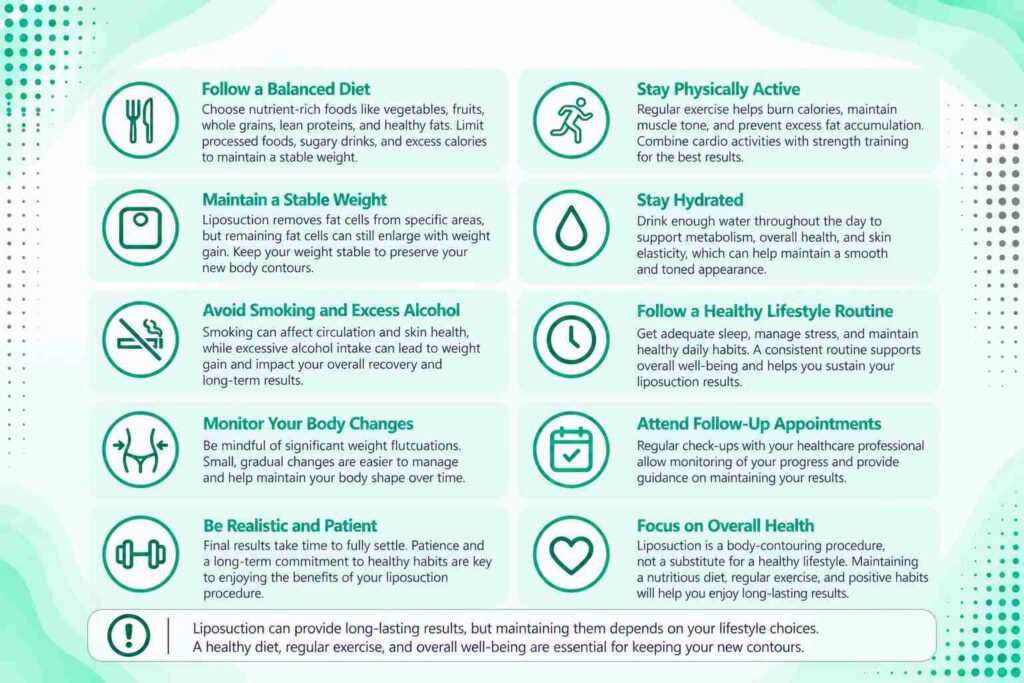
How to Maintain Liposuction Results
Long-term maintenance is one of the most important parts of successful body contouring.
Follow a Balanced Diet
Focus on nutrient-rich foods such as:
- Vegetables
- Fruits
- Whole grains
- Lean protein
- Healthy fats
- Adequate fluids
Reducing excessive intake of highly processed foods and added sugars can also support healthy weight management.
Stay Physically Active
Regular physical activity helps manage body weight and supports overall health.
A combination of aerobic activity and strength training can be useful, depending on your fitness level and medical circumstances.
Maintain a Stable Weight
Large changes in body weight can affect your body contours. Keeping your weight relatively stable can help preserve the appearance achieved through liposuction.
Follow Recovery Instructions
Immediately after treatment, follow the instructions provided by your healthcare team. Recovery recommendations may include guidance about physical activity, compression garments, wound care, and follow-up appointments.
Liposuction vs Weight-Loss Treatment
Liposuction and weight-loss treatment have different purposes.
Liposuction targets localized fat deposits for body contouring. Weight-loss strategies aim to reduce overall body weight and improve metabolic health.
Someone who has significant excess weight may need a broader weight-management approach rather than relying on liposuction alone.
Liposuction is generally most suitable for people who have localized fat deposits and realistic expectations about what the procedure can accomplish.
Who May Be a Suitable Candidate
Suitability depends on individual health, body composition, skin quality, treatment goals, and other factors.
A person considering liposuction may be more likely to benefit when they:
- Have localized fat deposits
- Have relatively stable body weight
- Maintain realistic expectations
- Are generally healthy enough for surgery
- Understand the recovery process
- Are willing to maintain healthy lifestyle habits
A proper consultation is necessary to determine whether liposuction is appropriate.
Risks and Limitations
Like any surgical procedure, liposuction has potential risks and limitations.
Possible complications can include:
- Swelling
- Bruising
- Temporary numbness
- Fluid accumulation
- Infection
- Bleeding
- Irregular contours
- Changes in skin sensation
- Scarring
- Anesthesia-related complications
The likelihood and severity of complications vary from person to person.
Choosing an appropriately qualified medical professional and following preoperative and postoperative instructions can help reduce avoidable risks.
Recovery After Liposuction
Recovery varies depending on the amount of fat removed, number of areas treated, technique used, and individual healing response.
Some swelling and bruising are expected during the early recovery period. The final body contour may not be immediately visible because tissues need time to settle.
During recovery, you may be advised to:
- Rest as recommended
- Avoid strenuous activity until cleared
- Wear compression garments if instructed
- Attend follow-up appointments
- Keep treatment areas clean
- Follow medication instructions
- Gradually return to normal activities
Do not judge the final outcome too early because swelling can temporarily affect the appearance of the treated area.
Tips Before Considering Liposuction
Before choosing liposuction, take time to understand what the procedure can and cannot achieve.
Define Your Goal
Be specific about whether your goal is fat reduction, improved proportions, or body contouring.
Discuss Your Medical History
Share relevant health information, medications, previous surgeries, allergies, and other factors during your consultation.
Ask About the Technique
Different liposuction methods may be suitable for different circumstances. Ask why a particular technique is being recommended.
Understand Recovery
Ask how much downtime may be expected and when you can return to work, exercise, and normal activities.
Have Realistic Expectations
Liposuction can improve contours, but it cannot create perfection or stop future changes in your body.
Tips for Long-Term Results
The answer to is liposuction a permanent solution for fat removal becomes more useful when long-term maintenance is considered.
After recovery, focus on sustainable habits rather than temporary restrictions.
Helpful habits include:
- Eat balanced meals consistently.
- Keep physically active.
- Monitor major weight changes.
- Stay adequately hydrated.
- Get sufficient sleep.
- Avoid extreme dieting.
- Follow recommended follow-up care.
- Seek professional guidance when significant weight changes occur.
The goal is not simply to maintain a procedure’s result but to support your overall health.
What Happens If You Gain Weight After Liposuction
A small amount of weight fluctuation may not dramatically change the outcome. Significant weight gain, however, can alter body contours.
Because fewer fat cells remain in the treated area, the distribution of additional fat may differ from how it was distributed before treatment. Other areas can become more prominent.
This is why maintaining a stable weight is an important part of achieving a satisfying long-term outcome.
Does Liposuction Stop Future Fat Formation`
No. Liposuction removes existing fat cells from selected areas, but it does not stop the body from storing additional fat.
The body continues to respond to energy intake, physical activity, hormones, genetics, and other factors.
Therefore, the procedure should not be considered a permanent shield against future fat accumulation.
When Should You Consider Liposuction
The right time depends on your individual goals and circumstances.
It may be worth discussing liposuction when:
- Your weight is relatively stable.
- You have localized fat deposits.
- Diet and exercise have not changed a particular contour as desired.
- You understand the limitations of the procedure.
- You can commit to postoperative care.
- You have realistic expectations.
A consultation can help determine whether surgical fat removal fits your goals.
Conclusion
So, is liposuction a permanent solution for fat removal? The most accurate answer is that liposuction can permanently remove the fat cells targeted during treatment, but the overall result depends heavily on maintaining a stable weight and healthy lifestyle. It is a body-contouring procedure, not a permanent solution for every future change in body fat.
Understanding the benefits, limitations, risks, recovery process, and maintenance requirements can help you make a more informed decision. If you are considering liposuction in Thrissur, discuss your individual goals and expectations with a qualified healthcare professional before proceeding. For reliable information about liposuction, including its benefits, risks, and expected results, visit the American Society of Plastic Surgeons’ liposuction guide.
Frequently Asked Question
Sushrutha Institute of Plastic, Reconstructive & Aesthetic Surgery
Dr Pradeep Kumar
Plastic, Reconstructive & Aesthetic Surgeon
SIPRAS, Elite Mission Hospital, Thrissur