Liposuction is a popular cosmetic procedure designed to remove stubborn areas of localized fat that may not respond well to diet and exercise. Understanding the benefits of liposuction surgery can help people make an informed decision about whether body contouring is appropriate for them. For people considering treatment in Thrissur, learning about the procedure, expected results, recovery, and limitations is an important first step.
Liposuction is not primarily a weight-loss treatment. Instead, it is intended to reshape specific areas of the body by removing excess subcutaneous fat. When performed on an appropriate candidate, the procedure can create a more proportionate and defined body contour.
What Is Liposuction Surgery
Liposuction is a surgical body-contouring procedure that removes unwanted fat deposits from selected areas of the body. A small tube called a cannula is generally inserted through tiny incisions, allowing excess fat to be loosened and removed.
The procedure can be used on areas where localized fat accumulation affects body proportions. Common treatment areas include:
- Abdomen
- Waist and flanks
- Hips
- Thighs
- Upper arms
- Back
- Under the chin
- Certain areas around the knees
The benefits of liposuction surgery are primarily related to body contouring rather than reducing overall body weight. The best outcomes usually occur when the patient is relatively close to a healthy, stable weight and has realistic expectations.
Why Do Stubborn Fat Deposits Develop
Before considering the benefits of liposuction surgery, it is useful to understand why some fat deposits can remain despite healthy habits.
Genetics
Genetic factors can influence where the body stores fat. Some people naturally accumulate more fat around the abdomen, hips, thighs, arms, or other areas.
Hormonal Changes
Hormonal fluctuations can influence body-fat distribution. Changes associated with ageing and other physiological processes may alter how fat is stored.
Ageing
As people age, metabolism, skin elasticity, muscle mass, and fat distribution can change. These factors can affect body shape even when lifestyle habits remain consistent.
Lifestyle Factors
A sedentary lifestyle, excessive calorie intake, and inconsistent physical activity can contribute to increased body fat. However, localized deposits can sometimes remain even after improvements in diet and exercise.
Weight Changes
Repeated weight gain and loss may change the distribution of fat and affect skin firmness. Liposuction may address selected deposits, but maintaining a stable weight remains important after treatment.
What Are the Main Types of Liposuction
Several liposuction techniques may be available depending on the treatment area, amount of fat, tissue characteristics, and surgical plan.
Tumescent Liposuction
Tumescent liposuction involves injecting a specially prepared solution into the treatment area before fat removal. This approach is widely used because it can help facilitate fat removal and manage bleeding and discomfort during the procedure.
Power-Assisted Liposuction
Power-assisted techniques use a cannula with mechanical movement to assist fat removal. This may be useful for particular areas or larger volumes, depending on the patient’s circumstances.
Ultrasound-Assisted Liposuction
Ultrasound energy may be used to help break up fat before it is removed. Its suitability depends on the treatment area and the surgeon’s assessment.
Laser-Assisted Liposuction
Laser energy can be used in some liposuction techniques to assist with fat disruption. It should not be assumed to provide skin tightening in every patient, and realistic expectations remain essential.
The appropriate technique is determined during a professional consultation rather than simply by choosing the newest technology.
7 Key Benefits of Liposuction Surgery
The potential benefits of liposuction surgery can vary from person to person. Results depend on factors such as the amount and location of fat, skin elasticity, overall health, lifestyle, and surgical technique.
1. Removes Localized Fat Deposits
One of the most important benefits of liposuction surgery is its ability to directly remove selected pockets of subcutaneous fat.
Diet and exercise reduce overall body fat, but they cannot always determine exactly where fat disappears first. Liposuction can target specific areas where stubborn deposits affect body proportions.
This can be particularly useful when a person has persistent fullness in areas such as the abdomen, thighs, hips, arms, or flanks despite maintaining healthy habits.
2. Improves Body Contours
Another major benefit of liposuction surgery is improved body contouring. By selectively removing fat from carefully chosen areas, the procedure can help create smoother transitions between different parts of the body.
For example, reducing excess fat around the waist may create a more defined waistline. Treating selected areas of the thighs may improve their overall proportion.
The goal is not simply to remove as much fat as possible. Effective contouring requires balance and precision.
3. Helps Create Better Body Proportions
Body shape is influenced by how different areas relate to one another. A relatively small amount of excess fat in one location can sometimes make the entire body appear less balanced.
The benefits of liposuction surgery may therefore include improved proportionality between areas such as the abdomen, waist, hips, and thighs.
The procedure is generally planned around the individual’s natural anatomy rather than a single ideal body shape.
4. Can Improve Clothing Fit
Localized fat deposits can sometimes make certain clothes feel tight or fit unevenly. After appropriate fat removal and healing, some patients may find that clothing fits more comfortably around treated areas.
This is not a medical guarantee or a specific surgical objective, but it can be a practical benefit associated with improved body contour.
5. Can Enhance the Appearance of Specific Areas
Liposuction can be used to refine selected body regions. When appropriately planned, the procedure may make the treated area appear more streamlined.
The degree of visible improvement depends on the original anatomy, amount of fat removed, skin quality, healing, and postoperative weight stability.
6. May Improve Confidence and Body Satisfaction
Physical appearance can influence how people feel about their bodies. Some patients report greater satisfaction with their appearance after successful body-contouring surgery.
However, liposuction should not be presented as a solution for every body-image concern. A healthy motivation and realistic expectations are important when considering cosmetic surgery.
7. Can Provide Long-Lasting Contouring With Stable Weight
Fat cells removed during liposuction are physically removed from the treated area. This contributes to the potential long-term nature of the contouring effect.
However, remaining fat cells can still enlarge if a person gains significant weight. Therefore, one of the important benefits of liposuction surgery is best maintained through consistent nutrition, physical activity, and stable body weight.
Who May Be a Suitable Candidate
Understanding candidacy is just as important as understanding the benefits of liposuction surgery.
A suitable candidate may generally:
- Have localized fat deposits that are resistant to lifestyle measures
- Be near a stable, healthy weight
- Have realistic expectations
- Have adequate skin elasticity for the planned contouring
- Be physically healthy enough for surgery
- Understand the risks and recovery requirements
- Be willing to maintain healthy lifestyle habits afterward
Liposuction may not be appropriate for someone seeking a major reduction in body weight. A medical evaluation is necessary to determine whether the procedure is suitable.
What Happens During Liposuction
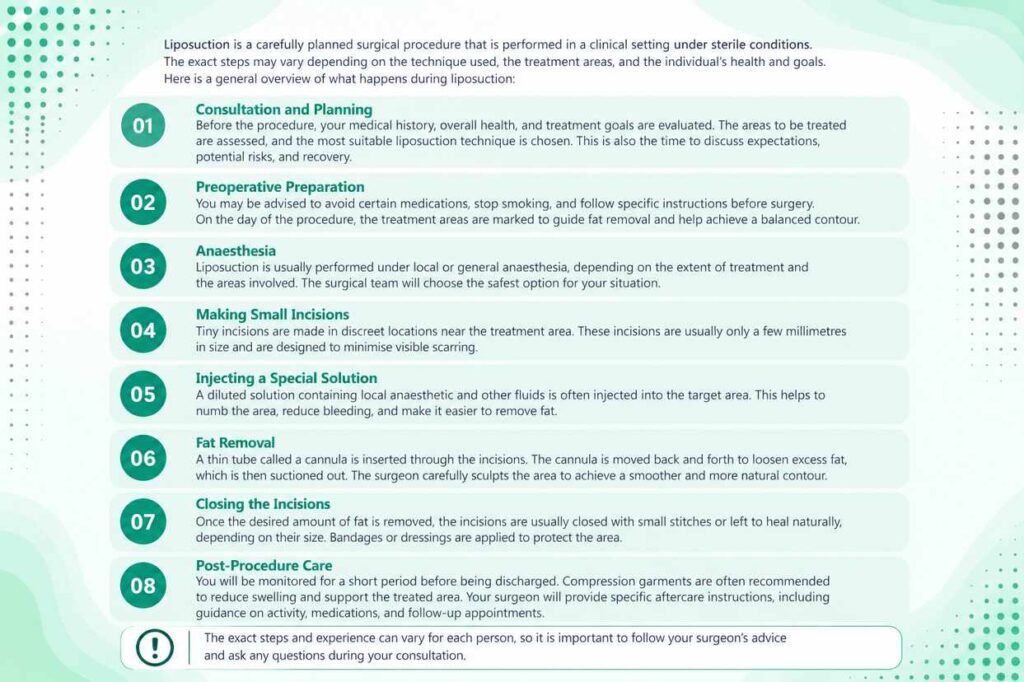
The exact surgical process varies according to the technique and treatment area. Generally, the procedure involves several stages.
Consultation and Planning
The treatment areas are assessed, medical history is reviewed, and expectations are discussed. The surgical plan may consider body proportions, skin quality, fat distribution, and overall health.
Anaesthesia
Depending on the extent of treatment, appropriate anaesthesia or sedation is selected. The surgical team determines the safest option based on the planned procedure.
Fat Removal
Small incisions are made, and a cannula is introduced into the targeted area. Fat is loosened and removed in a controlled manner.
Closing and Recovery
The incisions are managed appropriately, and compression garments may be recommended. The patient then begins the postoperative recovery process.
What Are Common Symptoms After Liposuction
Knowing what to expect after surgery can help patients understand the recovery process.
Temporary symptoms may include:
- Swelling
- Bruising
- Tenderness
- Mild to moderate discomfort
- Temporary numbness
- Fluid drainage from small incision sites
- Tightness in treated areas
These symptoms generally improve as healing progresses. However, severe pain, increasing redness, significant swelling, fever, breathing difficulty, chest pain, or other concerning symptoms should receive prompt medical attention.
Recovery After Liposuction Surgery
Recovery is an important part of achieving the benefits of liposuction surgery.
Follow Postoperative Instructions
Patients should carefully follow instructions concerning wound care, medication, compression garments, activity, bathing, and follow-up appointments.
Allow the Body to Heal
Returning to strenuous exercise too quickly may interfere with recovery. Activity should be increased gradually according to professional guidance.
Wear Compression Garments if Recommended
Compression garments may be recommended after liposuction to support the treated areas during healing and help manage swelling.
Maintain Hydration and Balanced Nutrition
Adequate fluids and nutritious meals can support general recovery. Protein-rich foods, fruits, vegetables, whole grains, and other nutrient-dense foods can be incorporated according to individual dietary needs.
Be Patient With Results
Early swelling can make the treated area appear different from the eventual result. Contours typically become clearer as swelling decreases and tissues heal.
How to Maintain the Benefits of Liposuction Surgery
Maintaining results requires long-term attention to lifestyle habits.
Maintain a Stable Weight
Significant weight gain can affect the overall body contour. A stable weight is one of the most important factors for maintaining results.
Exercise Regularly
Once cleared for exercise, a balanced routine involving cardiovascular activity and strength training can support overall fitness and body composition.
Eat a Balanced Diet
Regular meals based around vegetables, fruits, lean proteins, whole grains, and appropriate sources of healthy fats can support healthy weight management.
Avoid Unrealistic Expectations
Liposuction does not prevent future weight gain or replace healthy lifestyle habits. Understanding its limitations helps patients make more realistic decisions.
Risks and Limitations
Although the benefits of liposuction surgery can be significant for appropriate candidates, it is still a surgical procedure and carries potential risks.
Possible complications may include:
- Infection
- Bleeding
- Fluid accumulation
- Temporary or persistent changes in sensation
- Irregular contours
- Asymmetry
- Skin changes
- Anaesthesia-related complications
- Blood clots
- Damage to deeper tissues or organs in rare cases
There are also limitations. Liposuction is not a treatment for obesity, cellulite, or loose skin in every situation. Significant skin laxity may require a different or additional approach.
A qualified medical professional should assess individual risks before surgery.
Liposuction vs Weight Loss
One common misconception is that liposuction and weight-loss treatment are the same.
They are not.
Weight loss aims to reduce overall body mass, usually through changes in calorie intake, physical activity, medical treatment, or a combination of approaches. Liposuction is primarily intended to reshape specific areas by removing localized fat.
Someone can lose weight without achieving the specific contour they want, while someone undergoing liposuction may experience only a modest change on the weighing scale but a noticeable change in body shape.
Tips Before Considering Liposuction
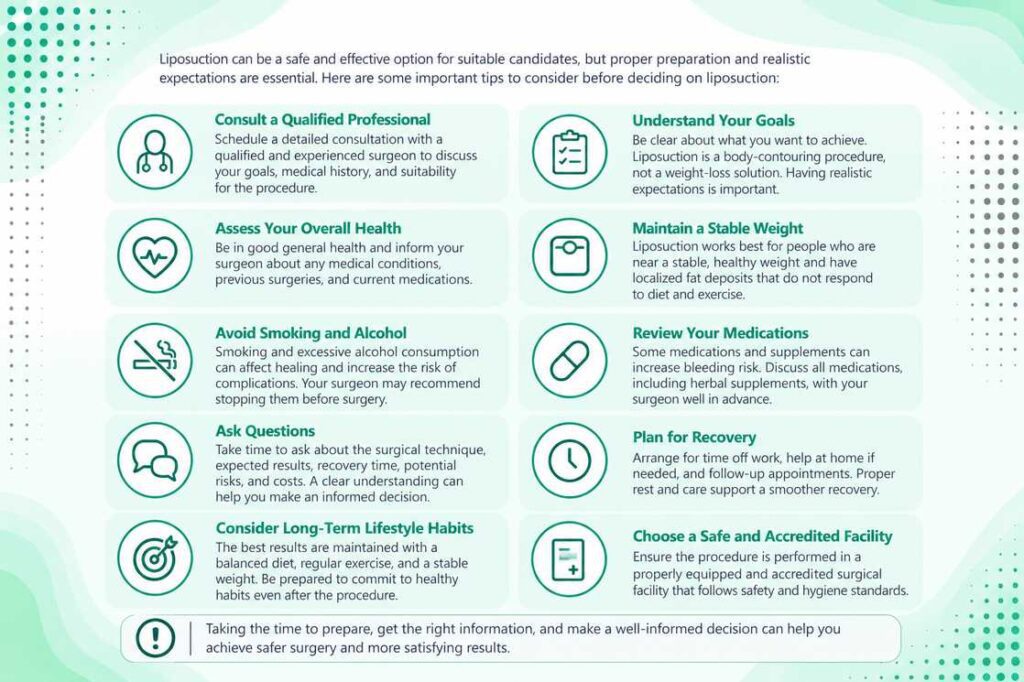
Before deciding whether the benefits of liposuction surgery outweigh the risks for your circumstances, consider the following:
- Understand the actual goal of the procedure.
- Discuss your medical history honestly.
- Ask what technique is being recommended and why.
- Understand expected recovery time.
- Ask about possible complications.
- Discuss realistic results.
- Find out what postoperative care will be required.
- Plan adequate time for recovery.
- Avoid making a decision based solely on photographs or promotional claims.
- Choose a properly qualified surgical professional and accredited clinical setting.
Conclusion
The benefits of liposuction surgery mainly relate to targeted body contouring rather than overall weight loss. By removing selected localized fat deposits, liposuction may improve body proportions, refine contours, enhance clothing fit, and contribute to greater body satisfaction in appropriately selected patients.
At the same time, liposuction is a surgical procedure with risks and limitations. Careful evaluation, realistic expectations, qualified surgical care, and a commitment to maintaining a stable weight are essential for achieving and preserving the best possible outcome. For those exploring the benefits of liposuction surgery in Thrissur, a personalized consultation is the appropriate next step to determine whether the procedure suits their goals and circumstances. For reliable information about liposuction and its potential benefits and risks, visit the American Society of Plastic Surgeons for patient-focused guidance.
Frequently Asked Questions
Sushrutha Institute of Plastic, Reconstructive & Aesthetic Surgery


Dr Pradeep Kumar
Plastic, Reconstructive & Aesthetic Surgeon
SIPRAS, Elite Mission Hospital, Thrissur