Plastic surgery includes a wide range of procedures designed to improve appearance, restore function, or reconstruct areas affected by injury, disease, burns, or congenital conditions. Understanding what plastic surgery procedures are available in Kerala can help patients make informed decisions about their treatment options. In Kerala, patients can access both cosmetic plastic surgery and reconstructive plastic surgery depending on their individual needs.
Plastic surgery is not limited to appearance-enhancing procedures. It also includes complex reconstructive techniques that can restore damaged tissues, improve movement, and support recovery after trauma or medical treatment. The appropriate procedure depends on the patient’s condition, expectations, overall health, and the assessment of a qualified plastic surgeon.
What Plastic Surgery Procedures Are Available in Kerala
When exploring what plastic surgery procedures are available in Kerala, it is useful to understand the two major categories: cosmetic surgery and reconstructive surgery.
Cosmetic Plastic Surgery
Cosmetic procedures are generally performed to improve or modify specific aspects of appearance. Common examples include:
- Rhinoplasty or nose reshaping
- Facelift surgery
- Eyelid surgery
- Breast augmentation
- Breast reduction
- Breast lift
- Liposuction
- Tummy tuck or abdominoplasty
- Otoplasty or ear correction
- Body contouring
These procedures may address concerns related to facial appearance, breast shape, excess skin, body proportions, or localized fat.
Reconstructive Plastic Surgery
Reconstructive procedures focus primarily on restoring function and appearance after medical conditions, injuries, or tissue loss.
They may include:
- Burn reconstruction
- Scar revision
- Trauma reconstruction
- Breast reconstruction after cancer treatment
- Cleft lip and palate surgery
- Hand reconstruction
- Skin and soft-tissue reconstruction
- Flap surgery
- Microsurgical reconstruction
The distinction between cosmetic and reconstructive surgery is important because the goals and medical considerations can differ significantly.
Facial Plastic Surgery Procedures
Facial procedures are among the commonly considered areas of plastic surgery. Depending on the concern, surgery may involve the nose, eyelids, ears, face, or neck.
Rhinoplasty
Rhinoplasty is a surgical procedure used to reshape the nose. It may address the size, shape, symmetry, or proportions of the nose. In some cases, rhinoplasty can also help improve breathing when structural nasal problems are present.
Facelift
A facelift, also known as rhytidectomy, is designed to address signs of facial ageing. It can improve loose facial skin and sagging tissues while creating a more defined facial contour.
Blepharoplasty
Blepharoplasty, or eyelid surgery, involves removing or repositioning excess skin, fat, or tissue around the eyelids. It may be performed on the upper eyelids, lower eyelids, or both.
Otoplasty
Otoplasty reshapes or repositions the ears. It may be considered when the ears are prominent, asymmetrical, or affected by a structural concern.
Breast Plastic Surgery Procedures
Breast surgery can be performed for cosmetic reasons or as part of reconstruction following cancer treatment or other medical conditions.
Breast Augmentation
Breast augmentation is performed to increase breast volume or restore breast fullness. Depending on the case, implants or other techniques may be considered.
Breast Reduction
Breast reduction removes excess breast tissue, fat, and skin to reduce breast size. It may be considered when very large breasts contribute to discomfort, difficulty with physical activity, or other quality-of-life concerns.
Breast Lift
A breast lift, or mastopexy, reshapes and raises the breast by removing excess skin and repositioning breast tissue and the nipple-areola complex.
Breast Reconstruction
Breast reconstruction aims to restore breast shape following mastectomy or significant tissue loss. Reconstruction may involve implants, tissue from another part of the body, or a combination of techniques.
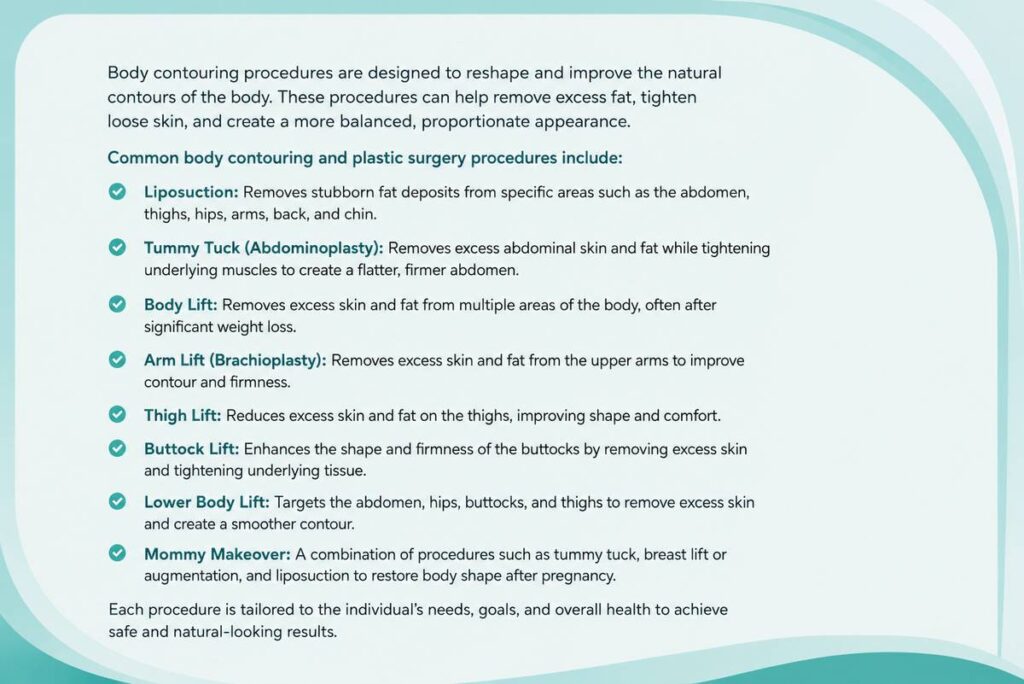
Body Contouring and Plastic Surgery Procedures
Body contouring procedures focus on reshaping specific areas of the body. They may be considered after significant weight loss, pregnancy, ageing, or changes in body shape.
Liposuction
Liposuction removes localized deposits of fat from selected areas. Common treatment areas include the abdomen, thighs, hips, arms, back, and chin.
Liposuction is generally considered a body-contouring procedure rather than a primary weight-loss treatment.
Tummy Tuck
A tummy tuck, or abdominoplasty, removes excess abdominal skin and may tighten separated or weakened abdominal muscles when appropriate.
Body Lift
A body lift can address significant amounts of loose skin and tissue, particularly following major weight loss. The exact surgical approach depends on the patient’s anatomy and treatment goals.
Arm Lift
An arm lift, or brachioplasty, removes excess skin and may improve the contour of the upper arms.
Reconstructive Plastic Surgery Procedures
Reconstructive surgery is an important part of understanding what plastic surgery procedures are available in Kerala. These procedures can help restore areas affected by trauma, burns, cancer, infection, congenital differences, or previous surgery.
Burn Reconstruction
Severe burns can result in contractures, scars, tissue loss, and restricted movement. Reconstructive surgery may release tight scar tissue and improve both function and appearance.
Trauma Reconstruction
Accidents and other traumatic injuries can damage skin, muscle, bone, blood vessels, and nerves. Reconstructive procedures may help restore damaged areas depending on the extent and location of the injury.
Scar Revision
Scar revision aims to improve the appearance, texture, or position of problematic scars. Surgical and non-surgical approaches may be considered depending on the scar.
Cleft Lip and Palate Surgery
Cleft lip and palate are congenital conditions that may require staged treatment. Plastic and reconstructive surgery can form part of a multidisciplinary treatment plan.
Microsurgery and Flap Reconstruction
Complex tissue loss may require advanced reconstructive techniques. Microsurgery allows surgeons to work with very small blood vessels and nerves.
Flap Surgery
Flap reconstruction involves transferring tissue from one area of the body to another while maintaining or restoring its blood supply.
Depending on the clinical situation, surgeons may use:
- Local flaps
- Regional flaps
- Free flaps
- Muscle flaps
- Fasciocutaneous flaps
Microsurgical Reconstruction
Microsurgery can be used in complex breast, head and neck, limb, hand, and soft-tissue reconstruction. The technique selected depends on the location and extent of tissue damage.
Hand and Upper-Limb Reconstruction
Plastic surgeons may also perform reconstructive procedures involving the hands and upper limbs.
Injuries involving tendons, nerves, blood vessels, skin, or soft tissues can affect movement and function. Treatment may involve wound reconstruction, tendon repair, nerve procedures, skin grafting, or microsurgical reconstruction.
The goal is often to restore as much functional movement as possible while also addressing the appearance of the affected area.
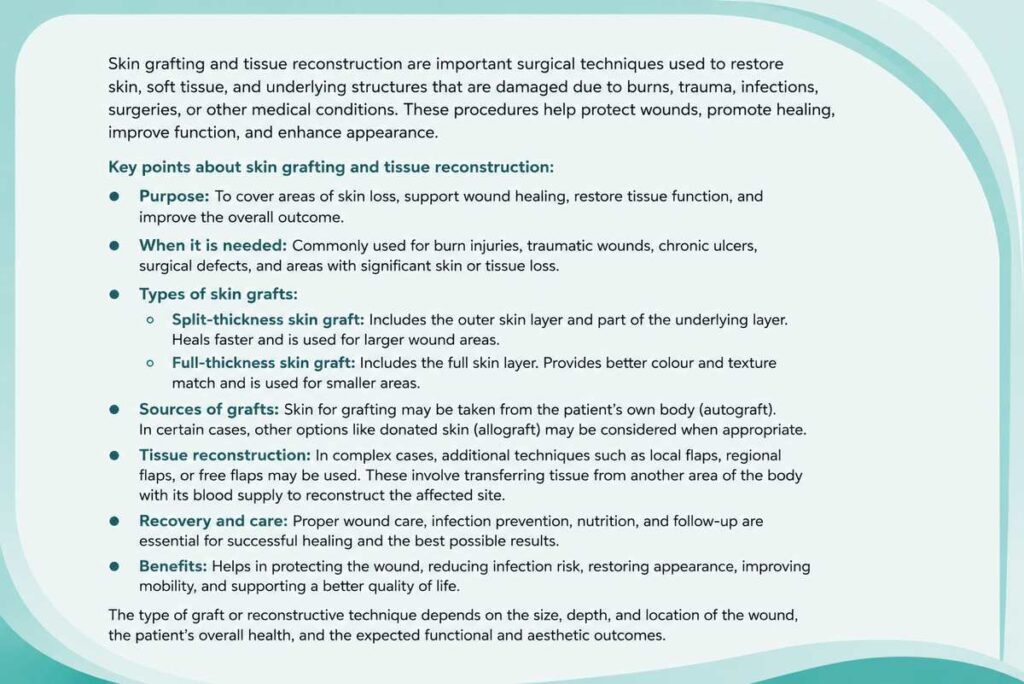
Skin Grafting and Tissue Reconstruction
Skin grafting is another important reconstructive technique. It involves transferring healthy skin from one part of the body to cover an area where skin has been lost or damaged.
Skin grafts may be considered for:
- Burn wounds
- Traumatic wounds
- Chronic wounds
- Surgical defects
- Areas with significant skin loss
The type of graft depends on the depth, size, location, and condition of the wound.
Who May Consider Plastic Surgery
The suitability of plastic surgery depends on the specific procedure and the individual’s overall health.
A person may be considered for surgery when:
- There is a clear and realistic treatment goal.
- The person understands the expected outcome.
- General health is suitable for the proposed procedure.
- Relevant medical conditions are appropriately controlled.
- The individual understands potential risks and recovery requirements.
- Expectations are realistic rather than based on guaranteed results.
For reconstructive surgery, medical necessity, tissue condition, previous treatments, and functional requirements can influence the treatment plan.
How Is the Right Plastic Surgery Procedure Selected
Knowing what plastic surgery procedures are available in Kerala is only the first step. Choosing an appropriate procedure requires a professional assessment.
During consultation, the surgeon may evaluate:
- Medical history
- Previous surgeries
- Current medications
- Allergies
- General health
- Skin and tissue quality
- Anatomy of the treatment area
- Functional concerns
- Desired outcomes
The surgeon may also discuss alternative treatments, expected results, recovery time, possible complications, and follow-up requirements.
A procedure should not be selected solely because it is popular. The treatment should be appropriate for the patient’s individual condition and objectives.
Benefits of Plastic and Reconstructive Surgery
The potential benefits depend on the procedure and the patient’s circumstances.
Cosmetic Benefits
Cosmetic surgery may help improve:
- Body proportions
- Facial contours
- Breast shape
- Skin and tissue contours
- Areas affected by excess skin or localized fat
Reconstructive Benefits
Reconstructive surgery may help:
- Restore damaged tissues
- Improve physical function
- Reduce restrictive scars
- Reconstruct areas affected by burns
- Restore body form after cancer treatment
- Improve mobility in selected cases
- Support psychological recovery following major physical changes
Results vary from person to person, and surgery cannot guarantee a particular appearance or functional outcome.
Risks and Possible Complications
Like any major surgical procedure, plastic surgery can involve risks. The exact risks depend on the operation, surgical site, health status, and other factors.
Possible complications can include:
- Infection
- Bleeding
- Swelling
- Bruising
- Pain
- Delayed wound healing
- Scarring
- Changes in sensation
- Asymmetry
- Blood clots
- Anaesthesia-related complications
- Need for additional surgery
Patients should discuss procedure-specific risks with their surgeon before making a treatment decision.
Recovery and Aftercare
Recovery varies considerably between procedures. A relatively small procedure may require less recovery time than complex reconstructive surgery.
After surgery, patients may need to:
- Follow wound-care instructions carefully.
- Take prescribed medicines as directed.
- Attend scheduled follow-up appointments.
- Avoid strenuous activity until cleared.
- Keep surgical areas protected.
- Follow instructions regarding bathing and dressing changes.
- Report unusual symptoms promptly.
Smoking can interfere with wound healing, so patients should discuss smoking and nicotine use with their healthcare team before surgery.
How to Prepare for Plastic Surgery
Good preparation can support safer surgery and smoother recovery.
Before the procedure:
- Discuss your complete medical history.
- Tell the surgical team about all medications and supplements.
- Follow instructions regarding eating and drinking before surgery.
- Arrange appropriate transportation and support after the procedure.
- Prepare the recovery area at home.
- Understand activity restrictions.
- Ask about warning signs that require medical attention.
It is also useful to understand what the procedure can realistically achieve rather than focusing only on photographs or advertised results.
Tips for Choosing Plastic Surgery Care
When considering plastic surgery, patients should evaluate the quality and suitability of the surgical care rather than focusing only on cost.
Important factors include:
- Appropriate surgical qualifications
- Hospital and facility standards
- Patient safety protocols
- Anaesthesia support
- Experience with the specific procedure
- Availability of postoperative care
- Emergency support when required
- Clear explanation of risks and alternatives
A proper consultation should allow patients to ask questions and understand the proposed treatment before making a decision.
Conclusion
Understanding what plastic surgery procedures are available in Kerala makes it easier to distinguish cosmetic procedures from reconstructive treatments and understand which options may be relevant to different concerns. From rhinoplasty, breast surgery, and body contouring to burn reconstruction, skin grafting, flap surgery, and microsurgery, plastic surgery covers a broad range of treatments.
The most appropriate procedure depends on individual anatomy, health, medical history, treatment goals, and realistic expectations. A detailed consultation with a qualified plastic surgeon is essential before deciding on surgery. Patients considering treatment in Kerala should also pay attention to surgical qualifications, hospital standards, safety measures, anaesthesia support, and postoperative care. For reliable information on plastic surgery procedures, you can refer to the American Society of Plastic Surgeons (ASPS) for patient-focused guidance on cosmetic and reconstructive surgery.
Frequently Asked Questions
Sushrutha Institute of Plastic, Reconstructive & Aesthetic Surgery
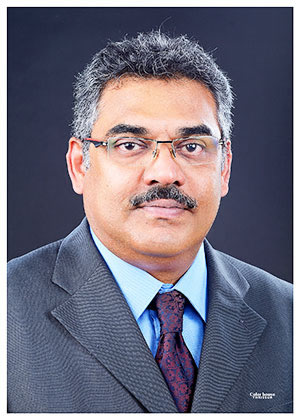
Dr Pradeep Kumar
Plastic, Reconstructive & Aesthetic Surgeon
SIPRAS, Elite Mission Hospital, Thrissur