Choosing the right plastic surgery hospital is an important decision that can influence your safety, treatment experience, recovery, and overall satisfaction. If you are researching a plastic surgery hospital in Kerala, it is helpful to look beyond advertisements, online ratings, or treatment prices. A good hospital should have qualified specialists, appropriate surgical facilities, trained support staff, modern technology, strong safety protocols, and proper follow-up care.
Plastic surgery includes both reconstructive and aesthetic procedures. These may range from reconstruction after injuries or burns to procedures intended to improve particular physical features. Since every procedure has different requirements, the hospital you select should be capable of providing care that matches your specific needs.
This guide explains the most important factors to consider when selecting a plastic surgery hospital and how you can compare your options carefully.
Understand Your Plastic Surgery Requirement
Before choosing a plastic surgery hospital, first understand the type of treatment you may need. Plastic surgery is a broad medical specialty that includes several procedures with different objectives.
Common Categories of Plastic Surgery
Plastic surgery can generally be divided into:
- Reconstructive plastic surgery
- Cosmetic or aesthetic surgery
- Burn reconstruction
- Scar revision
- Facial reconstruction
- Breast reconstruction
- Hand and microsurgery
- Skin and soft-tissue reconstruction
Knowing your treatment category helps you identify a hospital with suitable facilities and relevant surgical expertise.
For example, a person requiring reconstruction after an injury may need a hospital with advanced reconstructive facilities, while someone considering an aesthetic procedure may focus more on surgical planning, anesthesia services, recovery facilities, and postoperative support.
A suitable plastic surgery hospital should be able to evaluate your condition rather than simply recommend a procedure.
Check the Qualifications and Experience of the Surgical Team
One of the most important considerations when selecting a plastic surgery hospital is the expertise of its medical team.
Plastic surgery requires detailed knowledge of anatomy, tissue handling, wound healing, surgical techniques, and postoperative management. Depending on the procedure, additional expertise in microsurgery, reconstructive surgery, burns, or aesthetic surgery may be necessary.
When comparing a plastic surgery hospital, consider:
- The qualifications of the plastic surgeon
- Relevant specialist training
- Experience with the procedure you are considering
- Hospital-based surgical experience
- Availability of anesthesia specialists
- Access to other medical specialists when required
- Postoperative monitoring facilities
You should also ask how frequently the hospital performs the procedure you are considering. Experience with a particular type of surgery can be an important factor in treatment planning.
A hospital should provide clear information about who will be responsible for your assessment, surgery, anesthesia, and postoperative care.
Evaluate the Hospital’s Surgical Facilities
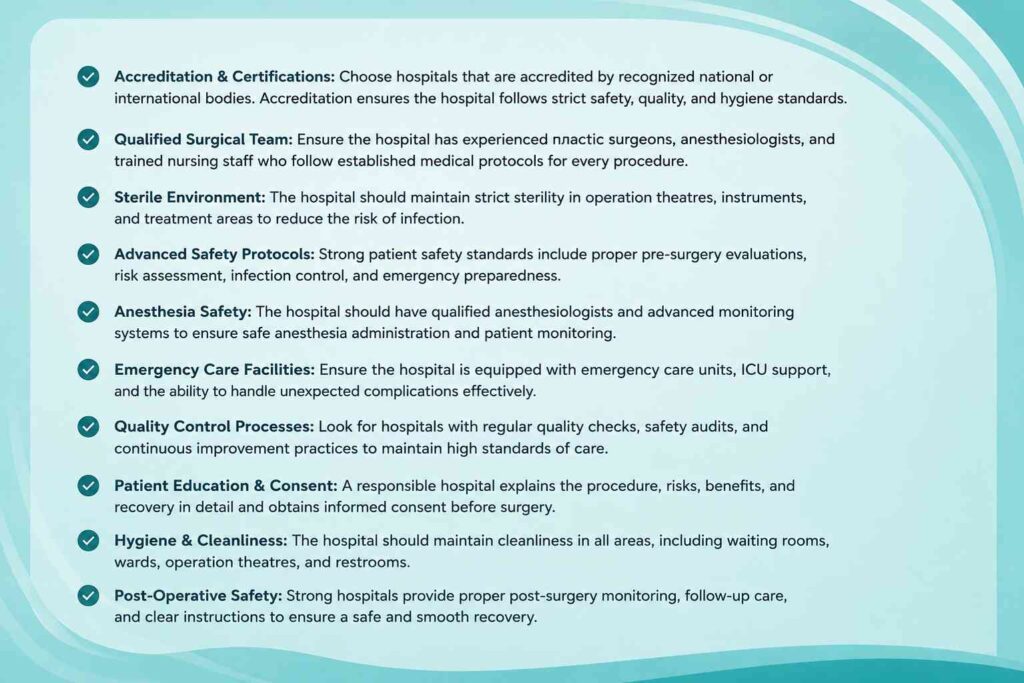
A modern plastic surgery hospital should have facilities appropriate for the procedures it performs. The infrastructure becomes especially important when surgery involves general anesthesia, complex reconstruction, prolonged observation, or treatment of patients with other medical conditions.
Important Facilities to Look For
When evaluating a plastic surgery hospital, check whether it provides:
- Well-equipped operating theatres
- Appropriate anesthesia facilities
- Recovery and observation areas
- Sterilization systems
- Emergency support
- Diagnostic facilities
- Laboratory services
- Blood bank access when required
- Intensive care support when medically necessary
- Postoperative nursing care
Not every procedure requires the same level of infrastructure. However, hospitals performing complex procedures should have suitable systems to manage unexpected medical situations.
The availability of supporting specialties can also be useful. Plastic surgery patients may sometimes require assistance from anesthesiology, general surgery, orthopedics, oncology, dermatology, or other departments depending on their condition.
Look for Strong Patient Safety Standards
Patient safety should be one of the highest priorities when selecting a plastic surgery hospital. Surgical procedures involve potential risks, and a well-organized hospital should have systems designed to reduce preventable complications.
Ask about the hospital’s infection-control practices, sterilization procedures, patient identification systems, surgical safety protocols, and postoperative monitoring.
Questions Worth Asking
Before making your decision, you can ask:
- How is infection prevention managed?
- What type of anesthesia will be used?
- How long will monitoring continue after surgery?
- What happens if a complication develops?
- Is emergency support available?
- Where will postoperative follow-up take place?
- Who should be contacted if concerns occur after discharge?
A trustworthy plastic surgery hospital should be comfortable discussing these questions. You should not feel pressured to proceed before understanding the expected benefits, possible risks, recovery requirements, and alternatives.
Consider the Hospital’s Experience With Your Procedure
Hospital experience matters because different plastic surgery procedures require different equipment, techniques, and postoperative care.
For example, reconstructive procedures may involve tissue transfer, skin grafting, flap surgery, or microsurgical techniques. Aesthetic procedures may require specialized planning based on individual anatomy and cosmetic goals.
When researching a plastic surgery hospital, focus on whether the facility regularly handles the type of procedure you are considering.
Compare Relevant Experience
Consider:
- Experience with similar procedures
- Availability of appropriate surgical equipment
- Reconstructive capabilities
- Anesthesia support
- Postoperative observation
- Wound-care services
- Follow-up arrangements
The goal is not simply to find the hospital offering the largest number of procedures. Instead, look for a facility whose capabilities match your specific treatment requirements.
Review the Consultation and Treatment Planning Process
A proper consultation is an important part of plastic surgery. It gives you an opportunity to explain your concerns, understand available options, and discuss realistic expectations.
A good plastic surgery hospital should provide enough time for an appropriate assessment.
During consultation, the medical team may review:
- Your medical history
- Previous surgeries
- Current medications
- Allergies
- Existing medical conditions
- Your treatment expectations
- Relevant physical findings
- Possible surgical approaches
- Recovery requirements
The surgeon may also explain whether surgery is appropriate or whether another treatment option could be considered.
Avoid choosing a hospital solely because it promises a particular appearance or result. Plastic surgery outcomes can vary between individuals, and realistic expectations are essential.
Assess the Technology and Equipment Available
Technology can support accurate diagnosis, surgical planning, anesthesia, monitoring, and postoperative care. However, technology should be considered alongside medical expertise rather than as a replacement for it.
Depending on the procedure, a plastic surgery hospital may use specialized equipment for:
- Surgical procedures
- Microsurgery
- Tissue reconstruction
- Wound management
- Patient monitoring
- Imaging
- Anesthesia
- Sterilization
Ask whether the technology available is relevant to the treatment you are considering.
A hospital does not necessarily need to have every possible technology. What matters is whether it has the appropriate equipment and trained personnel for your procedure.
Understand the Benefits of Choosing the Right Hospital
Selecting an appropriate plastic surgery hospital can provide several advantages throughout the treatment journey.
Better Treatment Planning
A suitable hospital can provide a structured assessment and develop a treatment plan based on your individual needs.
Improved Safety
Well-established surgical protocols, infection-control systems, trained staff, and appropriate monitoring can support safer care.
Access to Supporting Services
Hospitals with multiple departments may be better equipped to manage patients who need additional medical evaluation or specialist support.
Better Postoperative Care
Recovery is an important part of plastic surgery. Access to wound care, nursing support, follow-up consultations, and emergency services can make postoperative management more organized.
Continuity of Care
Receiving consultation, surgery, monitoring, and follow-up through an established hospital can make communication between different members of the medical team easier.
Compare Costs Carefully
Cost is naturally an important consideration, but it should not be the only factor used to choose a plastic surgery hospital.
The total cost of treatment can depend on:
- Type of procedure
- Surgical complexity
- Anesthesia
- Hospital room category
- Diagnostic tests
- Surgical materials
- Medications
- Duration of hospitalization
- Follow-up care
- Additional procedures if medically necessary
When comparing prices, ask what is included in the quoted amount.
Questions About Cost
You can ask whether the estimate includes:
- Surgeon fees
- Anesthesia charges
- Operating theatre charges
- Room charges
- Medication costs
- Diagnostic investigations
- Follow-up consultations
A very low initial quotation may not represent the final treatment cost if important services are excluded.
The best approach is to request a clear cost estimate and understand what circumstances could lead to additional expenses.
Check Accreditation and Hospital Standards
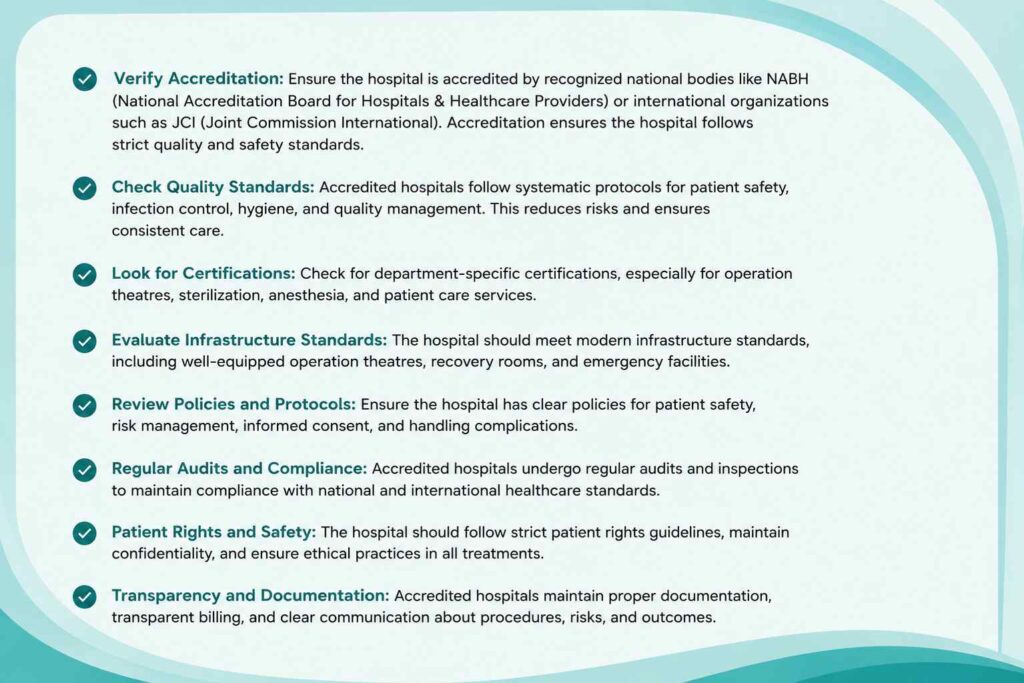
Accreditation and quality certifications can provide useful information about a hospital’s systems and processes. Depending on the facility, different forms of accreditation or certification may apply.
When researching a plastic surgery hospital, check whether the hospital follows recognized standards for:
- Patient safety
- Infection control
- Sterilization
- Clinical documentation
- Emergency response
- Quality management
- Staff training
Accreditation should not be the only factor in your decision, but it can be one useful part of your overall evaluation.
Consider Reviews Without Relying on Them Completely
Online reviews can help you understand other patients’ experiences, but they should be interpreted carefully.
Look for recurring patterns rather than focusing on a single extremely positive or negative review.
You may consider feedback about:
- Staff communication
- Hospital cleanliness
- Appointment experience
- Waiting times
- Nursing support
- Follow-up care
- Overall patient experience
However, reviews cannot determine whether a particular hospital is medically suitable for your individual condition.
Your decision should combine online research with professional consultation and direct questions about the treatment.
Ask About Recovery and Follow-Up Care
Plastic surgery does not end when the operation is completed. Follow-up care can be important for monitoring healing and identifying potential complications.
Before surgery, ask about the expected recovery period and restrictions.
Depending on the procedure, recovery may involve:
- Wound care
- Dressing changes
- Medication
- Activity restrictions
- Follow-up appointments
- Scar management
- Gradual return to normal activities
Ask how many follow-up visits are normally expected and who you should contact if you experience unexpected symptoms.
A hospital that provides organized postoperative care can make the recovery process easier to manage.
Watch for Warning Signs When Choosing a Hospital
While researching a plastic surgery hospital, be cautious about unrealistic promises or pressure-based decision-making.
Potential warning signs include:
- Guaranteed surgical results
- Pressure to book surgery immediately
- Lack of clear information about risks
- Unclear pricing
- Limited explanation of alternatives
- No discussion of medical history
- Poor communication about follow-up care
- Claims that every patient is suitable for surgery
A professional healthcare environment should encourage informed decision-making.
You should have enough time to ask questions, understand the procedure, and consider whether surgery is appropriate for you.
Prepare Questions Before Your Consultation
Writing down questions before visiting a plastic surgery hospital can help you make better use of your consultation.
Useful questions include:
- What procedure is being recommended?
- Why is this procedure appropriate for me?
- Are there alternatives?
- What are the potential risks?
- What type of anesthesia will be required?
- How long will recovery take?
- Will hospitalization be necessary?
- What postoperative care will I need?
- What symptoms should require immediate medical attention?
- What is included in the estimated cost?
Taking notes during the consultation can also help you compare different hospitals objectively.
Make Your Final Decision Carefully
After gathering information, compare your options based on the complete treatment experience rather than one factor.
| Factor | What to Check |
|---|---|
| Surgical expertise | Relevant qualifications and experience |
| Facilities | Operating theatre and recovery infrastructure |
| Safety | Infection control and emergency support |
| Technology | Equipment appropriate for the procedure |
| Consultation | Detailed assessment and treatment planning |
| Cost | Transparent estimate and inclusions |
| Recovery | Follow-up and postoperative support |
| Communication | Clear answers and realistic expectations |
| Accreditation | Applicable quality standards |
| Convenience | Appointments and continued care |
The right choice should be based on medical suitability, safety, professional expertise, hospital infrastructure, and quality of patient care.
Conclusion
Choosing a plastic surgery hospital requires more than comparing prices or looking at online ratings. The most important considerations include the qualifications of the surgical team, hospital infrastructure, patient safety systems, procedure-specific experience, technology, consultation quality, transparent costs, and postoperative care.
Take time to research your options, prepare questions, and discuss your individual needs during consultation. A reliable plastic surgery hospital should provide clear information and support informed decisions without making unrealistic promises.
If you are considering treatment in Kerala, compare hospitals carefully and select one that offers appropriate expertise, facilities, safety standards, and follow-up support for your specific procedure.
Frequently Asked Questions
Sushrutha Institute of Plastic, Reconstructive & Aesthetic Surgery
Dr Pradeep Kumar
Plastic, Reconstructive & Aesthetic Surgeon
SIPRAS, Elite Mission Hospital, Thrissur