Understanding liposuction vs weight loss is important for anyone trying to improve body shape, reduce excess fat, or achieve a healthier appearance. While both approaches can change the way the body looks, they work in very different ways.
Weight loss mainly focuses on reducing overall body weight through nutrition, physical activity, lifestyle changes, and, when appropriate, medical support. Liposuction, on the other hand, is a cosmetic surgical procedure designed to remove localized fat deposits from specific areas of the body.
The main point in liposuction vs weight loss is that neither option should automatically be viewed as a replacement for the other. Weight loss addresses overall body composition and health, while liposuction primarily focuses on body contouring.
Liposuction vs Weight Loss: The Main Difference
The simplest way to understand liposuction vs weight loss is to look at the goal of each approach.
Weight loss aims to decrease total body weight. This usually happens when the body uses more energy than it receives from food over time. As weight decreases, fat may be reduced from several parts of the body.
Liposuction targets specific areas where stubborn fat remains despite healthy habits. During the procedure, unwanted fat cells are removed from selected areas to improve body contours.
How Weight Loss Works
Weight loss generally involves:
- Creating a sustainable calorie deficit
- Eating a balanced diet
- Increasing physical activity
- Improving sleep and daily habits
- Managing factors that affect metabolism and appetite
- Maintaining healthy lifestyle practices over time
The result is usually a reduction in overall body mass rather than a targeted change in one particular area.
How Liposuction Works
Liposuction uses surgical techniques to remove fat from selected areas. Depending on the treatment plan, areas may include the abdomen, thighs, hips, arms, back, or other localized regions.
The procedure is intended to reshape specific areas rather than treat general obesity or replace a healthy lifestyle.
This distinction is central to liposuction vs weight loss. One focuses on overall weight reduction, while the other focuses on localized body contouring.
What Causes Excess Body Fat
Before comparing liposuction vs weight loss, it helps to understand why excess body fat develops.
Body fat can increase when energy intake regularly exceeds energy expenditure. However, body composition is influenced by more than food and exercise alone.
Common Factors
Several factors can contribute to increased body fat, including:
- High-calorie eating patterns
- Limited physical activity
- Sedentary work or daily routines
- Poor sleep
- Stress
- Age-related changes
- Hormonal influences
- Genetics
- Certain medications
- Medical conditions that affect metabolism
Because these factors vary between individuals, weight management can be complex.
Types of Body Fat
Understanding different types of fat also helps explain liposuction vs weight loss.
Subcutaneous Fat
Subcutaneous fat is stored directly beneath the skin. It can contribute to areas such as the abdomen, thighs, hips, arms, and buttocks.
This is the type of fat that may sometimes be targeted through body-contouring procedures.
Visceral Fat
Visceral fat is located deeper inside the abdomen around internal organs. Higher levels of visceral fat are associated with several health risks.
Liposuction does not provide a substitute for reducing visceral fat. Lifestyle-based weight management is important for improving overall body composition and health.
Stubborn Localized Fat
Some people maintain a relatively stable weight but have localized fat deposits that are resistant to changes in diet and exercise. These areas are often the main reason people investigate liposuction vs weight loss.
Can Weight Loss Remove Stubborn Fat
Weight loss can reduce fat throughout the body, but it does not always produce uniform results.
Some areas may become noticeably slimmer while other areas retain more fat. Genetics, age, body shape, hormones, and fat distribution can influence where the body stores and loses fat.
For this reason, someone may reach a healthy or stable weight and still feel dissatisfied with the contour of a particular area.
This is where the distinction between liposuction vs weight loss becomes especially relevant.
Can Liposuction Cause Weight Loss
Liposuction removes fat cells, but it is not primarily a weight-loss treatment.
The amount of fat removed is limited by safety considerations and the treatment area. Any reduction on the weighing scale is generally less important than the change in body contour.
People considering liposuction vs weight loss should therefore think about their primary goal.
If the goal is better metabolic health and a lower overall body weight, lifestyle-based weight management is generally the foundation.
If the goal is improving the shape of a specific area after achieving a relatively stable weight, body contouring may be considered.
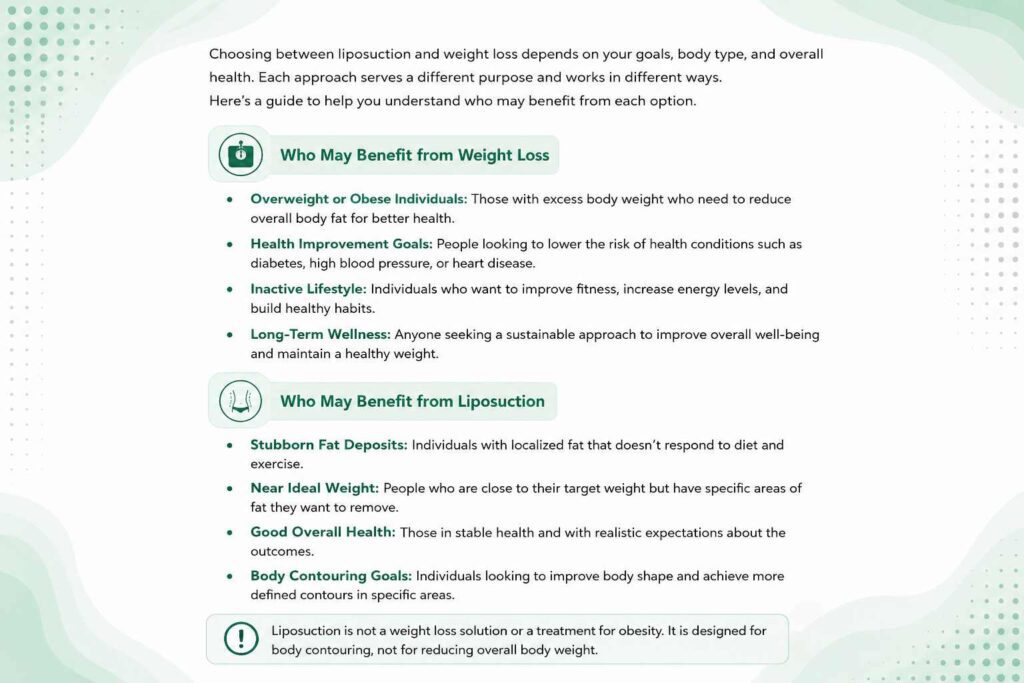
Liposuction vs Weight Loss: Who May Benefit
The right approach depends on individual circumstances, expectations, body composition, and health status.
People Who May Benefit From Weight Loss
Weight loss may be more appropriate for people who:
- Have excess body weight overall
- Want to improve general health
- Need to reduce body fat throughout several areas
- Have not yet established sustainable lifestyle habits
- Want to improve fitness and physical function
- Need to manage weight-related health risks
People Who May Consider Liposuction
Liposuction may be considered by individuals who:
- Have localized fat deposits
- Are near a stable and healthy weight
- Maintain realistic expectations
- Want to improve body contours
- Have areas that remain resistant to lifestyle changes
- Understand that liposuction is a cosmetic procedure rather than a general weight-loss solution
The comparison of liposuction vs weight loss should therefore be based on the person’s objective rather than simply choosing the option that appears faster.
Symptoms and Signs of Excess Body Fat
Excess body fat does not always produce specific symptoms. However, changes in body composition may be noticed through:
- Increasing waist circumference
- Difficulty fitting into clothes
- Reduced physical stamina
- Increased body weight
- Changes in body shape
- Fat accumulation around the abdomen or other areas
Some people may have localized fat without having significant overall excess weight. This is another reason why liposuction vs weight loss should be considered on an individual basis.
If excess weight is accompanied by health concerns, professional medical assessment may be appropriate.
Benefits of Weight Loss
Healthy weight reduction can provide benefits that extend beyond appearance.
Potential benefits include:
- Better physical fitness
- Improved mobility
- Healthier blood pressure
- Improved blood sugar management
- Reduced strain on joints
- Better cardiovascular health
- Greater energy
- Improved confidence
- Support for long-term health
The benefits of weight loss are therefore broader than cosmetic changes.
Benefits of Liposuction
The benefits of liposuction are primarily related to body contouring.
Potential benefits can include:
- Reduction of localized fat deposits
- Improved body proportions
- More defined contours
- Better clothing fit
- Targeted reshaping of selected areas
- Greater satisfaction with body appearance
However, the outcome depends on factors such as skin elasticity, body shape, treatment area, surgical technique, and postoperative care.
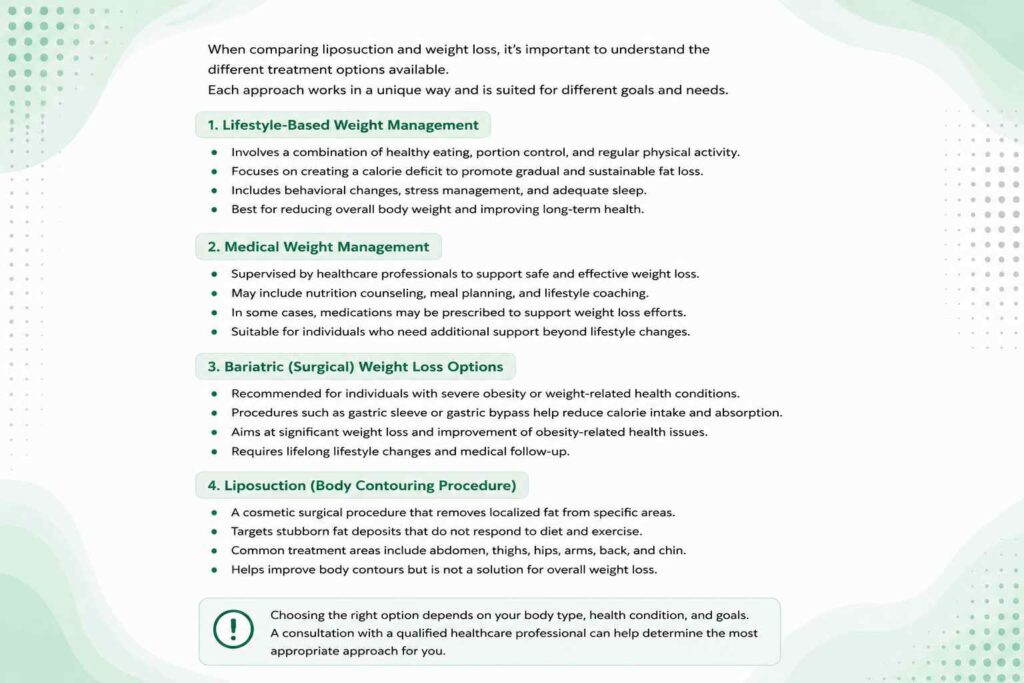
Liposuction vs Weight Loss: Treatment Options
There are several ways to approach weight management and body contouring.
Lifestyle-Based Weight Management
A sustainable weight-loss strategy may include:
- Balanced meals
- Appropriate portion sizes
- Regular aerobic activity
- Strength training
- Adequate sleep
- Stress management
- Consistent daily routines
The focus should be on habits that can be maintained rather than short-term restrictive diets.
Medical Weight Management
Some individuals may require structured medical support. Depending on individual needs, this can include nutritional counseling, behavioral support, or prescribed medications.
Medical weight management should be personalized and monitored appropriately.
Surgical Weight-Loss Procedures
For some individuals with significant obesity, certain bariatric procedures may be considered after medical evaluation. These procedures are fundamentally different from liposuction because their purpose is to support substantial weight reduction and metabolic improvement.
Liposuction
Liposuction is a surgical body-contouring procedure. It can remove localized fat from selected areas but does not address every cause of excess body weight.
This is one of the most important points in liposuction vs weight loss.
What Happens During Liposuction
During liposuction, a qualified surgical team uses specialized equipment to loosen and remove unwanted fat from selected areas.
The exact technique depends on the patient’s anatomy, treatment goals, amount of fat, and treatment area.
The procedure is planned carefully to achieve smoother and more balanced contours while maintaining safety.
Recovery After Liposuction
Recovery varies depending on the extent of treatment and individual healing.
Common aspects of recovery may include:
- Temporary swelling
- Bruising
- Tenderness
- Wearing compression garments when advised
- Gradual return to normal activities
- Follow-up appointments
- Avoiding strenuous activities until cleared
Final body contours may take time to become apparent because swelling can gradually decrease during healing.
Patients should follow their postoperative instructions carefully.
Tips for Better Long-Term Results
Whether someone chooses weight management, body contouring, or both, long-term habits remain important.
Maintain a Stable Weight
Significant weight fluctuations can affect body shape and skin appearance. Maintaining a relatively stable weight can support more predictable long-term results.
Follow a Balanced Diet
Focus on nutritious foods that provide protein, fiber, vitamins, minerals, and healthy fats.
Stay Physically Active
Regular movement supports cardiovascular health, muscle strength, and healthy body composition.
Set Realistic Expectations
No treatment can guarantee a perfect body shape. Understanding what a procedure or lifestyle change can realistically achieve is an important part of the decision-making process.
Follow Professional Advice
Anyone considering surgery should receive an appropriate evaluation and follow all preparation and recovery instructions.
Liposuction vs Weight Loss: Which Is Better
There is no universal winner in liposuction vs weight loss because the two approaches solve different problems.
Weight loss is generally more appropriate when the primary objective is reducing overall body weight and improving health.
Liposuction may be more appropriate when a person has reached a relatively stable weight but still has specific areas of localized fat that affect body contours.
In some cases, these approaches may complement one another. A person may first focus on achieving a stable weight and later consider body contouring for remaining localized fat.
The decision should be based on individual goals, overall health, body composition, expectations, and professional assessment.
Common Mistakes to Avoid
When researching liposuction vs weight loss, it is easy to develop unrealistic expectations.
Avoid assuming that:
- Liposuction is a substitute for exercise
- Liposuction treats obesity
- Weight loss always removes fat evenly
- A procedure guarantees permanent body shape
- Rapid weight loss is always better
- Cosmetic treatment eliminates the need for healthy habits
A clear understanding of the purpose and limitations of each approach leads to better decisions.
Conclusion
Understanding liposuction vs weight loss can help you choose an approach that matches your actual goals. Weight loss focuses on reducing overall body weight and supporting better health, while liposuction focuses on removing localized fat and improving body contours.
Neither approach should be viewed as a quick replacement for healthy habits. A balanced diet, regular physical activity, stable weight, realistic expectations, and appropriate professional guidance remain important. For reliable information on healthy weight management, visit the CDC’s healthy weight guidance for evidence-based tips on nutrition, physical activity, and maintaining a healthy weight.
Frequently Asked Questions
Sushrutha Institute of Plastic, Reconstructive & Aesthetic Surgery
Dr Pradeep Kumar
Plastic, Reconstructive & Aesthetic Surgeon
SIPRAS, Elite Mission Hospital, Thrissur