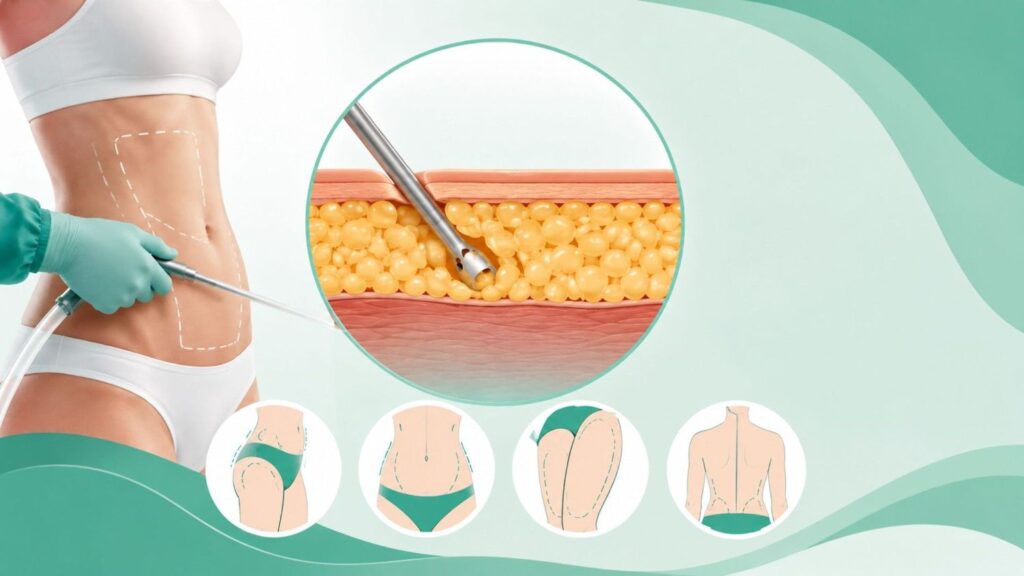
Liposuction is a surgical body-contouring procedure designed to remove localized deposits of fat from specific areas of the body. If you are considering treatment, one of the most important questions to understand is how is liposuction performed? The procedure involves carefully planned fat removal through small incisions using a thin tube called a cannula.
Understanding how is liposuction performed? can help you know what happens before, during, and after surgery. Liposuction is not simply about removing as much fat as possible. The surgeon evaluates your body shape, skin quality, fat distribution, health, and desired outcome before deciding how the procedure should be performed.
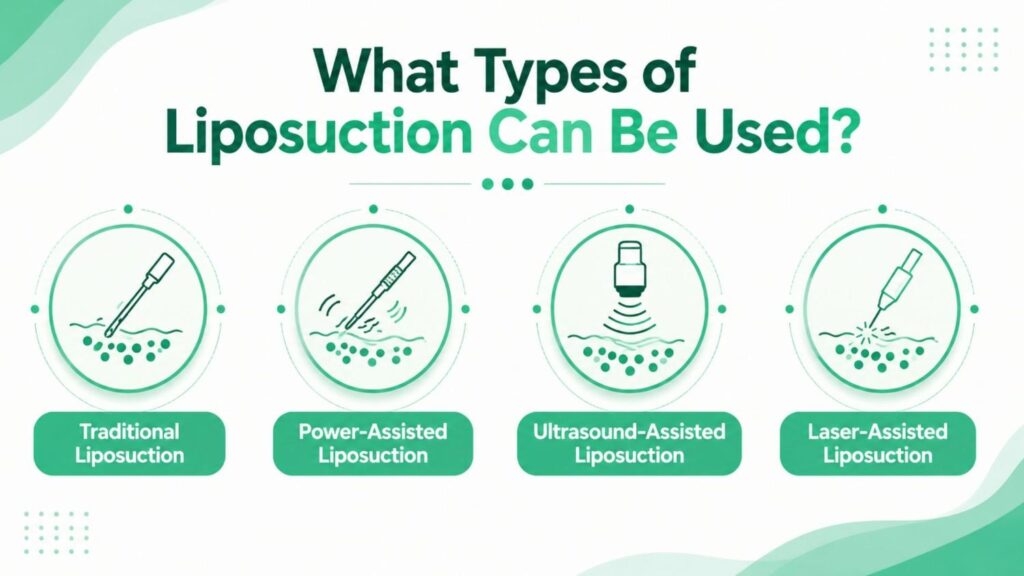
The goal is to create a smoother and more proportionate body contour while maintaining a natural appearance. Different techniques, including traditional, power-assisted, ultrasound-assisted, and laser-assisted liposuction, may be considered depending on the treatment area and individual requirements.
What Is Liposuction?
Before understanding how is liposuction performed?, it is important to understand what the procedure is designed to accomplish. What Is Liposuction provides a broader overview of the procedure, its purpose, suitable candidates, treatment areas, and expected outcomes.
Liposuction, also called lipoplasty, is a surgical procedure that removes excess fat from selected areas beneath the skin. It is primarily used for body contouring rather than general weight loss. Common treatment areas include the abdomen, waist, hips, thighs, back, buttocks, upper arms, chest, chin, and neck.
Liposuction is generally considered when localized fat deposits remain despite healthy lifestyle habits. These deposits can be influenced by genetics, age, hormonal changes, body composition, weight fluctuations, and natural patterns of fat distribution.
The procedure does not automatically tighten significantly loose skin, remove cellulite, or treat obesity. People with relatively firm and elastic skin may achieve better contouring results because the skin can adapt more effectively to the underlying change in volume.
HOW IS LIPOSUCTION PERFORMED?
So, HOW IS LIPOSUCTION PERFORMED? In simple terms, the surgeon first identifies and marks the areas to be treated. Anaesthesia is then administered, and a special fluid may be introduced into the fatty tissue. Small incisions are made, allowing a thin cannula to enter the treatment area.
The cannula is moved carefully through the fatty layer to loosen the fat. A suction device or syringe attached to the cannula then removes the loosened fat from the body.
However, the procedure involves considerably more precision than this basic description suggests. The surgeon must control the depth, direction, amount, and distribution of fat removal to avoid excessive or uneven contouring.
The main stages are:
- Surgical consultation and planning
- Marking the treatment area
- Selecting appropriate anaesthesia
- Preparing the tissue
- Making small access incisions
- Introducing the cannula
- Loosening and suctioning fat
- Refining the contour
- Closing or dressing the incisions
- Beginning postoperative care
Step 1: Consultation and Surgical Planning
A detailed consultation is the first part of understanding HOW IS LIPOSUCTION PERFORMED?
The surgeon assesses your:
- Body shape and proportions
- Areas of localized fat
- Skin elasticity
- General health
- Previous surgeries
- Current medications
- Medical history
- Weight stability
- Expectations from treatment
The surgeon may also determine whether liposuction alone is appropriate or whether another body-contouring procedure may be more suitable.
For example, a person with significant loose abdominal skin may not achieve the desired result from fat removal alone. In selected cases, procedures such as abdominoplasty may need to be discussed separately.
The objective of consultation is not simply to decide where fat should be removed. It is to establish whether the procedure is appropriate and what outcome can realistically be expected.
Step 2: Preparing the Treatment Area
Before surgery, the areas selected for treatment are carefully examined and marked.
These markings help the surgeon identify:
- The boundaries of the treatment area
- Areas requiring more precise contouring
- Symmetry between the two sides
- The direction of planned fat removal
- Areas that should be preserved
Good planning is essential because liposuction is a contouring procedure. Removing too much fat from one location or failing to blend the treated area with surrounding tissue can result in visible irregularities.
Step 3: Anaesthesia
Another important part of HOW IS LIPOSUCTION PERFORMED? is the choice of anaesthesia.
Depending on the extent of treatment, treatment area, and individual circumstances, liposuction may involve:
- Local anaesthesia
- Intravenous sedation
- General anaesthesia
The appropriate option is determined by the surgeon and anaesthesia team according to the planned procedure and the patient’s health.
The purpose of anaesthesia is to keep the patient comfortable while allowing the surgeon to perform controlled fat removal safely.
Step 4: Making Small Incisions
Once the area has been prepared and anaesthesia has taken effect, the surgeon makes small incisions in carefully selected locations.
These openings provide access for the cannula.
The incisions are generally positioned as discreetly as practical, often near natural creases or locations that can be less noticeable after healing.
The number and position of incisions depend on:
- The size of the treatment area
- The area being treated
- The amount of fat being removed
- The technique being used
- The desired contour
Step 5: Injecting the Tumescent Solution
When explaining HOW IS LIPOSUCTION PERFORMED?, the tumescent solution is an important part of the process.
A fluid solution may be introduced into the fatty tissue before suctioning. Depending on the technique and surgical plan, this solution can contain saline, a local anaesthetic, and medication that helps reduce bleeding.
The solution helps prepare the tissue for fat removal and can make the procedure more controlled.
The exact composition and quantity of fluid are determined by the surgical team based on the patient’s needs and the extent of treatment.
Step 6: Inserting the Cannula
A cannula is a thin, hollow tube designed specifically for fat removal.
After the small access incision is made, the cannula is introduced into the fatty layer beneath the skin.
The surgeon does not simply leave the cannula in one position. It is moved in controlled directions through the treatment area.
This movement allows the surgeon to gradually loosen and remove fat while working toward the planned contour.
The cannula is connected to a suction device or, in some circumstances, a syringe. The loosened fat is then aspirated from the body.
Step 7: Loosening and Removing Fat
This is the central stage when answering HOW IS LIPOSUCTION PERFORMED?
The surgeon carefully moves the cannula back and forth through the fatty layer. The movement helps separate fat before it is removed through suction.
The amount of fat removed is not determined simply by how much can technically be suctioned. The surgeon must consider the desired contour, skin quality, body proportions, safety, and the treatment area’s anatomy.
Controlled removal is important because excessive or uneven fat removal can contribute to contour irregularities.
The surgeon therefore works progressively, assessing the treated area throughout the procedure.
Step 8: Creating a Smooth Body Contour
Liposuction is fundamentally a contouring procedure.
This means how is liposuction performed? cannot be understood only as “fat is suctioned out.” The surgeon also has to shape the transition between treated and untreated areas.
The objective is to create:
- Smooth transitions
- Better body proportions
- Appropriate symmetry
- Natural-looking contours
- Reduced prominence of localized fat deposits
The surgeon may approach the fatty layer from different directions to achieve a more even result.
Skin elasticity also influences the final appearance. When the skin can adapt well to the reduced underlying volume, the contour may appear smoother as healing progresses.
Step 9: Closing the Incisions
After the planned fat removal and contouring are completed, the cannula is removed.
The small incision sites may be closed with sutures or managed according to the surgical technique.
Dressings or bandages are then applied, and a compression garment may be placed over the treated area.
Compression garments are commonly used after liposuction to help manage swelling and support the healing tissues.
Which Areas Can Liposuction Treat?
Once patients understand HOW IS LIPOSUCTION PERFORMED?, they often want to know where it can be performed.
Depending on individual suitability, liposuction may be considered for:
- Abdomen
- Waist and flanks
- Hips
- Thighs
- Buttocks
- Back
- Upper arms
- Chest
- Chin and neck
- Inner knees
- Other selected areas of localized fat
Not every area is appropriate for every patient. The surgeon must evaluate the amount of fat, skin quality, anatomy, and overall proportions before recommending treatment.
How Long Does Liposuction Take?
The duration depends on the number and size of treatment areas, the amount of fat being removed, the technique, and whether other procedures are performed at the same time.
Liposuction may take several hours in some cases. The NHS notes that the procedure commonly takes around one to three hours, although individual treatment times vary.
Your surgeon should explain the expected duration during the preoperative consultation.
What Happens Immediately After Liposuction?
Knowing HOW IS LIPOSUCTION PERFORMED? is only part of preparing for treatment. The immediate postoperative period is also important.
After surgery, you may experience:
- Swelling
- Bruising
- Soreness
- Temporary numbness
- Fluid drainage from small incision sites
- Tightness in the treated area
Compression garments may be recommended to support the healing process and help control swelling.
Your surgical team will provide specific instructions regarding wound care, medication, bathing, movement, compression garments, and follow-up appointments.
Recovery After Liposuction
Recovery varies according to the extent of surgery and the individual patient.
During the early recovery period, you may need to limit physical activity. Gentle movement may be encouraged when your surgeon considers it appropriate, while strenuous exercise should be avoided until you receive clearance.
A general recovery pattern may include:
First Week
- Swelling and bruising are common
- Activity is usually restricted
- Medication may be required for discomfort
- Incision care is important
Weeks Two to Three
- Many patients begin feeling more comfortable
- Some may return to work depending on their occupation
- Exercise remains limited
Following Weeks
- Bruising gradually improves
- Swelling continues to decrease
- Body contours become easier to assess
- Activity can gradually increase according to medical advice
Recovery is individual, so your surgeon’s instructions should take priority over generic timelines.
When Will Liposuction Results Become Visible?
If you are asking how is liposuction performed?, you should also understand that the final result does not appear immediately after surgery.
Swelling and fluid retention can temporarily obscure the new contour.
As healing progresses, the treated areas gradually become more defined. Some swelling may persist for several weeks or months, and the final contour can take time to settle.
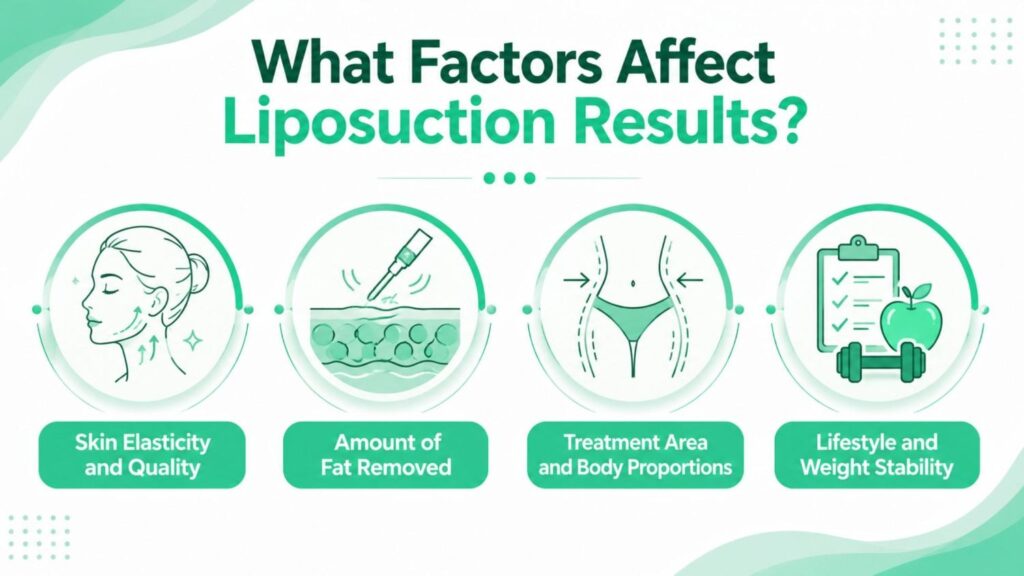
The long-term result can be influenced by:
- Skin elasticity
- Amount of fat removed
- Weight stability
- Healing response
- Lifestyle
- Age
- Surgical technique
What Are the Benefits of Liposuction?
Understanding how is liposuction performed? should also include realistic expectations about its benefits.
Potential benefits include:
- Reduction of localized fat deposits
- Improved body contour
- Better proportions between treated areas
- More defined body shape
- Long-lasting removal of treated fat cells
- Ability to target specific areas rather than the whole body
The fat cells removed during liposuction are not expected to grow back in the same way. However, remaining fat cells can enlarge if significant weight gain occurs, which can alter the overall result.
Who May Be Suitable for Liposuction?
Liposuction may be considered for adults who:
- Have localized fat deposits
- Are relatively close to a healthy weight
- Have reasonably good skin elasticity
- Are healthy enough for surgery
- Maintain realistic expectations
- Understand that liposuction is body contouring rather than a weight-loss treatment
A consultation is essential because suitability cannot be determined from body weight alone.
Liposuction vs Weight Loss
One of the most important points when asking HOW IS LIPOSUCTION PERFORMED? is understanding what the procedure does not do.
Liposuction is not a substitute for:
- Healthy eating
- Regular physical activity
- Medical weight management
- Weight-loss treatment when medically indicated
The procedure is intended to reshape selected areas rather than produce general weight reduction. It is also not considered an effective treatment for cellulite or significant loose skin.
Risks and Possible Complications
Liposuction is surgery, so it carries potential risks.
Possible complications include:
- Bleeding
- Infection
- Fluid accumulation
- Persistent numbness or altered sensation
- Irregular contours
- Asymmetry
- Poor wound healing
- Blood clots
- Anaesthesia-related complications
- Injury to deeper structures
- Thermal injury with certain assisted techniques
- Need for revision surgery
The specific risks vary according to the technique, treatment area, amount of fat removed, medical history, and other individual factors.
A qualified surgical team should discuss the relevant risks with you before treatment.
How to Prepare for Liposuction
Before undergoing treatment, your surgeon may recommend:
- A medical evaluation
- Laboratory investigations when appropriate
- Review of current medicines
- Discussion of allergies
- Review of previous operations
- Avoiding smoking or vaping
- Adjusting certain medicines or supplements when medically advised
- Arranging transportation after surgery
- Preparing assistance at home during the initial recovery period
Never stop prescribed medication without medical advice.
You should also follow the instructions given to you regarding food, fluids, medication, bathing, and activity before surgery.
Questions to Ask Before Liposuction
Before deciding whether liposuction is right for you, consider asking:
- How is liposuction performed for my specific treatment area?
- Which liposuction technique is recommended for me?
- What type of anaesthesia will be used?
- How much fat is expected to be removed?
- What results can I realistically expect?
- Will loose skin affect my result?
- How long should I expect to recover?
- When can I return to work?
- When can I exercise again?
- What complications are relevant to my case?
- Will I need compression garments?
- What follow-up care will I receive?
- Could another procedure be more appropriate?
A proper consultation should give you enough information to make an informed decision without creating unrealistic expectations.
Conclusion
Understanding how is liposuction performed? involves looking beyond the basic idea of fat suction. It is a carefully planned surgical procedure involving consultation, treatment-area marking, anaesthesia, fluid infiltration, small incisions, cannula placement, controlled fat removal, contour refinement, and postoperative care.
The procedure can help reduce localized fat deposits and improve body proportions when appropriately selected. However, it is not a replacement for weight management, and the outcome depends on factors such as skin elasticity, body composition, surgical technique, healing, and long-term weight stability.
If you are considering liposuction, understanding how is liposuction performed? can help you have a more informed discussion with a qualified plastic surgeon about your goals, suitability, expected results, recovery, and potential risks. A personalized assessment is the best way to determine whether liposuction is appropriate for your individual needs. For additional information about the liposuction procedure, techniques, and recovery, refer to the American Society of Plastic Surgeons (ASPS).
Frequently Asked Questions
Sushrutha Institute of Plastic, Reconstructive & Aesthetic Surgery

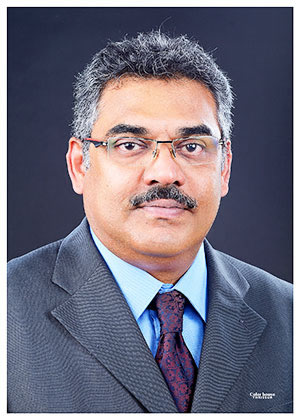
Dr Pradeep Kumar
Plastic, Reconstructive & Aesthetic Surgeon
SIPRAS, Elite Mission Hospital, Thrissur