Can rhinoplasty improve breathing problems? This is a common question among people experiencing nasal obstruction or difficulty breathing due to structural abnormalities. Functional rhinoplasty can improve airflow while preserving the natural appearance of the nose.
Whether breathing difficulties are caused by a deviated nasal structure, trauma, congenital abnormalities, or other internal nasal concerns, a thorough evaluation helps determine whether functional rhinoplasty is the most appropriate treatment option.
What Causes Breathing Problems?
Many patients ask, can rhinoplasty improve breathing problems caused by structural abnormalities inside the nose. A detailed examination helps determine whether functional rhinoplasty is an appropriate solution for improving nasal airflow.
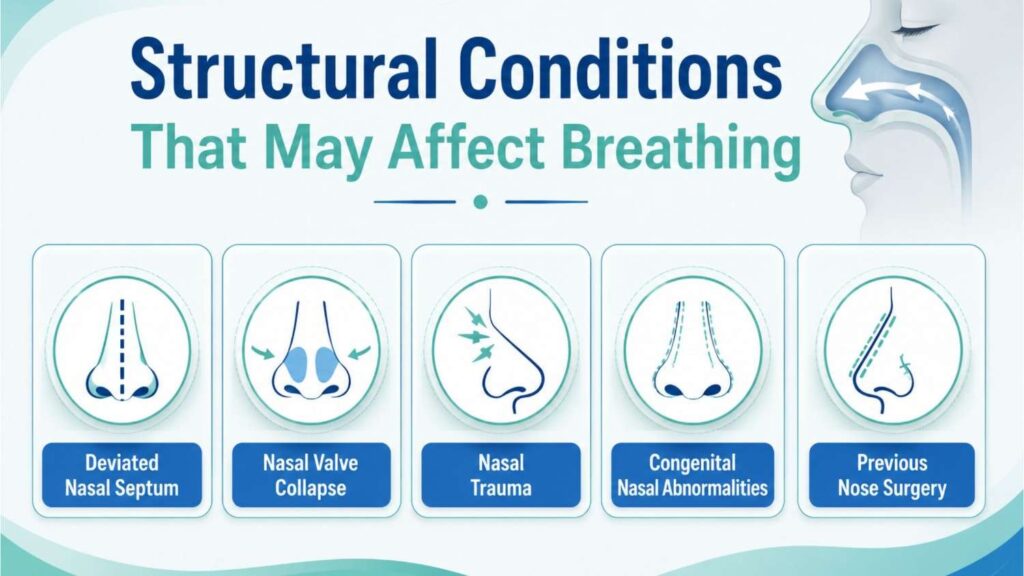
Common causes include:
- Deviated nasal septum
- Collapsed nasal valves
- Nasal trauma
- Congenital nasal deformities
- Previous nasal injuries
- Structural narrowing of the nasal passages
Identifying the underlying cause is the first step toward selecting the most suitable treatment.
Can Rhinoplasty Improve Breathing Problems?
For many patients, the answer is yes. Can rhinoplasty improve breathing problems? Functional rhinoplasty is specifically designed to improve nasal airflow by correcting structural abnormalities while preserving the natural appearance of the nose whenever possible.
Depending on the patient’s condition, surgery may involve:
- Straightening structural deviations
- Improving nasal support
- Reshaping cartilage
- Correcting collapsed nasal passages
- Restoring airflow after trauma
- Improving overall nasal function
Each treatment plan is tailored to the patient’s anatomy and functional needs. For a complete understanding of the procedure and the conditions it can address, explore our guide on Rhinoplasty Surgery.
How Functional Rhinoplasty Works
Functional rhinoplasty focuses on improving both nasal structure and function.
During the procedure, the surgeon may:
- Correct structural deviations
- Strengthen weakened nasal support
- Reshape cartilage when necessary
- Improve airway stability
- Restore normal airflow
- Preserve facial balance and natural appearance
The exact surgical approach depends on each patient’s anatomy and treatment goals. Understanding can rhinoplasty improve breathing problems begins with identifying the structural cause of nasal obstruction. Functional rhinoplasty is designed to improve airflow while preserving the natural shape and balance of the nose.
Cosmetic vs Functional Rhinoplasty
Although both procedures involve the nose, their primary goals differ.
Cosmetic Rhinoplasty
Performed to improve the appearance of the nose by enhancing facial harmony, shape, size, or symmetry.
Functional Rhinoplasty
Performed primarily to improve breathing by correcting structural abnormalities affecting airflow. In some cases, cosmetic and functional improvements can be achieved during the same procedure.
Benefits of Functional Rhinoplasty
Patients undergoing functional rhinoplasty may experience several benefits.
These may include:
- Improved nasal breathing
- Better airflow during daily activities
- Enhanced sleep quality
- Improved exercise tolerance
- Correction of structural abnormalities
- Long-lasting functional improvement
- Natural-looking nasal appearance
- Improved quality of life
Results vary depending on the underlying condition and individual healing. If you are wondering can rhinoplasty improve breathing problems, many patients experience noticeable improvement in breathing after structural nasal issues have been corrected through functional rhinoplasty.
Who May Benefit from Functional Rhinoplasty?
Functional rhinoplasty may be appropriate for individuals who:
- Experience persistent nasal obstruction
- Have difficulty breathing through the nose
- Have sustained nasal trauma
- Have congenital nasal abnormalities
- Experience breathing problems caused by structural issues
- Want to improve both nasal function and appearance
A detailed consultation helps determine whether surgery is the most appropriate treatment option. If you have been asking can rhinoplasty improve breathing problems, consulting an experienced plastic surgeon can help determine whether your symptoms are caused by correctable structural nasal abnormalities.
Recovery After Functional Rhinoplasty
Recovery following functional rhinoplasty is similar to recovery after cosmetic rhinoplasty.
Patients commonly experience:
- Mild swelling
- Temporary nasal congestion
- Minor bruising
- Gradual improvement in breathing
- Progressive reduction in swelling over several weeks
Following post-operative instructions carefully supports proper healing and optimal long-term results. Although healing takes time, patients who ask can rhinoplasty improve breathing problems often notice gradual improvements in nasal airflow as swelling decreases during recovery.
Why an Expert Evaluation Is Important
Not every breathing problem originates from the same cause. A comprehensive nasal assessment helps identify whether symptoms are caused by structural abnormalities, allergies, sinus conditions, or other medical issues. Before deciding whether can rhinoplasty improve breathing problems applies to your condition, a comprehensive evaluation helps identify the exact cause of nasal obstruction and determine the most suitable treatment plan.
During the evaluation, the surgeon typically assesses:
- Internal nasal anatomy
- Airway obstruction
- Nasal support structures
- Previous injuries or surgery
- Functional and aesthetic goals
A personalized assessment ensures the most appropriate treatment plan is recommended for each patient.
Conclusion
Understanding can rhinoplasty improve breathing problems helps patients make informed decisions about treatment. Functional rhinoplasty can improve nasal airflow by correcting structural abnormalities while maintaining natural facial balance. A comprehensive consultation, careful surgical planning, and appropriate post-operative care all contribute to achieving safe, effective, and long-lasting functional outcomes. For individuals experiencing persistent breathing difficulties caused by nasal structural concerns, functional rhinoplasty may provide both improved breathing and enhanced quality of life.
Learning more about functional rhinoplasty can help you understand how surgical correction of structural nasal abnormalities improves airflow while maintaining the natural appearance of the nose.
Frequently Asked Questions
Yes. Functional rhinoplasty can improve breathing when nasal obstruction is caused by structural issues such as a deviated septum, nasal valve collapse, or other anatomical abnormalities affecting airflow.
Breathing difficulties may result from a deviated nasal septum, nasal valve collapse, previous nasal trauma, congenital nasal abnormalities, or structural changes following earlier nose surgery.
Yes. Functional rhinoplasty is performed to improve nasal breathing by correcting structural problems, while cosmetic rhinoplasty focuses on enhancing the appearance of the nose. In some cases, both goals can be achieved in a single procedure.
If a deviated septum is contributing to breathing problems, surgical correction may improve airflow and nasal function. Your surgeon will determine the most appropriate treatment after a thorough evaluation.
Functional rhinoplasty primarily aims to improve breathing. However, subtle cosmetic changes may occur, and if desired, functional and aesthetic corrections can often be performed together.
Most patients return to routine daily activities within one to two weeks. Swelling gradually decreases over several months, and breathing continues to improve as healing progresses.
A comprehensive consultation and nasal examination help determine whether your breathing difficulties are caused by structural abnormalities, allergies, sinus conditions, or other medical concerns.
When breathing issues are caused by structural nasal abnormalities, functional rhinoplasty can provide long-lasting improvement in nasal airflow. Individual outcomes vary depending on the underlying condition and healing process.
Yes. If trauma has altered the internal nasal structure and restricted airflow, functional rhinoplasty may help restore both nasal function and appearance after appropriate evaluation.
Individuals with persistent nasal obstruction, difficulty breathing through the nose, structural nasal abnormalities, or breathing problems caused by previous injury or congenital conditions may be suitable candidates. A detailed consultation is essential to determine the most appropriate treatment plan.
Sushrutha Institute of Plastic, Reconstructive & Aesthetic Surgery
Dr Pradeep Kumar
Plastic, Reconstructive & Aesthetic Surgeon
SIPRAS, Elite Mission Hospital, Thrissur