Can liposuction treat belly fat? Yes, liposuction can remove localized pockets of fat from the abdomen and improve the overall shape of the belly. However, it is important to understand that liposuction is a body contouring procedure, not a general weight-loss treatment. It is mainly designed for people who have stubborn fat deposits that do not respond well to diet and exercise.

For people considering treatment in Kerala, understanding what liposuction can and cannot accomplish is an important part of making an informed decision. Abdominal liposuction can target excess subcutaneous fat beneath the skin, helping create a flatter and more defined abdominal appearance.

The key question is not simply whether liposuction removes belly fat, but whether the type and amount of belly fat you have is suitable for liposuction. Factors such as skin elasticity, overall health, body weight, fat distribution, and lifestyle can all influence the outcome.

This guide explains how abdominal liposuction works, what type of belly fat it can treat, who may benefit, what results to expect, possible risks, recovery, and practical tips for maintaining results.

Can Liposuction Treat Belly Fat

Can liposuction treat belly fat when diet and exercise have not produced the desired contour? In many suitable candidates, the answer is yes.

Liposuction works by removing fat cells from specific areas of the body. During abdominal liposuction, a small tube called a cannula is used to loosen and remove excess fat from selected areas of the abdomen.

The procedure can be particularly useful for localized fat deposits. These are areas where fat remains even after a person has achieved a relatively stable and healthy body weight.

However, liposuction does not remove every type of abdominal fat.

What Type of Belly Fat Can Liposuction Remove

The abdomen contains different types of fat. The most important distinction is between subcutaneous fat and visceral fat.

  • Subcutaneous fat: Fat stored directly beneath the skin. This is the primary type of fat that liposuction can remove.
  • Visceral fat: Fat stored deeper inside the abdomen around internal organs. Liposuction does not directly remove this fat.
  • Loose skin: Liposuction removes fat but does not automatically tighten significantly loose skin.
  • Muscle separation: Liposuction does not repair separated abdominal muscles.

Therefore, when asking can liposuction treat belly fat, it is essential to identify where the fat is located.

How Does Abdominal Liposuction Work

Can liposuction treat belly fat by simply suctioning fat from the abdomen? The process is more controlled than that.

Before treatment, the abdomen is assessed to determine the location and amount of excess fat. The treatment area is then prepared, and anesthesia is used according to the procedure plan.

Small incisions are generally made in carefully selected locations. A cannula is inserted through these openings and moved through the fatty tissue. The fat cells are loosened and removed using controlled suction.

The Basic Process

The procedure generally involves:

  1. Evaluating the abdominal area.
  2. Identifying localized fat deposits.
  3. Marking the treatment areas.
  4. Administering appropriate anesthesia.
  5. Making small access points.
  6. Using a cannula to remove excess fat.
  7. Checking the abdominal contour.
  8. Closing or managing the small incision sites.
  9. Providing postoperative instructions.

The exact technique can vary depending on the individual’s anatomy, treatment goals, and amount of fat being addressed.

Causes of Belly Fat

Understanding why belly fat develops can help explain why liposuction may or may not be appropriate.

Belly fat can result from several factors, including:

Weight Gain

When the body stores more energy than it uses, fat can accumulate in different areas, including the abdomen. Genetics can influence where the body tends to store excess fat.

Aging

Changes in metabolism, hormone levels, activity, and muscle mass can contribute to increased abdominal fat as people age.

Genetics

Some people naturally store a greater proportion of fat around the waist and abdomen. Genetics can also influence the size and distribution of fat cells.

Lifestyle Factors

A diet high in excess calories, limited physical activity, poor sleep, and long-term sedentary habits may contribute to abdominal fat accumulation.

Hormonal Changes

Hormonal changes can affect body-fat distribution. This can be especially noticeable during certain stages of adulthood.

Liposuction can address a localized deposit of subcutaneous fat, but it does not correct the underlying lifestyle or metabolic causes of overall weight gain.

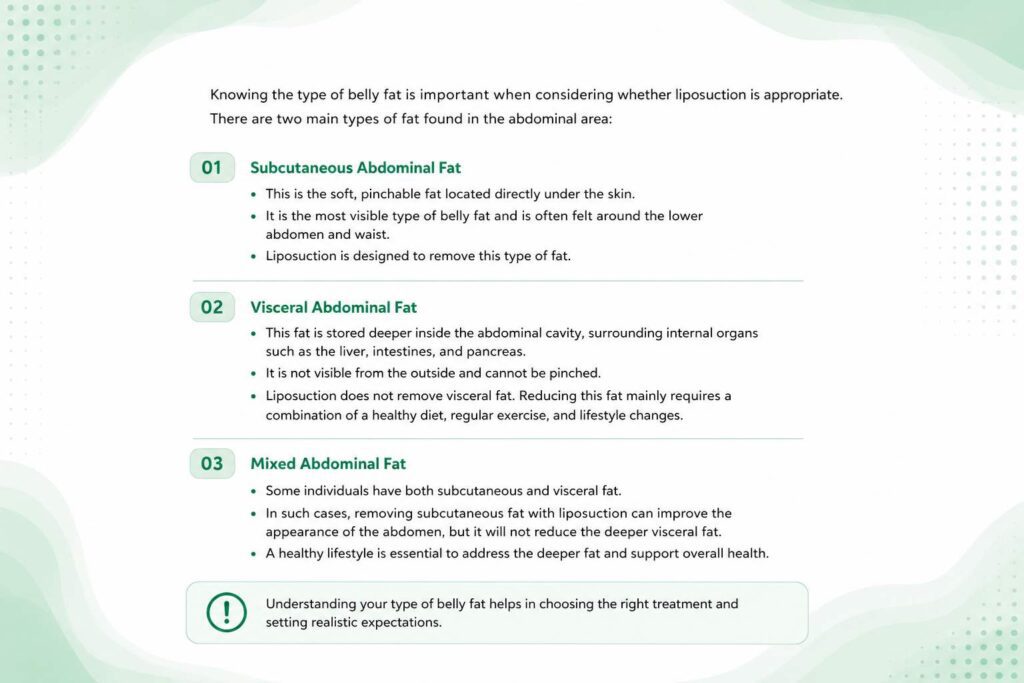
Types of Belly Fat

Types of belly fat including subcutaneous, visceral, and mixed abdominal fat

Knowing the type of belly fat is important when considering whether liposuction is appropriate.

Subcutaneous Abdominal Fat

This is the soft or pinchable fat located directly under the skin. It can often be felt by gently pinching the abdominal tissue.

This is the type of belly fat most directly addressed by liposuction.

Visceral Abdominal Fat

Visceral fat lies deeper within the abdominal cavity. It surrounds internal organs and is associated with broader metabolic and health concerns.

Liposuction is not a treatment for visceral fat.

Mixed Abdominal Fat

Some individuals have both subcutaneous and visceral fat. In these situations, removing subcutaneous fat may improve external contour, but it will not eliminate deeper abdominal fat.

Symptoms and Signs of Excess Belly Fat

Belly fat is not a medical symptom by itself, but certain visible characteristics can help identify localized abdominal fat.

Common signs include:

  • A persistent abdominal bulge
  • Fat deposits around the lower abdomen
  • Fat around the waistline
  • Difficulty reducing a specific abdominal area
  • Uneven body contour
  • Fat that remains despite stable weight
  • A noticeable difference between the abdomen and other body areas

It is important to distinguish a localized fat deposit from abdominal bloating, visceral fat, loose skin, or other causes of abdominal enlargement.

Who May Benefit From Liposuction

Can liposuction treat belly fat effectively for everyone? No. The best candidates are generally people with realistic expectations and localized fat deposits that are suitable for surgical removal.

A person may be considered a suitable candidate when they:

  • Are relatively close to their target weight
  • Have localized subcutaneous abdominal fat
  • Have reasonably good skin elasticity
  • Maintain a generally healthy lifestyle
  • Have realistic expectations
  • Understand that liposuction is not a weight-loss solution
  • Are prepared to follow recovery instructions

A consultation is necessary to determine whether abdominal liposuction is appropriate for an individual.

When Liposuction May Not Be the Best Choice

Although can liposuction treat belly fat is a common question, the procedure is not suitable for every type of abdominal concern.

Liposuction may not provide the desired result when the primary concern is:

Significant Visceral Fat

Deep abdominal fat cannot be suctioned away through conventional liposuction.

Major Excess Skin

If the abdomen has substantial loose or hanging skin, removing fat alone may not create the desired appearance.

Major Overall Obesity

Liposuction is not designed to treat generalized obesity or replace a comprehensive weight-management plan.

Poor Skin Elasticity

When skin cannot contract adequately after fat removal, loose skin may remain.

Unrealistic Expectations

Liposuction can improve body contours, but it cannot guarantee a completely flat abdomen or a particular body shape.

Benefits of Liposuction for Belly Fat

Can liposuction treat belly fat and provide visible contouring benefits? For appropriate candidates, it can.

Targeted Fat Reduction

One of the major benefits is the ability to focus on specific areas of unwanted subcutaneous fat.

Improved Abdominal Contour

Removing localized fat can make the abdomen appear smoother and more proportionate.

Better Body Proportions

Abdominal contouring can improve the relationship between the waist, abdomen, hips, and surrounding areas.

More Predictable Fat Removal

Because the procedure directly targets fat deposits, it can provide a more localized approach than general weight loss.

Long-Lasting Fat-Cell Reduction

The fat cells removed during liposuction are physically removed. However, remaining fat cells can still enlarge if significant weight is gained later.

Liposuction vs Weight Loss

Liposuction and weight loss are not the same thing.

Weight loss generally reduces fat throughout the body, while liposuction focuses on selected areas. A person can lose weight without achieving the exact abdominal contour they want, particularly if stubborn subcutaneous fat remains.

Liposuction may therefore be considered a contouring treatment after or alongside a stable weight-management approach, rather than a substitute for healthy weight control.

Key Differences

LiposuctionWeight Loss
Targets specific fat depositsReduces overall body weight
Focuses on body contouringFocuses on energy balance and health
Removes selected fat cellsReduces fat throughout the body
Does not treat visceral fat directlyCan reduce visceral fat
Not intended as an obesity treatmentCan be part of obesity management

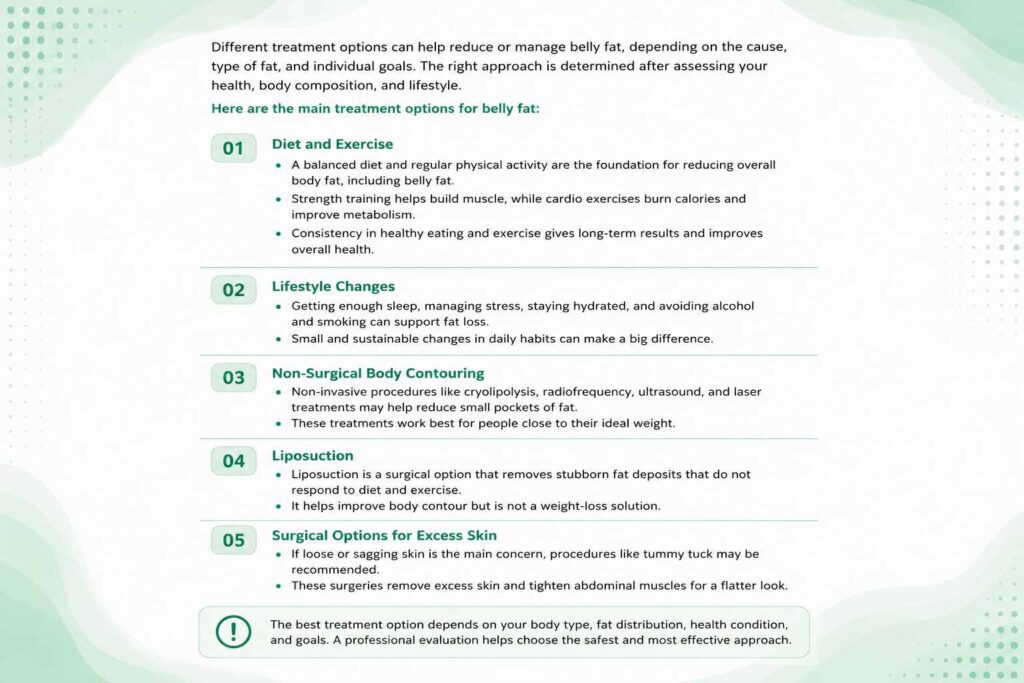
Treatment Options for Belly Fat

Treatment options for belly fat including diet, exercise, body contouring, and liposuction

Can liposuction treat belly fat better than every alternative? Not necessarily. The appropriate treatment depends on the cause and characteristics of the abdominal fullness.

Diet and Exercise

For generalized weight gain, nutrition and physical activity remain foundational. Regular exercise can help reduce overall body fat while improving muscle strength and fitness.

Non-Surgical Body Contouring

Certain non-surgical technologies may be used for selected localized fat deposits. Results and suitability vary by technology and individual anatomy.

Liposuction

Liposuction is a surgical option for removing localized subcutaneous fat and reshaping selected areas.

Abdominal Surgery for Loose Skin

When excess skin is a major concern, a different surgical approach may be considered rather than relying on liposuction alone.

A proper assessment helps determine which approach addresses the actual source of the abdominal concern.

What Results Can You Expect

Can liposuction treat belly fat and produce an immediately flat stomach? Results generally develop progressively rather than appearing instantly.

Swelling and temporary changes in the treated area are common during early recovery. As healing progresses, the abdominal contour can become more apparent.

The final appearance depends on factors such as:

  • Amount of fat removed
  • Skin elasticity
  • Existing body shape
  • Treatment technique
  • Healing response
  • Weight stability
  • Lifestyle habits

Liposuction can improve contour, but individual results vary.

Recovery After Abdominal Liposuction

Recovery is an important part of the treatment process.

Patients may experience temporary swelling, bruising, soreness, tightness, or sensitivity in the treated area. Recovery time varies depending on the extent of treatment and individual healing.

Typical recovery guidance may include:

  • Following all postoperative instructions
  • Wearing compression garments when recommended
  • Avoiding strenuous activities until cleared
  • Maintaining adequate hydration
  • Keeping follow-up appointments
  • Monitoring the treated area
  • Gradually returning to normal activities

It is important not to judge the final result too early because swelling can temporarily hide the improved contour.

Risks and Considerations

Like any surgical procedure, liposuction has potential risks.

Possible complications may include:

  • Swelling
  • Bruising
  • Temporary numbness
  • Infection
  • Fluid accumulation
  • Irregular contour
  • Changes in skin sensation
  • Scarring
  • Asymmetry
  • Blood clots or other serious complications in uncommon cases

A qualified medical professional should evaluate individual risks before treatment.

Understanding these considerations is essential when deciding whether can liposuction treat belly fat is the right solution for you.

Tips for Maintaining Liposuction Results

Liposuction permanently removes fat cells from the treated area, but this does not make a person immune to future weight gain.

To support long-term results:

Maintain a Stable Weight

Significant weight gain can enlarge remaining fat cells and change body proportions.

Eat a Balanced Diet

Focus on vegetables, fruits, whole grains, lean protein, healthy fats, and appropriate portions.

Stay Physically Active

A combination of cardiovascular activity and resistance training can support healthy body composition.

Stay Hydrated

Adequate fluid intake supports general health and recovery.

Follow Medical Guidance

Postoperative instructions should be followed carefully, especially during the initial recovery period.

Avoid Unrealistic Expectations

Liposuction improves contours; it does not guarantee permanent control over overall body weight.

Can Liposuction Treat Belly Fat Permanently?

Can liposuction treat belly fat permanently? The fat cells physically removed during the procedure do not grow back in the same way. However, the remaining fat cells can become larger with weight gain.

This means the contouring effect can be long-lasting when a person maintains a stable weight and healthy lifestyle.

Liposuction should therefore be viewed as a long-term body contouring procedure rather than a permanent solution for future weight gain.

Can Exercise Replace Liposuction

Exercise is extremely valuable for overall health, body composition, and weight management. However, exercise cannot selectively remove fat from one specific location.

A person may become fitter and lose overall body fat while still having a persistent abdominal fat pocket.

This is one reason people with stable weight and localized subcutaneous fat sometimes consider liposuction.

How to Prepare for Liposuction

If abdominal liposuction is being considered, preparation should begin with a professional consultation.

During an evaluation, relevant factors may include:

  • Current health
  • Medical history
  • Weight stability
  • Abdominal fat distribution
  • Skin quality
  • Previous surgeries
  • Medications and supplements
  • Treatment expectations

Patients should provide accurate health information and follow all preoperative instructions.

Conclusion

Can liposuction treat belly fat? It can be an effective option for carefully selected people who have localized subcutaneous abdominal fat and want to improve their body contour. The procedure is not a substitute for weight loss, healthy nutrition, or regular exercise, and it cannot remove visceral fat.

The best results come from realistic expectations, appropriate patient selection, careful treatment planning, and a commitment to maintaining a stable weight after recovery.

If you are considering abdominal contouring in Thrissur, a qualified medical evaluation can help determine whether liposuction is appropriate for your specific type of belly fat and whether another treatment may better address your goals.  For additional information about liposuction and body contouring, visit the American Society of Plastic Surgeons for trusted patient resources.

Frequently Asked Questions

Yes. Liposuction can remove localized deposits of subcutaneous fat from the abdomen in suitable candidates. It is primarily a body-contouring procedure and is not intended for general weight loss.
No. Liposuction does not remove all abdominal fat. It mainly targets subcutaneous fat located beneath the skin and does not directly remove visceral fat stored around the internal organs.
Yes. Liposuction may be considered when localized belly fat remains after weight loss, particularly when a person has reached a relatively stable weight and has suitable skin elasticity.
Liposuction may result in some weight reduction because fat is removed, but it is not designed for major weight loss. Its primary purpose is to improve body shape by reducing specific fat deposits.
The fat cells removed during liposuction do not simply grow back. However, remaining fat cells can enlarge if significant weight gain occurs, which may change the appearance of the abdomen.
No. Visceral fat is located deep inside the abdominal cavity around internal organs and cannot be directly removed through liposuction. Lifestyle-based weight management is important for reducing visceral fat.
No. Suitability depends on factors such as overall health, body weight, fat distribution, skin elasticity, medical history, and treatment expectations. A professional evaluation is necessary before treatment.
Liposuction results can be long-lasting when a stable weight is maintained. However, significant weight gain, ageing, pregnancy, and natural changes in the body can affect the abdominal contour over time.
Yes. After appropriate recovery and medical clearance, regular physical activity can support a healthy body composition and help maintain the contour achieved through liposuction.
Liposuction primarily removes excess fat and does not reliably correct significant loose or hanging skin. When loose skin is the main concern, another treatment approach may be more appropriate.

Sushrutha Institute of Plastic, Reconstructive & Aesthetic Surgery

Dr Jyoshid R Balan

Dr Jyoshid R Balan

Plastic & Reconstructive Surgeon

SIPRAS, Elite Mission Hospital, Thrissur

Dr Pradeep Kumar

Dr Pradeep Kumar

Plastic, Reconstructive & Aesthetic Surgeon

SIPRAS, Elite Mission Hospital, Thrissur

Dr Prince H P

Dr Prince H P

Senior Consultant Plastic Surgeon

SIPRAS, Elite Mission Hospital, Thrissur

Dr Vinu Roy

Dr Vinu Roy

Plastic & Reconstructive Surgeon

SIPRAS, Elite Mission Hospital, Thrissur

Dr Ajai K S

Dr Ajai K S

Plastic & Reconstructive Surgeon

SIPRAS, Elite Mission Hospital, Thrissur