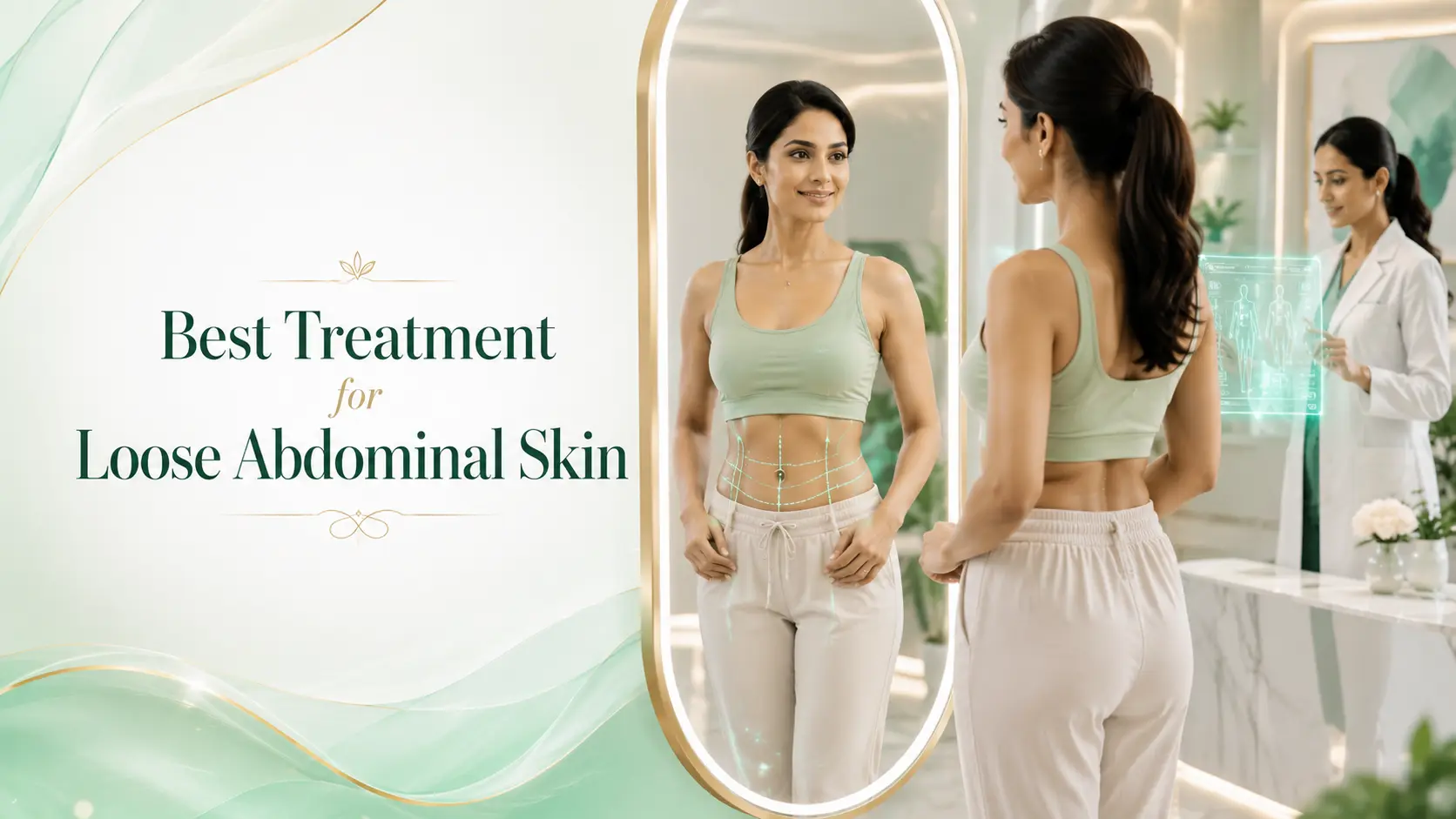
Loose abdominal skin is a common concern experienced by many individuals after pregnancy, major weight loss, aging, or lifestyle changes. Excess skin around the abdomen may affect body contour, clothing fit, physical comfort, and confidence. Many people search for the best treatment for loose abdominal skin to achieve a firmer and smoother abdominal appearance.
Modern body contouring treatments offer several options for improving abdominal skin laxity depending on the severity of the condition, skin quality, muscle tone, and cosmetic goals. Some individuals may benefit from non-surgical skin tightening methods, while others with significant loose skin may consider surgical body contouring procedures such as abdominoplasty.
Understanding the best treatment for loose abdominal skin involves learning about available procedures, recovery expectations, skin tightening methods, and personalized treatment planning. This guide explains the causes of loose abdominal skin, different treatment options, and factors that influence treatment selection.
What Causes Loose Abdominal Skin?
Before choosing the best treatment for loose abdominal skin, it is important to understand why skin laxity develops.
Common causes include:
- Pregnancy
- Major weight loss
- Aging
- Reduced skin elasticity
- Lifestyle changes
- Fluctuating body weight
When the skin stretches significantly, collagen and elastin fibers may weaken. As a result, the skin may not fully return to its previous firmness.
Loose abdominal skin may appear as:
- Sagging lower abdominal skin
- Skin folds
- Wrinkled abdominal texture
- Hanging tissue after weight loss
The severity of loose skin often determines the best treatment approach.
Best Treatment for Loose Abdominal Skin After Weight Loss
Individuals who experience major weight loss often search for the best treatment for loose abdominal skin because stretched skin may remain even after reaching a stable body weight.
Post-weight-loss loose skin may:
- Affect clothing fit
- Cause skin irritation
- Reduce abdominal definition
- Impact confidence during physical activities
For mild skin laxity, non-surgical skin tightening procedures may help improve firmness gradually. However, significant excess skin may require surgical body contouring procedures for noticeable improvement.
Best Treatment for Loose Abdominal Skin After Pregnancy
Pregnancy commonly stretches abdominal skin and muscles. Some women notice that exercise alone may not fully tighten the abdomen after childbirth.
The best treatment for loose abdominal skin after pregnancy depends on:
- Skin elasticity
- Muscle separation
- Amount of excess skin
- Overall body contour goals
Some individuals choose abdominal contouring procedures that tighten muscles and remove excess loose skin for a firmer appearance.
Non-Surgical Options for Loose Abdominal Skin
Some individuals prefer non-invasive procedures when searching for the best treatment for loose abdominal skin.
Radiofrequency Skin Tightening
Radiofrequency treatments use heat energy to stimulate collagen production and improve skin firmness gradually.
Ultrasound-Based Skin Tightening
Ultrasound technologies target deeper skin layers to support collagen remodeling and tissue tightening.
Laser Skin Tightening
Laser treatments may help improve skin texture and mild laxity by encouraging collagen stimulation.
Lifestyle Support
Healthy habits may support skin quality, including:
- Hydration
- Balanced nutrition
- Regular exercise
- Stable body weight
Non-surgical treatments are generally more suitable for mild to moderate skin looseness.
Surgical Treatment for Loose Abdominal Skin
For moderate to severe skin laxity, surgical body contouring procedures are often considered the best treatment for loose abdominal skin.
Abdominoplasty Surgery
Abdominoplasty, also called tummy tuck surgery, is one of the most common procedures used to improve abdominal contour.
The procedure may involve:
- Removal of excess abdominal skin
- Tightening of abdominal muscles
- Improved waistline contour
- Reduction of skin folds
Many patients choose abdominoplasty when non-surgical options cannot adequately address excess skin.
Benefits of Treating Loose Abdominal Skin
The best treatment for loose abdominal skin may provide several physical and emotional benefits.
Potential benefits include:
- Improved abdominal contour
- Better clothing fit
- Enhanced confidence
- Smoother skin appearance
- Reduced skin irritation from folds
- Improved body proportions
Treatment goals usually focus on achieving natural-looking body contour improvement.
How to Choose the Best Treatment for Loose Abdominal Skin
Choosing the best treatment for loose abdominal skin depends on multiple factors.
Amount of Loose Skin
Mild skin laxity may respond to non-invasive treatments, while larger skin folds may require surgery.
Skin Elasticity
Better skin elasticity may improve non-surgical treatment outcomes.
Body Weight Stability
Stable body weight is important before body contouring procedures.
Muscle Separation
Patients with abdominal muscle separation may benefit from muscle repair procedures.
Cosmetic Goals
Treatment planning depends on desired contour improvement and recovery preferences.
Recovery After Loose Skin Treatments
Recovery varies depending on the selected treatment.
Non-Surgical Recovery
Most non-invasive treatments involve minimal downtime and gradual results.
Surgical Recovery
Surgical body contouring procedures require more recovery time and healing support.
Recovery may involve:
- Compression garments
- Activity restrictions
- Swelling management
- Follow-up care
Following medical guidance supports smoother healing and recovery.
Importance of Healthy Lifestyle Habits
Healthy lifestyle habits help maintain treatment results after abdominal contour improvement procedures.
Helpful habits include:
- Maintaining stable body weight
- Regular physical activity
- Balanced nutrition
- Proper hydration
- Avoiding smoking
Lifestyle support is important regardless of the chosen treatment method.
Common Myths About Loose Abdominal Skin Treatments
Myth 1: Exercise Removes Excess Loose Skin
Exercise improves muscle tone but may not remove stretched skin.
Myth 2: Non-Surgical Treatments Work for All Cases
Severe loose skin may require surgical correction for noticeable improvement.
Myth 3: Loose Skin Only Happens After Weight Loss
Pregnancy and aging can also contribute to skin laxity.
Understanding realistic expectations helps patients choose the best treatment for loose abdominal skin more confidently.
Emotional Confidence and Body Image
Loose abdominal skin may affect confidence and comfort in social situations or fitness activities. Many individuals seek the best treatment for loose abdominal skin to feel more comfortable in their appearance.
Improved body contour may positively influence:
- Clothing confidence
- Physical comfort
- Self-image
- Activity participation
Emotional well-being often plays an important role in cosmetic body contour decisions.
Consultation and Personalized Treatment Planning
Professional consultation is important before selecting the best treatment for loose abdominal skin.
A cosmetic surgery consultation may include:
- Skin quality evaluation
- Abdominal muscle assessment
- Discussion of body goals
- Recovery planning
- Treatment recommendations
Personalized planning helps patients understand which procedures may best suit their needs.
Patients can also learn more about abdominal contouring procedures through the American Society of Plastic Surgeons guide on tummy tuck surgery.
Conclusion
Finding the best treatment for loose abdominal skin depends on skin condition, body contour goals, and the amount of excess tissue present. Mild skin laxity may improve with non-surgical skin tightening procedures, while more significant loose skin may require surgical body contouring treatments such as abdominoplasty.
Modern treatment options focus on achieving natural-looking contour improvement while supporting patient safety and realistic expectations. Understanding available procedures, recovery expectations, and personalized treatment planning helps individuals make informed decisions about abdominal contour improvement and body confidence.
Frequently Asked Questions
Sushrutha Institute of Plastic, Reconstructive & Aesthetic Surgery

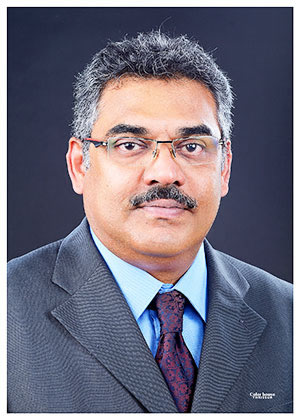
Dr Pradeep Kumar
Plastic, Reconstructive & Aesthetic Surgeon
SIPRAS, Elite Mission Hospital, Thrissur