Best Age for Rhinoplasty Surgery is one of the most frequently searched topics by individuals considering nose reshaping for cosmetic or functional reasons. While there is no single age that is right for everyone, the ideal timing for rhinoplasty depends on several important factors, including facial development, overall health, emotional maturity, and personal treatment goals.
Understanding the best age for rhinoplasty surgery helps patients make informed decisions and set realistic expectations before undergoing the procedure. In general, rhinoplasty is recommended only after the nose has completed its natural growth, ensuring long-lasting and stable results. However, healthy adults of various ages may also be suitable candidates depending on their unique anatomy and medical evaluation.
In this guide, we’ll explore the best age for rhinoplasty surgery, the factors surgeons consider before recommending treatment, and how choosing the right time can contribute to safe surgery, smoother recovery, and natural-looking outcomes.
Why Age Matters in Rhinoplasty
Age is an important consideration because the nose continues developing during adolescence. Performing rhinoplasty before facial growth is complete may affect long-term results.
When determining the best age for rhinoplasty surgery, surgeons evaluate:
- Facial growth
- Nasal bone development
- Cartilage maturity
- Overall health
- Emotional readiness
- Patient expectations
- Functional concerns
These factors help ensure the nose remains stable after surgery.
When Does the Nose Finish Growing?
Although development varies among individuals, facial growth generally completes during the late teenage years.
Typical milestones include:
Females
Nasal growth is often complete around 15–16 years.
Males
Growth commonly finishes around 16–18 years.
However, these are general guidelines. A comprehensive consultation is necessary before deciding whether surgery is appropriate.
Is There a Minimum Age for Rhinoplasty?
Most cosmetic rhinoplasty procedures are recommended only after facial growth has stabilized.
Exceptions may include:
- Nasal trauma
- Congenital abnormalities
- Significant breathing problems
- Functional reconstructive procedures
In these situations, treatment decisions are made on an individual basis.
Best Age for Cosmetic Rhinoplasty
Many surgeons consider the late teens through the twenties an excellent period for cosmetic rhinoplasty.
Advantages include:
- Fully developed facial anatomy
- Healthy skin elasticity
- Predictable healing
- Stable nasal structure
- Long-lasting results
Patients at this stage often recover efficiently while achieving natural-looking improvements.
Can Adults in Their 30s and 40s Have Rhinoplasty?
Absolutely.
The best age for rhinoplasty surgery is not limited to younger adults.
Patients in their 30s and 40s often choose rhinoplasty to:
- Improve facial balance
- Correct lifelong concerns
- Address breathing issues
- Reverse effects of previous injuries
- Improve confidence
Good health is generally more important than chronological age.
Can Adults in Their 30s and 40s Have Rhinoplasty?
Absolutely.
The best age for rhinoplasty surgery is not limited to younger adults.
Patients in their 30s and 40s often choose rhinoplasty to:
- Improve facial balance
- Correct lifelong concerns
- Address breathing issues
- Reverse effects of previous injuries
- Improve confidence
Good health is generally more important than chronological age.
Is Rhinoplasty Suitable After 50?
Many healthy individuals over 50 successfully undergo rhinoplasty.
Surgeons evaluate:
- Overall medical condition
- Skin quality
- Healing ability
- Bone health
- Personal goals
Older patients may still achieve excellent results with appropriate planning.
Factors More Important Than Age
Although many people search for the best age for rhinoplasty surgery, surgeons often prioritize several other factors.
Facial Maturity
The nose should be fully developed before cosmetic surgery.
Good Physical Health
Patients should be medically fit for surgery.
Emotional Readiness
Understanding the recovery process and maintaining realistic expectations are essential.
Stable Expectations
Patients should seek rhinoplasty for personal reasons rather than outside pressure.
Benefits of Having Rhinoplasty at the Right Time
Choosing the right stage of life may offer several advantages.
These include:
- Better facial harmony
- Stable long-term outcomes
- Improved confidence
- Enhanced breathing when appropriate
- Predictable healing
- Greater satisfaction
Proper timing contributes to overall success.
Consultation Determines the Best Age
Rather than focusing solely on age, surgeons perform a comprehensive evaluation.
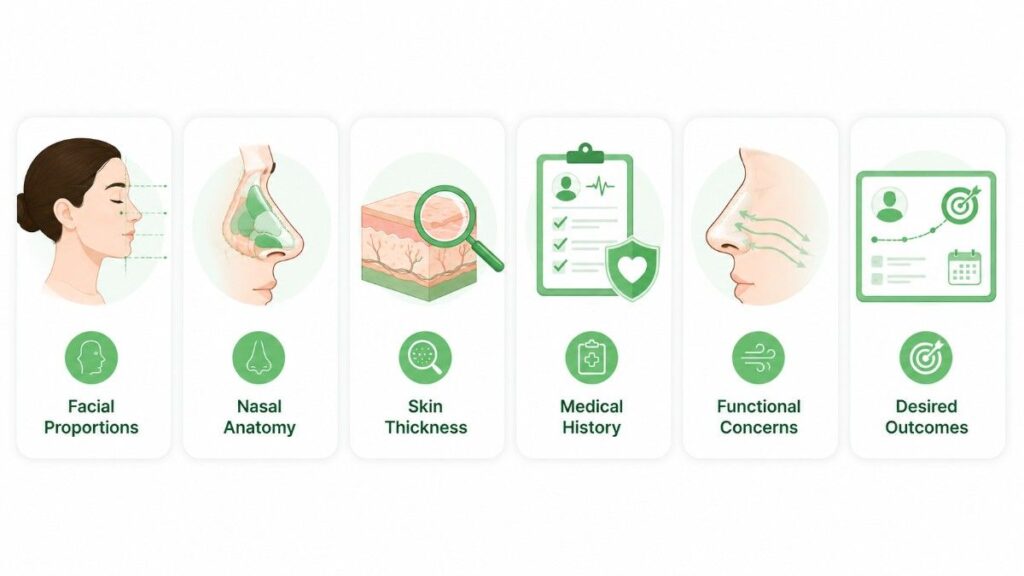
During consultation, they assess:
- Facial proportions
- Nasal anatomy
- Skin thickness
- Medical history
- Functional concerns
- Desired outcomes
This individualized approach helps determine whether now is the appropriate time for surgery.
Recovery Expectations by Age
Recovery varies from one patient to another.
Many healthy patients experience:
First Week
- Swelling
- Mild bruising
- Nasal congestion
Weeks Two to Four
- Reduced swelling
- Increased comfort
- Return to daily activities
Long-Term Healing
The nose gradually refines over several months.
Following post-operative instructions remains essential regardless of age.
Common Myths About Age and Rhinoplasty
Myth: Younger Always Means Better
Reality: Surgery should only be performed after facial development is complete.
Myth: Older Adults Cannot Have Rhinoplasty
Reality: Many healthy adults achieve excellent outcomes later in life.
Myth: Age Alone Determines Success
Reality: Health, anatomy, surgical planning, and aftercare all influence results.
Preparing for Rhinoplasty
Once patients determine they are suitable candidates, preparation includes:
- Medical evaluation
- Lifestyle adjustments
- Recovery planning
- Following surgeon instructions
- Understanding healing expectations
Good pr
If you’re considering nose reshaping, read our guide on Nose Reshaping Surgery Procedure to understand each step of the treatment, from consultation to recovery.
eparation contributes to a smoother recovery.
Conclusion
Understanding the best age for rhinoplasty surgery involves much more than choosing a specific number. The ideal timing depends on facial maturity, overall health, emotional readiness, and individual treatment goals. While cosmetic rhinoplasty is often performed after facial growth is complete during the late teenage years, healthy adults of many ages may also be excellent candidates.
A personalized consultation remains the best way to determine whether rhinoplasty is appropriate for you. By choosing the right time and following professional guidance throughout recovery, patients can achieve natural-looking, balanced, and long-lasting results that complement their facial features. For more patient education about rhinoplasty, refer to the American Society of Plastic Surgeons – Rhinoplasty Guide.
Frequently Asked Questions
Sushrutha Institute of Plastic, Reconstructive & Aesthetic Surgery
Dr Pradeep Kumar
Plastic, Reconstructive & Aesthetic Surgeon
SIPRAS, Elite Mission Hospital, Thrissur