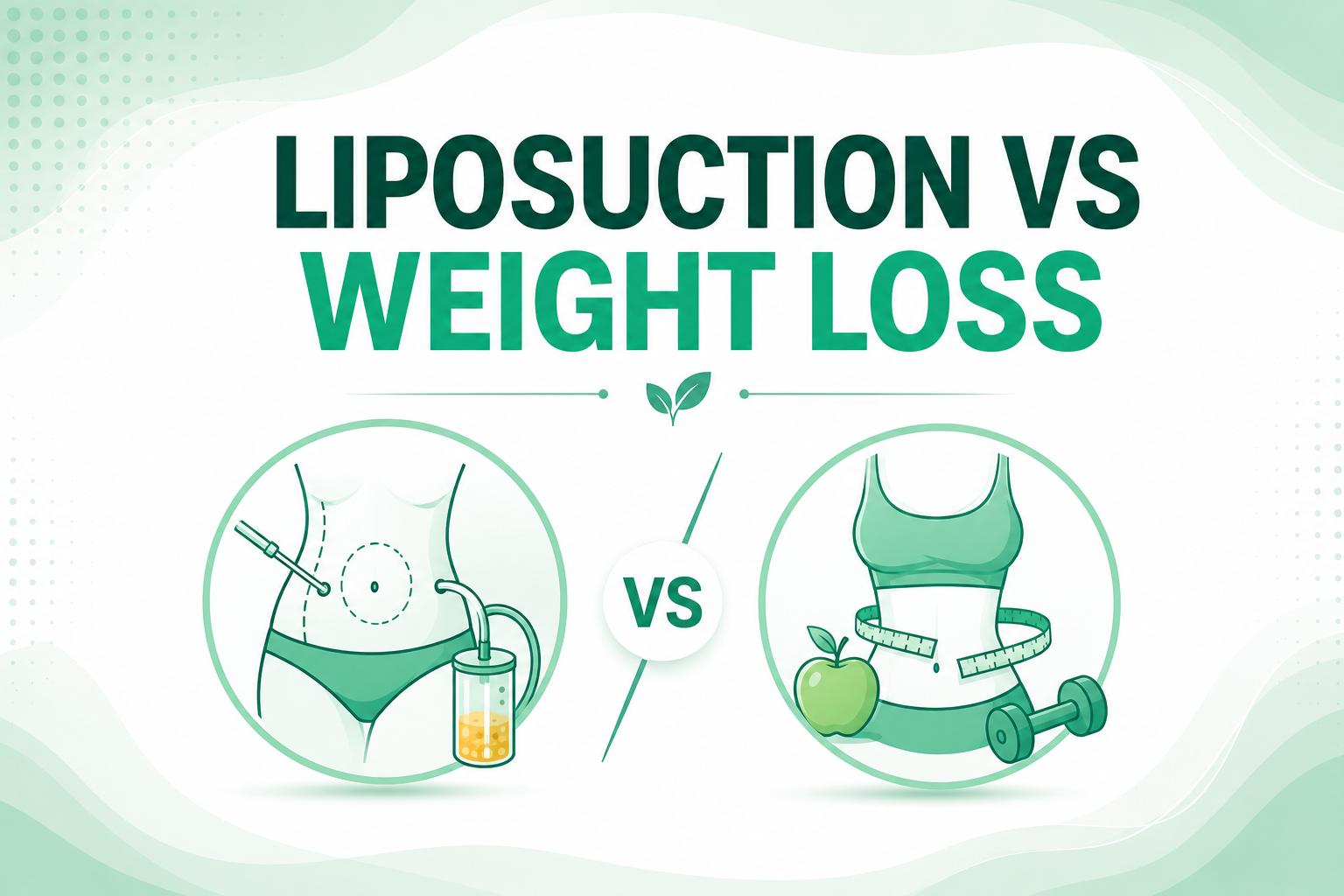
When people want to improve their body shape, liposuction vs weight loss is a common comparison. Although both can change the appearance of the body, they work in very different ways. Weight loss reduces overall body weight through changes in energy balance, diet, physical activity, and lifestyle. Liposuction, on the other hand, is a cosmetic procedure designed to remove specific deposits of localized fat.

Understanding liposuction vs weight loss can help you develop realistic expectations before choosing an approach. This is especially useful for people in Thrissur who may have reached a stable weight but still notice stubborn fat in areas such as the abdomen, thighs, hips, arms, back, or under the chin.

The important point is that liposuction is not a substitute for healthy weight management. Weight loss can improve overall health, while liposuction primarily focuses on body contouring. The right choice depends on your current weight, health, goals, fat distribution, and expectations.

What Is the Difference Between Liposuction vs Weight Loss

The basic difference in liposuction vs weight loss is the goal.

Weight loss aims to reduce total body weight. It usually involves creating a sustainable calorie deficit through nutrition, physical activity, daily activity, sleep, and other lifestyle habits. As body weight decreases, fat stores throughout the body may become smaller.

Liposuction is different. It physically removes fat cells from selected areas of the body. The procedure is intended to improve body contours rather than produce significant overall weight reduction.

Key Differences at a Glance

  • Weight loss: Reduces overall body weight.
  • Liposuction: Removes localized fat deposits.
  • Weight loss: Can improve several aspects of metabolic health.
  • Liposuction: Primarily improves body contour and proportions.
  • Weight loss: Requires ongoing lifestyle management.
  • Liposuction: Produces changes in treated areas after recovery.
  • Weight loss: Can affect the whole body.
  • Liposuction: Targets specific body areas.

This distinction is central when considering liposuction vs weight loss.

How Weight Loss Works

Weight loss occurs when the body uses more energy than it receives over time. The body then draws on stored energy, including stored fat.

A sustainable weight-loss plan may include:

  • Balanced meals
  • Appropriate portion sizes
  • Regular physical activity
  • Resistance training
  • Adequate protein and fiber
  • Good sleep habits
  • Consistent hydration
  • Long-term lifestyle changes

The pace of weight loss varies from person to person. Factors such as age, body composition, activity level, genetics, medications, sleep, and eating patterns can all influence results.

Why Weight Loss Affects the Whole Body

When you lose weight naturally, fat reduction does not occur only in one selected location. The body determines where stored fat is mobilized. Some people may notice changes in the face first, while others see changes around the waist, hips, arms, or legs.

This is one reason liposuction vs weight loss is an important distinction. Weight loss cannot reliably target one specific area.

What Is Liposuction

Liposuction is a cosmetic surgical procedure that removes excess subcutaneous fat from selected areas. It is generally used for body contouring when localized fat remains despite appropriate lifestyle efforts.

Common treatment areas may include:

  • Abdomen
  • Waist
  • Hips
  • Thighs
  • Upper arms
  • Back
  • Buttocks
  • Under the chin
  • Certain areas around the knees

During liposuction, fat is removed from beneath the skin using specialized surgical techniques. The exact technique depends on the treatment area, the amount of fat being removed, skin characteristics, and the individual’s needs.

Liposuction is therefore fundamentally different from ordinary weight reduction.

Liposuction vs Weight Loss: Who May Benefit

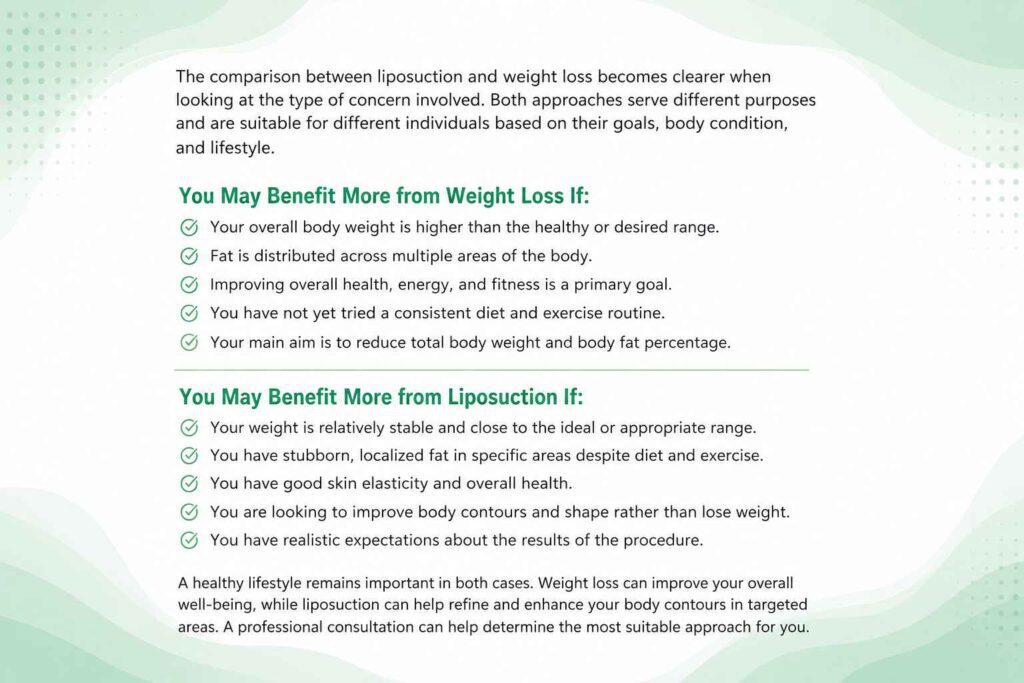
Liposuction vs weight loss showing who may benefit from each approach

The comparison between liposuction vs weight loss becomes clearer when looking at the type of concern involved.

A person who has excess body weight throughout the body will generally need to focus on weight management rather than relying on liposuction.

Someone who is already close to their preferred or medically appropriate weight but has persistent localized fat may instead discuss body-contouring options with a qualified medical professional.

Weight Loss May Be More Appropriate When:

  • Overall body weight is higher than desired.
  • Fat is distributed across several areas.
  • Health improvement is an important goal.
  • Lifestyle changes have not yet been optimized.
  • The primary goal is reducing total body weight.

Liposuction May Be Considered When:

  • Weight is relatively stable.
  • Localized fat remains in specific areas.
  • Diet and exercise have not changed certain contours as desired.
  • The goal is body shaping rather than major weight reduction.
  • Expectations about cosmetic improvement are realistic.

These factors can help clarify liposuction vs weight loss without treating either approach as universally better.

Causes of Stubborn Fat

Stubborn fat can develop for several reasons. Even people who maintain a healthy lifestyle may have areas where fat is more resistant to change.

Potential influences include:

  • Genetics
  • Hormonal changes
  • Age-related changes in body composition
  • Natural fat distribution
  • Reduced muscle mass
  • Changes in activity levels
  • Previous weight gain and loss
  • Skin elasticity
  • Individual body shape

It is important to remember that localized fat does not necessarily mean a person is unhealthy or inactive.

This is another important point in liposuction vs weight loss. Weight loss may reduce fat overall, but some areas can remain disproportionately fuller than others.

Types of Weight Loss

Weight loss can be approached in different ways depending on an individual’s needs.

Lifestyle-Based Weight Loss

This involves nutrition, physical activity, sleep, stress management, and behavioral changes. It is generally the foundation of long-term weight management.

Exercise-Focused Weight Management

Combining aerobic activity with resistance training can support calorie expenditure, cardiovascular fitness, muscle maintenance, and body composition.

Medically Supervised Weight Management

Some individuals may benefit from professional assessment and structured weight-management programs, particularly when lifestyle measures alone are insufficient.

The appropriate approach depends on individual circumstances. Cosmetic fat removal should not replace appropriate management of excess body weight.

Symptoms and Signs of Localized Fat

Localized fat is not technically a disease with symptoms. Instead, people may notice visible or physical characteristics such as:

  • A fuller appearance in a particular body area
  • Fat deposits that remain after overall weight loss
  • Uneven body contours
  • Difficulty achieving desired proportions
  • Clothing fitting differently around particular areas
  • Stable body weight with persistent localized fullness

These concerns often lead people to research liposuction vs weight loss.

However, a visible fat deposit should not automatically be considered a medical problem. Body shape naturally varies between individuals.

Liposuction vs Weight Loss for the Abdomen

The abdomen is one of the most commonly discussed areas when comparing liposuction vs weight loss.

Weight loss can reduce abdominal fat as overall body fat decreases. Regular exercise and dietary changes can also improve abdominal muscle definition and body composition.

Liposuction may address subcutaneous fat located beneath the skin. However, it does not remove visceral fat surrounding internal organs, and it is not intended to treat obesity.

Therefore, someone with significant overall excess weight should not view abdominal liposuction as a replacement for weight management.

Liposuction vs Weight Loss for the Thighs

Thigh fat can be influenced by genetics, body structure, hormones, and overall body composition.

Weight loss may reduce thigh size, but the degree of change varies. Some people naturally retain more fat in the inner or outer thighs even after losing weight.

Liposuction can be used for localized contouring in selected cases. The objective is generally to create a more proportionate contour rather than dramatically reduce body weight.

Liposuction vs Weight Loss for the Arms

Upper-arm fullness may change with overall weight loss, but some localized fat can remain.

Exercise can help strengthen the underlying muscles, while weight management may reduce overall fat. When a stable-weight individual has persistent localized fat, liposuction may be discussed as a contouring option.

The comparison of liposuction vs weight loss should therefore focus on whether the concern is overall excess weight or a specific contour.

Benefits of Weight Loss

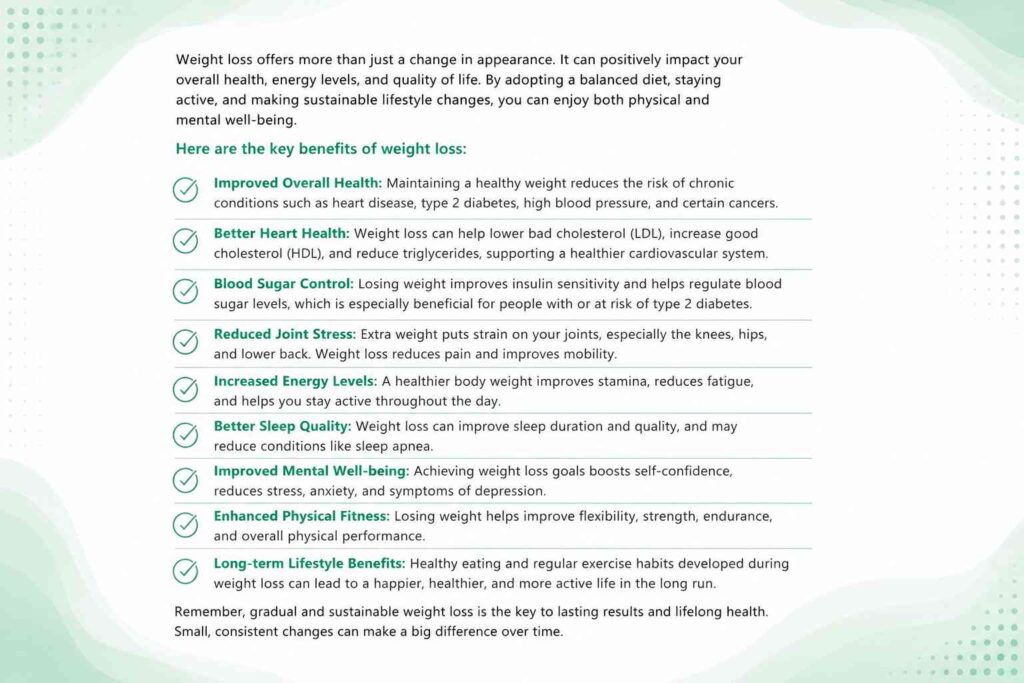
Benefits of weight loss for overall health, heart health, blood sugar, mobility, and fitness

Healthy weight loss can offer benefits beyond appearance.

Potential benefits include:

  • Better cardiovascular health
  • Improved blood sugar control
  • Reduced strain on joints
  • Better physical mobility
  • Improved fitness
  • Better sleep in some individuals
  • Lower risk of certain weight-related health problems
  • Improved confidence and quality of life

Because of these broader effects, weight loss is fundamentally different from cosmetic fat removal.

Benefits of Liposuction

Liposuction can provide body-contouring benefits when used appropriately.

Potential cosmetic benefits include:

  • Reduction of localized fat
  • Improved body proportions
  • More defined contours
  • Better symmetry in selected areas
  • Improvement in the appearance of certain stubborn fat deposits

The results are influenced by skin elasticity, the amount and location of fat, surgical technique, healing, and lifestyle after treatment.

It is important to understand that liposuction vs weight loss is not simply a choice between two ways to lose weight. One is primarily a health and weight-management strategy, while the other is a body-contouring procedure.

Treatment Options in Liposuction vs Weight Loss

When considering liposuction vs weight loss, treatment should be based on the underlying goal.

Lifestyle Treatment

A balanced eating pattern and regular activity remain important for people who want sustainable weight management.

Exercise and Strength Training

Strength training can support muscle preservation and improve body composition. Cardiovascular exercise can improve fitness and contribute to energy expenditure.

Professional Weight-Management Support

People struggling with significant excess weight may benefit from individualized assessment and a structured treatment plan.

Liposuction

For appropriate candidates, liposuction can remove selected localized fat deposits and reshape particular body areas.

Combined Approaches

In some cases, weight management and cosmetic body contouring may have complementary roles. A person may first reach a stable weight and later consider treatment for localized areas that remain.

Preparing for Liposuction

If liposuction is being considered, preparation should involve a detailed consultation and realistic discussion of goals.

Important topics may include:

  • Current weight and weight stability
  • Medical history
  • Medications and supplements
  • Previous procedures
  • Smoking status
  • Target treatment areas
  • Skin elasticity
  • Expected results
  • Recovery requirements
  • Potential risks and complications

A qualified professional should determine whether the procedure is appropriate.

Recovery After Liposuction

Recovery varies according to the treatment area and extent of the procedure.

Common postoperative experiences may include swelling, bruising, tenderness, and temporary changes in sensation. Compression garments may be recommended in some cases.

Recovery instructions should be followed carefully. Activity may need to be restricted temporarily before gradually returning to normal routines.

The final contour may take time to become apparent because swelling can persist during the healing process.

Tips for Better Long-Term Results

Whether you choose weight management, liposuction, or a combination of approaches, healthy habits remain valuable.

Maintain a Stable Weight

Significant weight fluctuations can affect body contours and may change the appearance of treated areas.

Eat a Balanced Diet

Focus on nutritious foods that provide protein, fiber, vitamins, minerals, and appropriate energy.

Stay Physically Active

Regular movement supports cardiovascular health, muscle strength, and weight maintenance.

Follow Postoperative Instructions

After liposuction, follow all recovery instructions provided by your medical team.

Set Realistic Expectations

No procedure can guarantee a perfect body shape. Individual anatomy and healing influence the outcome.

Common Mistakes When Comparing Liposuction vs Weight Loss

Several misconceptions can make the decision more difficult.

Mistake 1: Thinking Liposuction Is an Obesity Treatment

Liposuction is not designed to treat obesity or replace a comprehensive weight-management plan.

Mistake 2: Expecting Targeted Weight Loss

Exercise and diet cannot reliably choose exactly where the body loses fat.

Mistake 3: Expecting Instant Final Results

After liposuction, swelling and healing can temporarily affect the appearance of the treated area.

Mistake 4: Ignoring Weight Stability

Significant weight changes after body contouring can alter the result.

Mistake 5: Choosing Based Only on Appearance

Health, safety, expectations, and suitability should all be considered before treatment.

How to Decide Between Liposuction vs Weight Loss

Start by identifying your primary goal.

If your main concern is overall excess body weight, weight management should generally be the priority. If you are already at a relatively stable weight but have localized fat that affects your body contours, cosmetic treatment may be worth discussing.

A useful decision framework is:

  1. Identify whether the concern involves total body weight or one specific area.
  2. Assess whether your weight is stable.
  3. Review your current diet and activity habits.
  4. Consider your overall health.
  5. Set realistic cosmetic and health goals.
  6. Discuss suitable options with a qualified professional.
  7. Understand potential risks, benefits, costs, and recovery.

This approach makes liposuction vs weight loss a more informed decision rather than a simple comparison based on appearance alone.

Conclusion

Understanding liposuction vs weight loss is important because the two approaches have different purposes. Weight loss focuses on reducing overall body weight and can contribute to better health, fitness, and long-term weight management. Liposuction focuses on removing selected deposits of localized subcutaneous fat to improve body contours.

For people considering liposuction vs weight loss, the best starting point is to identify whether the primary concern is overall weight or stubborn fat in specific areas. Maintaining realistic expectations, reaching a stable weight when appropriate, following healthy habits, and obtaining professional guidance can support safer and more predictable outcomes.

If you are exploring body-contouring options in Thrissur, understanding the differences between these approaches can help you have a more informed discussion about your goals and available choices.  For reliable information about liposuction and body contouring, refer to the American Society of Plastic Surgeons for expert-reviewed guidance on procedures, benefits, risks, and recovery.

Frequently Asked Questions

Neither is universally better. Weight loss reduces overall body weight and can provide health benefits, while liposuction is primarily used to contour specific areas of localized fat.
No. Liposuction is not a substitute for healthy weight management and is not intended to treat obesity. It is mainly used to remove localized fat and improve body contours.
No. Liposuction removes selected deposits of subcutaneous fat from specific treatment areas. It does not remove all body fat or the visceral fat surrounding internal organs.
Weight loss can reduce overall body fat, including abdominal fat, but the amount of change varies between individuals. Genetics, hormones, age, and natural fat distribution can influence where fat is lost.
No. Liposuction is primarily a cosmetic body-contouring procedure rather than a weight-loss treatment. It is designed to reduce localized fat deposits in selected areas.
Reaching a stable and appropriate weight before body contouring may help produce more predictable results in suitable candidates. Individual suitability should be assessed by a qualified medical professional.
The fat cells removed during liposuction do not grow back. However, remaining fat cells can enlarge if substantial weight is gained, which may change the body's overall contour.
Exercise serves a different purpose from liposuction. It supports overall health, fitness, muscle strength, and weight management, while liposuction specifically targets localized fat deposits.
Liposuction results can be long-lasting when a stable weight and healthy lifestyle are maintained. However, ageing, significant weight changes, and other natural changes can affect body contours over time.
Consider your overall weight, health, body composition, weight stability, target areas, expectations, and long-term goals. A professional assessment can help determine whether weight management, liposuction, or another approach is appropriate.

Sushrutha Institute of Plastic, Reconstructive & Aesthetic Surgery

Dr Jyoshid R Balan

Dr Jyoshid R Balan

Plastic & Reconstructive Surgeon

SIPRAS, Elite Mission Hospital, Thrissur

Dr Pradeep Kumar

Dr Pradeep Kumar

Plastic, Reconstructive & Aesthetic Surgeon

SIPRAS, Elite Mission Hospital, Thrissur

Dr Prince H P

Dr Prince H P

Senior Consultant Plastic Surgeon

SIPRAS, Elite Mission Hospital, Thrissur

Dr Vinu Roy

Dr Vinu Roy

Plastic & Reconstructive Surgeon

SIPRAS, Elite Mission Hospital, Thrissur

Dr Ajai K S

Dr Ajai K S

Plastic & Reconstructive Surgeon

SIPRAS, Elite Mission Hospital, Thrissur