
One of the most common questions people have before undergoing body-contouring surgery is Liposuction permanent? The short answer is that liposuction permanently removes the fat cells targeted during the procedure. However, this does not mean that your body can never gain fat again or that your body shape will remain completely unchanged throughout life.
Understanding is Liposuction permanent?requires looking at what happens to the fat cells that are removed, what happens to the remaining fat cells, and how factors such as weight gain, ageing, pregnancy, and lifestyle can affect the long-term appearance.
Liposuction is designed to improve body contour by reducing localized deposits of subcutaneous fat. It is not a weight-loss treatment and does not prevent future changes in body weight. When a stable weight is maintained after treatment, the contouring effect can be long-lasting. The American Society of Plastic Surgeons notes that the fat cells removed during liposuction are permanently removed, while substantial weight gain can alter the results.
What Does Permanent Liposuction Mean?
Before asking is liposuction permanent?, it is important to understand what liposuction actually does. If you are new to the procedure, our guide to What Is Liposuction? explains how liposuction works, which areas it can treat, the different techniques available, and what you can realistically expect from treatment.
Liposuction permanently removes a portion of the fat cells from a selected treatment area. During the procedure, a cannula is used to loosen and suction localized fat beneath the skin. Once those specific fat cells have been removed from the body, they do not simply grow back.
However, the body still contains fat cells in the treated area and throughout other parts of the body. These remaining cells can increase in size when a person gains weight.
Therefore, permanent fat-cell removal does not mean permanent protection against weight gain.
This distinction is important because many people interpret the word “permanent” as meaning that their body can never store additional fat after liposuction. That is not the case. Liposuction changes the number of fat cells in the treated area, but it does not change the body’s ability to gain or lose weight.
IS LIPOSUCTION PERMANENT?
So, is Liposuction permanent? The fat cells removed through liposuction are permanently removed. However, the overall cosmetic result can change over time if there is substantial weight gain, major body changes, or significant changes in skin quality.
This means there are two separate things to consider:
Fat Cell Removal
The fat cells physically removed during liposuction do not return.
Long-Term Body Contour
The overall body contour can change because the remaining fat cells may enlarge, new fat cells can develop with substantial weight gain, and natural changes such as ageing can affect the body.
The NHS describes liposuction results as generally long-lasting when a healthy weight is maintained.
So, the most accurate answer is:
Liposuction provides permanent removal of the fat cells treated during surgery, but maintaining the visible contour depends on long-term weight stability and other changes in the body.
What Happens to Fat Cells After Liposuction?
When considering is Liposuction permanent?, it helps to understand how fat cells behave.
The human body stores energy in fat cells. When weight increases, existing fat cells can become larger as they store more fat. When weight decreases, these cells become smaller.
During liposuction, selected fat cells are physically removed from the treatment area.
The remaining cells are still present. They can therefore respond to future changes in body weight.
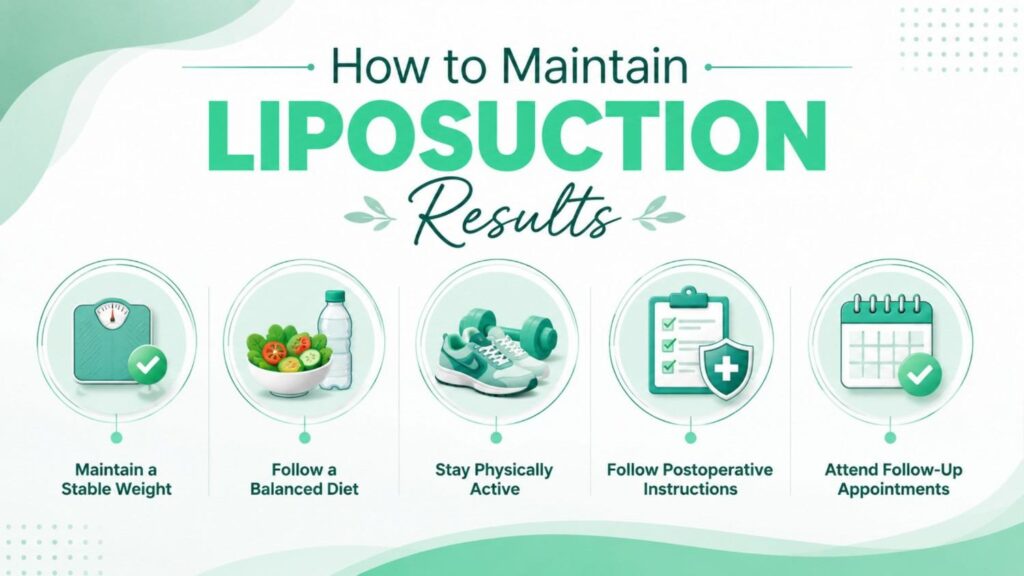
This is why maintaining a stable weight after surgery is important for preserving the contour created by liposuction.
The American Society of Plastic Surgeons explains that liposuction permanently removes fat cells, but surrounding fatty tissue can expand with future weight gain.
Can Fat Come Back After Liposuction?
A common concern when asking IS LIPOSUCTION PERMANENT? is whether the same fat comes back after treatment.
The fat cells that were removed do not return. However, this does not mean that the treated area can never become larger again.
If you gain weight after liposuction, the fat cells that remain in your body can enlarge. This may affect the treated area as well as other areas.
With modest weight gain, the overall contour may remain improved because the treated area has fewer fat cells than it had before surgery.
With substantial weight gain, however, the difference can become less noticeable.
The American Society of Plastic Surgeons notes that substantial weight gain can alter the results of liposuction, even though the removed fat cells themselves do not return.
Can Remaining Fat Cells Become Larger?
Yes. This is one of the most important points when understanding is liposuction permanent?
Liposuction reduces the number of fat cells in a specific area, but it does not remove every fat cell.
If calorie intake consistently exceeds the body’s energy requirements, remaining fat cells can enlarge.
For example, a person may have liposuction on the abdomen and later gain significant weight. The abdominal area may still change because remaining fat cells can increase in size.
The important difference is that the treated area has fewer fat cells than before the procedure.
This can help preserve the improvement when weight remains relatively stable, but it should not be interpreted as immunity against future fat accumulation.
Does Weight Gain Affect Liposuction Results?
When asking is liposuction permanent?, weight gain is one of the biggest factors to consider.
Liposuction does not prevent future weight gain. If body weight increases significantly after surgery, the remaining fat cells can enlarge and the overall body contour may change.
Small fluctuations may have a relatively limited effect. Larger or sustained weight gain can have a more noticeable impact.
This is why surgeons generally emphasize maintaining a stable, healthy weight after treatment.
Liposuction is most effective as a contouring procedure when the person has realistic expectations and maintains healthy lifestyle habits after surgery.
What Happens After Significant Weight Gain?
Significant weight gain can reduce the visual difference created by liposuction.
The American Society of Plastic Surgeons explains that with considerable weight gain, new fat cells may develop throughout the body, including areas that were previously treated.
This does not mean that liposuction has been reversed.
Instead, the body has undergone a substantial change that can affect overall proportions.
Possible changes may include:
- Enlargement of remaining fat cells
- Increased fat in untreated areas
- Changes in waist or abdominal contour
- Reduced definition of previously treated areas
- Changes in overall body proportions
If major weight gain occurs, a future assessment may be necessary to determine whether additional treatment is appropriate.
Does Liposuction Prevent Future Weight Gain?
No.
Understanding is liposuction permanent? also means understanding what liposuction cannot do.
The procedure does not:
- Prevent weight gain
- Change metabolism permanently
- Replace exercise
- Replace healthy eating
- Treat obesity
- Remove visceral fat
- Prevent age-related changes in body composition
Liposuction primarily targets subcutaneous fat, which is the fat located beneath the skin. It does not function as a general weight-management treatment.
This is why people considering liposuction should view it as a body-contouring procedure rather than a permanent weight-loss solution.
How Does Ageing Affect Liposuction Results?
Ageing can influence the appearance of the body even when body weight remains relatively stable.
Over time, the skin can become less elastic. Changes in muscle mass, body composition, hormones, and the distribution of fat can also affect body shape.
Therefore, asking is liposuction permanent? should not be limited to the behavior of fat cells.
The fat cells removed during treatment remain permanently absent, but the surrounding skin and tissues continue to age naturally.
This means that the body may look different several years after surgery even when the original liposuction result was successful.
The goal of liposuction is therefore not to stop the normal ageing process. It is to create a contour improvement that can remain long-lasting when supported by stable weight and healthy habits.
Can Pregnancy Change Liposuction Results?
Pregnancy can significantly change body shape and weight.
For someone who has undergone abdominal, waist, hip, or thigh liposuction, pregnancy may alter the appearance of the treated areas because the body undergoes substantial physical and hormonal changes.
Pregnancy can affect:
- Abdominal skin
- Body weight
- Fat distribution
- Muscle tone
- Overall body proportions
- Skin elasticity
This does not mean the fat cells removed during liposuction have returned.
Rather, pregnancy can change the surrounding tissues and overall body contour.
Anyone considering liposuction should discuss future pregnancy plans during the consultation so that the timing and expectations can be considered appropriately.
How Does Skin Elasticity Affect Long-Term Results?
Another important factor when asking is liposuction permanent? is skin quality.
Liposuction removes fat beneath the skin. The skin then needs to adapt to the change in underlying volume.
Skin with good elasticity may contract more effectively around the new contour. If the skin has significant laxity, removing fat alone may not produce the desired appearance.
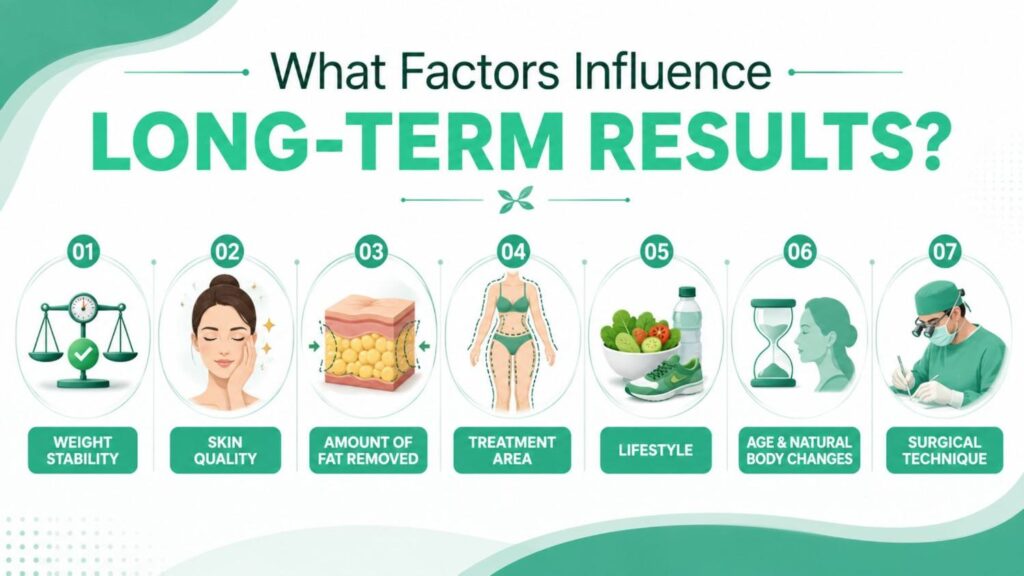
Skin quality can be influenced by:
- Age
- Genetics
- Previous weight fluctuations
- Sun exposure
- Pregnancy
- The amount of fat removed
- Natural skin elasticity
This is why a surgical consultation should evaluate both the fat deposits and the quality of the overlying skin.
Liposuction should not be expected to remove substantial loose skin. In selected cases, another body-contouring procedure may need to be considered.
What Areas Can Maintain Liposuction Results?
Liposuction can be performed on selected areas where localized subcutaneous fat is present.
Common treatment areas include:
- Abdomen
- Waist
- Hips
- Thighs
- Back
- Buttocks
- Upper arms
- Chest
- Chin
- Neck
- Inner knees
The longevity of the contour depends less on the name of the body area and more on factors such as weight stability, skin quality, surgical technique, and individual healing.
The NHS notes that liposuction is generally long-lasting when a healthy weight is maintained.
Is Liposuction Permanent Compared With Weight Loss?
Liposuction and conventional weight loss work differently.
During weight loss, fat cells generally become smaller. The number of fat cells does not necessarily decrease throughout the body.
During liposuction, selected fat cells are physically removed from specific areas.
This distinction explains why the answer to is liposuction permanent? is different from the answer to whether weight loss is permanent.
However, liposuction should not be viewed as a replacement for weight management.
Weight can still increase after surgery, and remaining fat cells can enlarge.
The purpose of liposuction is to reshape selected areas rather than produce a general reduction in body weight.
Can You Need Liposuction Again?
Liposuction is not routinely repeated simply because the original fat cells have returned. Those removed cells do not grow back.
However, additional treatment may sometimes be considered if:
- Significant weight gain changes the contour
- The original treatment did not produce the desired result
- There is asymmetry or contour irregularity
- The body changes substantially over time
- A different area later develops a localized fat deposit
A repeat procedure should not be assumed to be necessary. A qualified plastic surgeon should assess the reason for the change and determine whether further treatment is appropriate.
Common Misconceptions About Permanent Liposuction
Myth 1: Liposuction Means You Can Never Gain Weight Again
False. Liposuction does not prevent weight gain.
Myth 2: Removed Fat Cells Grow Back
The fat cells physically removed during liposuction do not return. However, remaining cells can enlarge with weight gain.
Myth 3: Liposuction Is Permanent Weight Loss
Liposuction is primarily a body-contouring procedure, not a weight-loss treatment.
Myth 4: You Do Not Need to Exercise After Liposuction
Healthy physical activity, once medically cleared, can help support stable weight and long-term results.
Myth 5: Liposuction Stops Ageing Changes
Liposuction does not stop natural ageing. Skin and body composition can continue to change after treatment.
Conclusion
So, is liposuction permanent? The most accurate answer is that the fat cells removed during liposuction are permanently removed, but the overall cosmetic result is not completely protected from future changes in the body.
Remaining fat cells can enlarge with weight gain, while significant weight changes, pregnancy, ageing, and changes in skin elasticity can influence body contour. This is why liposuction should be viewed as a long-lasting body-contouring procedure rather than a permanent solution for weight management.
Understanding is liposuction permanent? also means having realistic expectations about what the procedure can and cannot accomplish. Maintaining a stable weight and following healthy lifestyle habits can help preserve the improvement for many years. For additional information about long-term liposuction results, you can refer to the American Society of Plastic Surgeons (ASPS), which explains that liposuction results can be long-lasting when a stable weight and general fitness are maintained.
Frequently Asked Questions
Sushrutha Institute of Plastic, Reconstructive & Aesthetic Surgery


Dr Pradeep Kumar
Plastic, Reconstructive & Aesthetic Surgeon
SIPRAS, Elite Mission Hospital, Thrissur