Rhinoplasty is one of the most transformative procedures in cosmetic and reconstructive surgery  but it is not the right choice for everyone. Before booking a consultation, understanding who is suitable for rhinoplasty surgery helps you make an informed, confident decision about your treatment journey.

This guide covers the physical, medical, psychological, and age-related factors that determine ideal candidacy for rhinoplasty. Whether you are considering the procedure for cosmetic refinement, breathing correction, or post-trauma reconstruction, the criteria below will help you assess whether you are ready to take the next step.

What Does “Suitable for Rhinoplasty” Actually Mean?

Suitability for rhinoplasty is not simply about wanting a different nose. It involves a combination of factors — physical health, nasal development, realistic expectations, and emotional readiness. Surgeons at SIPRAS assess each of these dimensions during an in-depth consultation before recommending surgery.

The goal is to ensure that every patient who undergoes rhinoplasty is physically prepared, psychologically grounded, and likely to achieve a satisfying, lasting outcome.

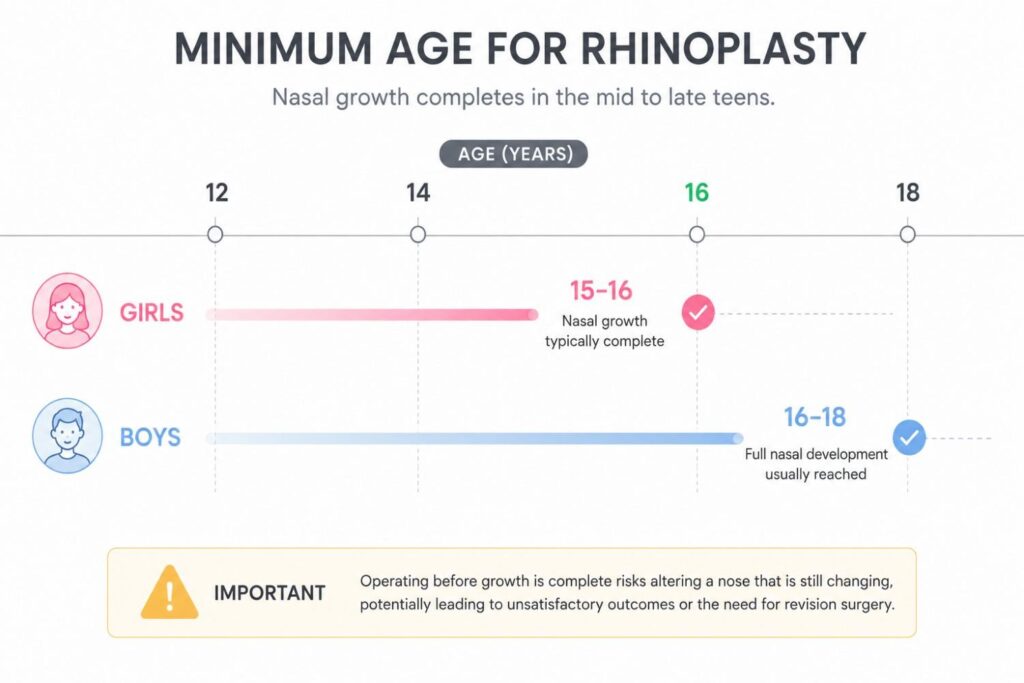
Infographic illustrating the minimum age for rhinoplasty, showing nasal growth completion timelines for girls and boys, with girls typically reaching maturity at 15–16 years and boys at 16–18 years.

Minimum Age for Rhinoplasty

One of the most common questions patients ask is whether they are old enough for the procedure. Rhinoplasty is generally considered appropriate only after the nose has reached full structural maturity.

  • Girls: Nasal growth is typically complete by 15–16 years of age
  • Boys: Full nasal development is usually reached by 16–18 years of age

Operating before growth is complete risks altering a nose that is still changing, potentially leading to unsatisfactory outcomes or the need for revision surgery.


Medical Health: Physical Conditions That Affect Candidacy

Good general health is a foundational requirement for rhinoplasty candidacy. Certain conditions may delay or contraindicate surgery.

Conditions That Support Candidacy

  • No uncontrolled chronic illness (hypertension, diabetes, autoimmune conditions)
  • Non-smoker, or willingness to stop smoking 4–6 weeks before and after surgery
  • No active infections, skin conditions affecting the nose, or untreated sinusitis
  • Normal blood clotting function
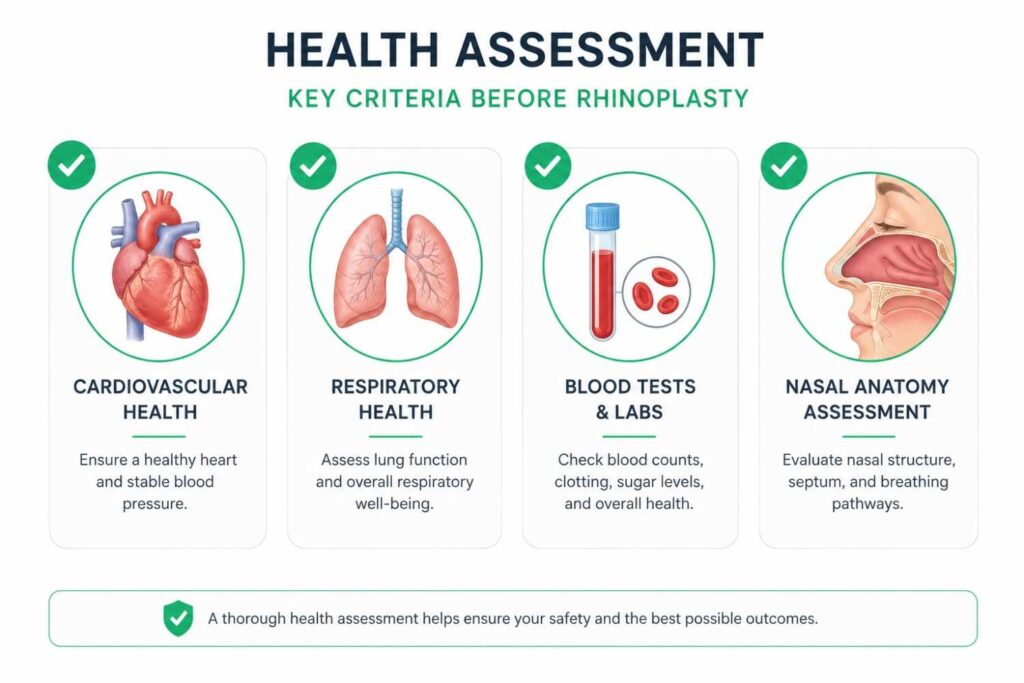
Clinical infographic illustrating key health assessment criteria before rhinoplasty, including cardiovascular health, respiratory health, blood tests, and nasal anatomy evaluation.

Conditions Requiring Careful Evaluation

  • Controlled diabetes – may affect wound healing; manageable with proper pre-operative planning
  • Hypertension – must be stable and medically managed before surgery
  • History of keloid scarring – relevant for open rhinoplasty techniques
  • Certain medications (blood thinners, steroids) – may require adjustment before surgery

Patients with managed chronic conditions are not automatically excluded. Your surgeon will conduct a thorough medical review to determine safety and plan accordingly.

Nasal Concerns: Cosmetic and Functional Reasons That Qualify

Who is suitable for rhinoplasty surgery based on the type of concern they have? Both cosmetic and functional reasons are valid indications for the procedure.

Cosmetic Concerns That Make You a Candidate

  • A nasal hump or dorsal bump
  • A drooping, bulbous, or upturned nasal tip
  • A wide nose or flared nostrils
  • Asymmetry or crookedness of the nose
  • Disproportionate nose size relative to face
  • Concerns following a previous unsatisfactory rhinoplasty (revision rhinoplasty)

Functional Concerns That Make You a Candidate

  • Deviated nasal septum causing chronic breathing difficulty
  • Nasal obstruction affecting sleep quality
  • Structural defects from previous injury or trauma
  • Congenital nasal abnormalities affecting airflow

For patients with breathing concerns, functional rhinoplasty may be performed alongside cosmetic correction in a single surgical session. You can read more about the full range of rhinoplasty surgery options available at SIPRAS.

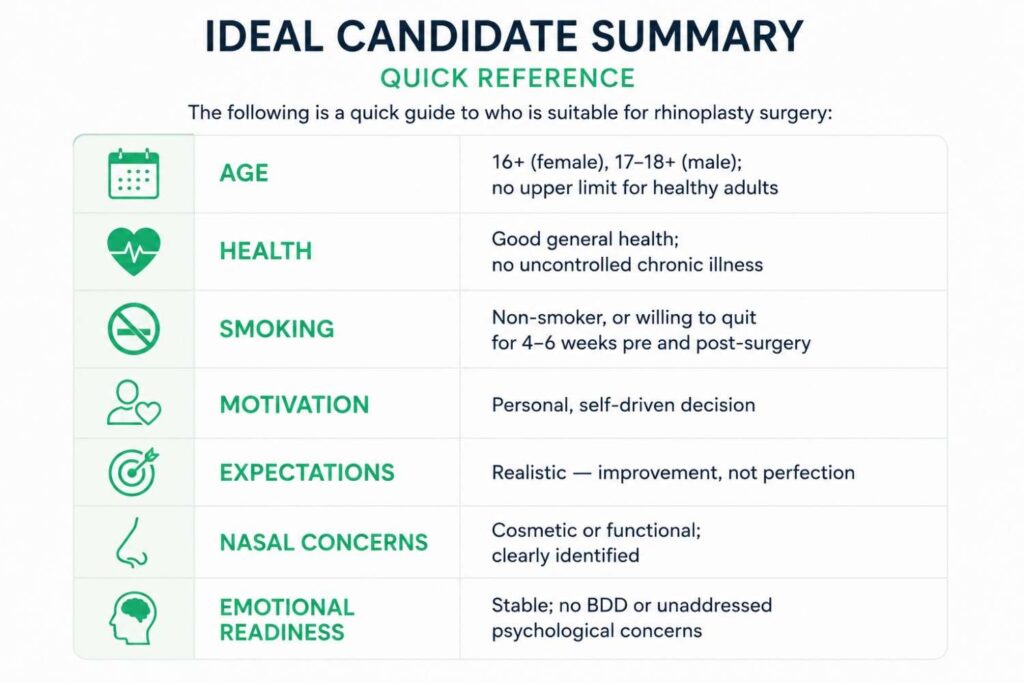
Infographic titled “Ideal Candidate Summary – Quick Reference” outlining the key criteria for rhinoplasty candidates, including age, health status, smoking habits, motivation, expectations, nasal concerns, and emotional readiness.

Smoking and Lifestyle Factors

Lifestyle habits directly affect rhinoplasty outcomes and healing.

Smoking

Smoking significantly reduces blood circulation and oxygen delivery to healing tissue. Patients who smoke are strongly advised to stop at least 4–6 weeks before surgery and continue abstaining during recovery. Smoking during healing increases the risk of poor wound healing, scarring, and infection.

Weight Stability

While rhinoplasty is not weight-dependent in the way body contouring procedures are, patients should be at a stable, healthy weight at the time of surgery to support safe anaesthesia and smooth recovery.

Alcohol Consumption

Alcohol thins the blood and interacts with anaesthesia and pain medications. Patients should avoid alcohol for at least two weeks before and after surgery.

Who May Not Be Suitable for Rhinoplasty Right Now?

Being unsuitable at a given time does not mean the procedure is permanently off the table. Certain factors may delay candidacy rather than eliminate it.

You may be advised to wait or reconsider if:

  • Your nose is still growing (under recommended age)
  • You have an active infection or untreated health condition
  • You are currently pregnant or breastfeeding
  • You are going through a major emotional life event and decisions may not reflect your long-term wishes
  • You have unrealistic expectations that cannot be aligned through consultation

In such cases, SIPRAS surgeons will guide you on the right timeline and preparation steps so you can revisit the procedure when the conditions are right.

What Happens During the Candidacy Assessment at SIPRAS?

When you attend a rhinoplasty consultation at the Sushrutha Institute of Plastic, Reconstructive and Aesthetic Surgery (SIPRAS), your surgeon will evaluate:

  • Facial proportions and nasal symmetry
  • Skin thickness and quality
  • Cartilage and bone structure
  • Breathing function and nasal airflow
  • Medical history and current medications
  • Personal goals and expectations

You will receive a personalised recommendation and a clear explanation of the approach best suited to your anatomy. Patients are encouraged to ask questions, review before-and-after outcomes, and take time before making a final decision.


Understanding who is suitable for rhinoplasty surgery is the essential first step before considering any nose reshaping procedure. Age, physical health, emotional readiness, lifestyle factors, and the clarity of your goals all play a role in determining whether you are the right candidate at the right time.

At SIPRAS, Elite Mission Hospital, Thrissur, the surgical team brings together decades of plastic and reconstructive expertise to help each patient arrive at a decision that is safe, well-informed, and truly in their best interest. If you are curious about whether rhinoplasty is right for you, a consultation is the best place to begin.

The American Society of Plastic Surgeons (ASPS) outlines that ideal rhinoplasty candidates are individuals in good health, with fully developed nasal structures, who have realistic expectations and are seeking the procedure for personal reasons. SIPRAS follows internationally aligned best-practice protocols to ensure patient safety and outcome quality. Learn more from the ASPS.

FREQUENTLY ASKED QUESTIONS

1. Can a teenager undergo rhinoplasty surgery?
Rhinoplasty is generally considered appropriate for girls from around 15–16 years and boys from 17–18 years, once nasal growth is complete. Parental consent is required for patients under 18.
2. Does weight affect rhinoplasty candidacy?
Rhinoplasty is not directly weight-dependent, but patients should be at a stable, healthy weight to support safe anaesthesia and a smooth recovery.
3. Can I get rhinoplasty if I have diabetes?
Controlled diabetes is not an automatic disqualification. Your surgeon will assess your current health status, HbA1c levels, and wound-healing risk before recommending surgery.
4. Is rhinoplasty suitable for men?
Absolutely. Men are equally suitable candidates for rhinoplasty, whether for cosmetic refinement or functional correction. Surgical planning takes natural male nasal anatomy into account.
5. What if I smoke — can I still get a nose job?
Smokers are advised to stop at least 4–6 weeks before surgery. Smoking during the recovery period significantly increases the risk of complications. Your surgeon will discuss this in detail during consultation.
6. Can I get rhinoplasty after a previous nose surgery?
Yes — revision rhinoplasty is available for patients who are unsatisfied with a previous procedure. Candidacy for revision surgery is assessed on a case-by-case basis.
7. Is there a minimum waiting period before rhinoplasty after nasal injury?
Surgeons typically recommend waiting at least 6 months after a nasal injury to allow swelling to fully resolve before operating. Your surgeon will advise the optimal timing based on your case.
8. Does mental health affect whether I am suitable for rhinoplasty?
Yes. Emotional stability and realistic expectations are key parts of candidacy assessment. Patients with untreated body dysmorphic disorder or unmanaged psychological concerns may be advised to seek support before proceeding with surgery.
9. How do I know if my expectations for rhinoplasty are realistic?
A consultation with your SIPRAS surgeon is the best way to align expectations. Using imaging tools and before-and-after references, the surgical team will help you understand what is achievable for your unique anatomy.
10. What documents should I bring to a rhinoplasty candidacy consultation?
Bring a list of your current medications, any previous surgical records, and a clear note of your specific concerns and goals. Photos of nasal concerns from different angles can also be helpful.

Sushrutha Institute of Plastic, Reconstructive & Aesthetic Surgery

Dr Jyoshid R Balan

Dr Jyoshid R Balan

Plastic & Reconstructive Surgeon

SIPRAS, Elite Mission Hospital, Thrissur

Dr Pradeep Kumar

Dr Pradeep Kumar

Plastic, Reconstructive & Aesthetic Surgeon

SIPRAS, Elite Mission Hospital, Thrissur

Dr Prince H P

Dr Prince H P

Senior Consultant Plastic Surgeon

SIPRAS, Elite Mission Hospital, Thrissur

Dr Vinu Roy

Dr Vinu Roy

Plastic & Reconstructive Surgeon

SIPRAS, Elite Mission Hospital, Thrissur

Dr Ajai K S

Dr Ajai K S

Plastic & Reconstructive Surgeon

SIPRAS, Elite Mission Hospital, Thrissur