Elite Mission Hospital · Koorkenchery, Thrissur 24 × 7 Emergency Plastic Surgery Care
When Will Rhinoplasty Results Become Visible

When Will Rhinoplasty Results Become Visible? A Complete Recovery Timeline

When Will Rhinoplasty Results Become Visible? This is one of the most common questions people ask before undergoing nose reshaping surgery. Rhinoplasty, commonly known as nose surgery, is performed to improve the shape, size, proportions or function of the nose. After surgery, patients may notice some changes when the nasal splint and dressings are removed, usually around the first week. However, the nose will still have swelling, and its final shape will take longer to develop. Most visible swelling gradually reduces over the following weeks and months, while subtle changes, particularly around the nasal tip, may continue for 6–12 months or sometimes longer. Understanding the recovery stages helps patients know what to expect and why patience isimportant after surgery.

When Will Rhinoplasty Results Become Visible After Surgery?

Some changes can be noticed during the first week, especially after the external splint or dressing is removed. Patients may see differences in the nasal bridge, overall shape and proportions. However, the nose will usually remain swollen during this early stage. The appearance immediately after splint removal should not be considered the final result because the tissues need time to recover from surgical changes. Swelling can temporarily make the nose look wider, fuller or slightly uneven.

Most patients begin noticing clearer improvements during the first few weeks as bruising and swelling gradually decrease. The nasal shape becomes easier to assess, although small changes continue as the tissues settle. The exact timeline depends on the surgical technique, skin thickness, the amount of reshaping performed and individual healing characteristics. Patients who undergo extensive structural correction may need more time than those who have relatively limited changes. It is important to attend follow-up appointments and allow the surgeon to monitor the healing process rather than judging the result too early.

Why Does Rhinoplasty Recovery Take Several Months?

Understanding When Will Rhinoplasty Results Become Visible requires knowing why the nose takes time to heal. Rhinoplasty involves changes to the bone, cartilage and surrounding soft tissues. Depending on the patient’s needs, the surgeon may reshape the nasal bridge, refine the tip, straighten the nose or correct internal structures that affect breathing. These tissues respond to surgery through a natural healing process that includes temporary swelling and fluid accumulation. Even after the visible bruising disappears, deeper tissues may continue recovering.

The nose is also a delicate facial structure with skin and soft tissues that can retain swelling for longer than some other surgical areas. The nasal tip is particularly likely to hold swelling because of its tissue structure and the changes made during surgery. Patients may notice that the upper portion of the nose looks more defined before the tip becomes fully refined. This difference is usually part of the gradual healing process. The final appearance develops as the swelling reduces and the skin adapts to the reshaped framework. Patience and regular medical reviews are therefore important throughout recovery.

What Factors Influence the Time Needed to See Rhinoplasty Results?

When Will Rhinoplasty Results Become Visible is different for every patient because several factors influence healing. Skin thickness is one important consideration. People with thicker nasal skin may experience prolonged swelling, particularly around the tip. Patients with thinner skin may notice changes in nasal definition earlier, although minor swelling can still affect their appearance. The amount of surgical correction also matters. A procedure involving significant bone reshaping, cartilage modification or structural reconstruction may require a longer healing period than a less extensive operation.

The surgical approach can also influence recovery. Open rhinoplasty involves an incision across the tissue between the nostrils, while closed rhinoplasty uses incisions inside the nostrils. The approach is selected according to the patient’s anatomy and surgical requirements. Previous nose surgery, existing scar tissue and the need for cartilage grafts may also affect the healing timeline. General health, smoking habits and adherence to postoperative instructions can influence recovery. Patients should remember that no single timeline applies to everyone. Their surgeon can provide a more individual estimate after considering the procedure and their healing progress.

What Changes Can You Expect During the First Week

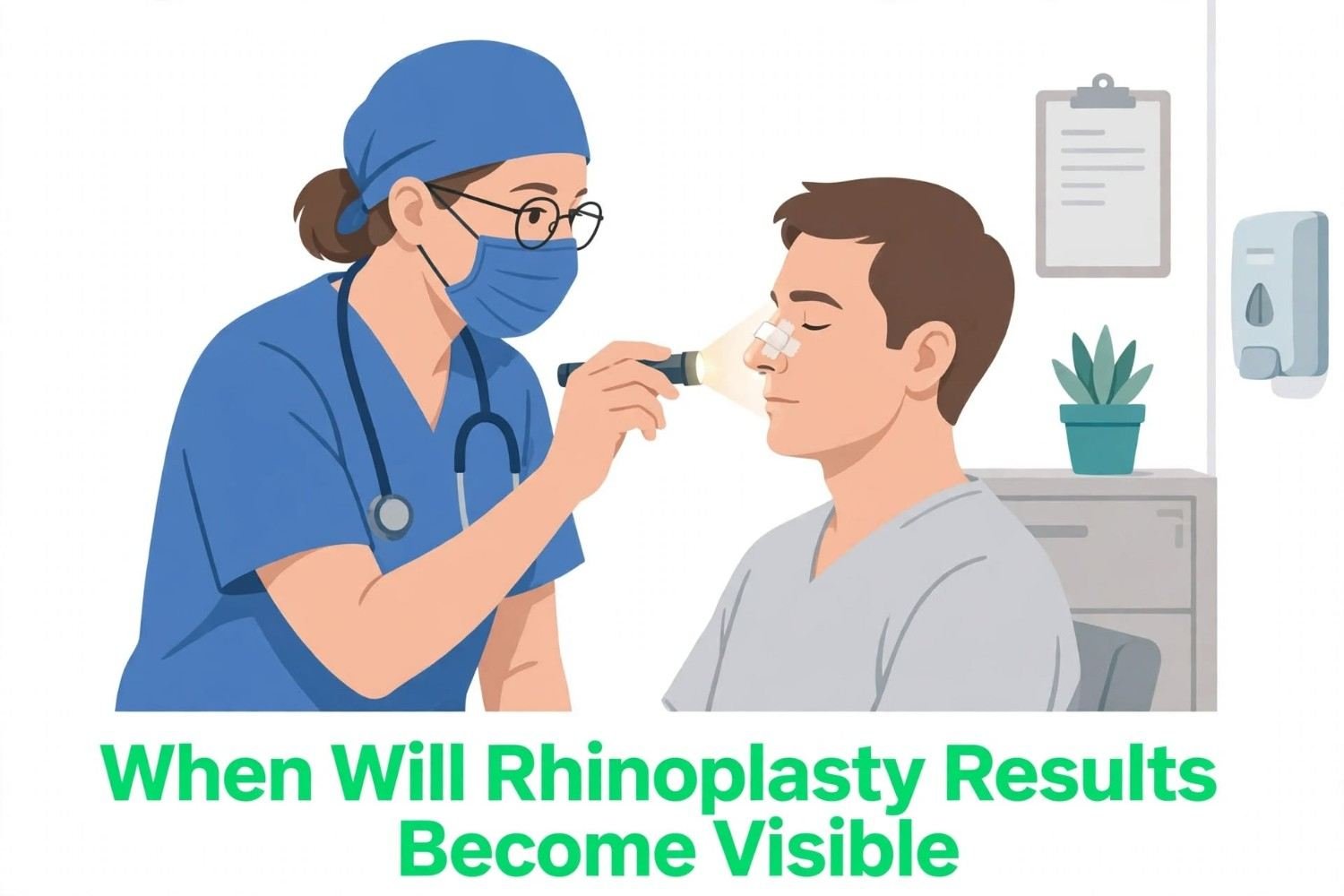
When Will Rhinoplasty Results Become Visible during the first week? This is when patients usually begin the early recovery process. Immediately after surgery, the nose may be covered with a protective splint or dressing to support the healing tissues. Some patients may also have internal splints or nasal packing, depending on the procedure. Swelling, bruising around the eyes, mild discomfort and nasal congestion are common during this period. These temporary effects can make the nose appear different from the expected surgical outcome. The medical team provides instructions about resting, cleaning and protecting the treated area.

The external splint is commonly removed around the end of the first week, although the timing depends on the surgeon’s approach. Once it is removed, patients may notice an early change in the nasal shape. However, swelling remains present, and the nose may appear fuller than expected. Some areas may look uneven because swelling does not always reduce equally on both sides. This does not automatically mean that the surgery has produced an uneven result. Patients should avoid pressing, rubbing or adjusting their nose and should follow the surgeon’s instructions carefully during this sensitive stage.
How Does the Nose Look During Weeks Two to Four

When Will Rhinoplasty Results Become Visible more clearly is often a concern during the second, third and fourth weeks. By this stage, much of the visible bruising may have improved, and early swelling usually becomes less noticeable. Patients may begin feeling more comfortable returning to work, school or other routine activities, depending on their recovery and the surgeon’s advice. The nasal bridge may appear more defined, and the overall shape may become easier to recognise. However, the tip and surrounding tissues may still look swollen.

During this period, patients may notice small changes in their nose from one day to another. Morning swelling can sometimes make the nose appear fuller, while it may look slightly different later in the day. This can happen as the body continues to manage fluid and tissue inflammation. It is also possible for one side to appear more swollen than the other during healing. Patients should avoid comparing daily photographs too closely because minor changes can be difficult to interpret. Following the recommended recovery routine and attending scheduled reviews are more useful than repeatedly checking the nose for small differences.

What Happens to Rhinoplasty Results Between One and Three Months

When Will Rhinoplasty Results Become Visible between the first and third months? During this stage, swelling generally continues to reduce, allowing the nasal shape to become more refined. The bridge may appear more settled, and the overall facial proportions may become easier to assess. Patients often notice that their nose looks more natural compared with the early weeks after surgery. However, the nasal tip may remain fuller than expected, particularly in patients with thicker skin or those who have undergone extensive tip reshaping.

Although the nose may look considerably improved during this period, it is still healing internally. The skin, cartilage and supporting tissues need time to settle into their new positions. Some temporary firmness or changes in sensation may also remain. Patients should continue following restrictions on strenuous activities and avoid any activity that could cause an accidental impact to the nose until cleared by their surgeon. The surgeon may use follow-up examinations and photographs to assess the changes over time. This stage is an important part of gradual refinement rather than the final stage of recovery.

When Does the Nasal Tip Become More Defined?

The nasal tip is often the last area to show its final shape after rhinoplasty. This is because the skin and soft tissues around the tip may retain swelling for longer than other parts of the nose. Patients sometimes notice that their nasal bridge looks relatively defined while the tip remains rounded, full or slightly firm. This difference can be frustrating, particularly for people who expected the entire nose to settle at the same speed. However, the healing process does not occur equally in every part of the nose.

When Will Rhinoplasty Results Become Visible around the nasal tip depends on skin thickness, surgical technique, cartilage support and the extent of correction. Patients with thicker skin may require additional time for swelling to settle. The tip can continue changing gradually over several months, and refinement may extend beyond the first year in some cases. Patients should not attempt to massage, press or reshape the tip unless their surgeon specifically recommends it. Regular follow-up examinations help distinguish normal healing changes from concerns that require medical attention.

What Should You Expect From Rhinoplasty Results Between Six and Twelve Months?

When Will Rhinoplasty Results Become Visible in their more settled form? For many patients, the period between six and twelve months brings significant refinement. Much of the swelling has usually reduced by this stage, and the nasal bridge, tip and overall proportions become easier to evaluate. The nose may look more natural as the tissues continue to adapt to the reshaped bone and cartilage. Patients who initially noticed fullness or mild irregularities may find that these changes have improved as healing progresses.

However, the final timeline varies according to the patient’s skin quality and surgical requirements. Some patients may continue experiencing subtle changes beyond twelve months, particularly after complex or revision rhinoplasty. The nasal tip can be one of the last areas to settle completely. It is important not to make decisions about additional cosmetic procedures while the nose is still undergoing normal healing. A detailed review with the operating surgeon can help determine whether the changes are part of the expected recovery process or require further evaluation.

How Can You Protect Your Nose During the Healing Period?

Protecting the nose after surgery is important for supporting the healing process and maintaining the planned structural changes. Patients should follow the instructions given by their surgeon regarding sleeping position, cleaning, medicines and daily activities. Keeping the head elevated while resting may help reduce swelling during early recovery. Cold compresses may be recommended around the cheeks or under the eyes, but they should not be placed directly on the nose unless specifically instructed. Patients should also avoid blowing their nose during the period advised by their surgeon.

Activities that may cause pressure or impact should be avoided until the surgeon gives permission. Heavy exercise, contact sports and activities involving a risk of facial injury may need to be restricted for several weeks or longer. Patients who wear glasses should ask their surgeon when it is safe to place weight on the nasal bridge. Sun protection is also important because healing skin can be more sensitive to sunlight. Smoking should be avoided because it can interfere with tissue healing. These precautions help protect the nose while the internal structures continue recovering.

How Can You Identify Normal Healing and Possible Complications?

When Will Rhinoplasty Results Become Visible

Understanding When Will Rhinoplasty Results Become Visible also means recognising the difference between normal recovery changes and symptoms that require medical attention. Mild swelling, bruising, temporary nasal congestion and changes in skin sensation can occur after surgery. Some patients may also notice that the nose appears slightly uneven during the early healing period. These changes often improve as swelling decreases. However, patients should not assume that every symptom is normal. Any concern should be discussed with the surgeon, particularly if it becomes worse rather than gradually improving.

Increasing pain, persistent or heavy bleeding, fever, worsening redness, unusual discharge or sudden changes in swelling should be reported to the medical team promptly. Significant breathing difficulties or other unexpected symptoms also require medical assessment. Patients should attend all follow-up appointments even when recovery appears to be progressing well. The surgeon can examine the internal and external structures, assess the nasal shape and provide guidance about the next stage of healing. A careful follow-up process helps patients understand their progress and evaluate their surgical outcome at the appropriate time.

wazamba-pl.deugarte.com

Cookie Policy

This website uses cookies to ensure you get the best experience on our website.

Go It!