Cosmetic procedures have become increasingly popular for people who want to improve their appearance and boost confidence. However, understanding the Risks and Safety of Cosmetic Surgery is just as important as knowing the potential benefits. Whether you are considering a minor cosmetic enhancement or a more extensive procedure, making informed decisions can help reduce complications and improve your overall experience. If you are researching treatment options in Thrissur, understanding the facts before surgery is essential.

Choosing cosmetic surgery is a personal decision. Every procedure carries benefits, limitations, and possible risks. The best outcomes are achieved when patients have realistic expectations, understand the recovery process, and carefully follow medical advice before and after surgery.

Understanding Risks and Safety of Cosmetic Surgery

The Risks and Safety of Cosmetic Surgery depend on several factors, including:

  • Overall health of the patient
  • Type of procedure performed
  • Complexity of the surgery
  • Experience of the surgical team
  • Quality of the medical facility
  • Post-operative care and patient compliance

Modern cosmetic surgery has become significantly safer due to advanced technology, improved surgical techniques, better anesthesia, and strict infection control measures. Nevertheless, no surgical procedure is completely free from risk.

Why Understanding Cosmetic Surgery Risks Matters

Being aware of possible complications helps patients:

  • Make informed decisions
  • Prepare mentally for recovery
  • Follow safety guidelines
  • Recognize warning signs early
  • Improve overall surgical outcomes

Knowledge allows patients to actively participate in their treatment journey rather than relying solely on expectations.

Common Risks Associated with Cosmetic Surgery

Although many cosmetic procedures are completed successfully, some complications may occur.

Infection

Infections may develop if bacteria enter the surgical site. Symptoms include:

  • Fever
  • Redness
  • Swelling
  • Warm skin
  • Drainage from the incision

Prompt treatment usually prevents serious complications.

Bleeding

Some bleeding is expected after surgery. Excessive bleeding may require additional treatment or monitoring.

Scarring

Every incision creates some degree of scar. Factors influencing scar formation include:

  • Genetics
  • Skin type
  • Surgical technique
  • Proper wound care

Swelling and Bruising

Temporary swelling and bruising are common and usually improve within weeks.

Delayed Healing

Certain patients experience slower healing because of:

  • Smoking
  • Diabetes
  • Poor nutrition
  • Reduced blood circulation

Anesthesia Risks

General or local anesthesia may occasionally lead to complications such as:

  • Allergic reactions
  • Breathing difficulties
  • Nausea
  • Blood pressure changes

Modern anesthesia monitoring has greatly reduced these risks.

Factors That Influence Cosmetic Surgery Safety

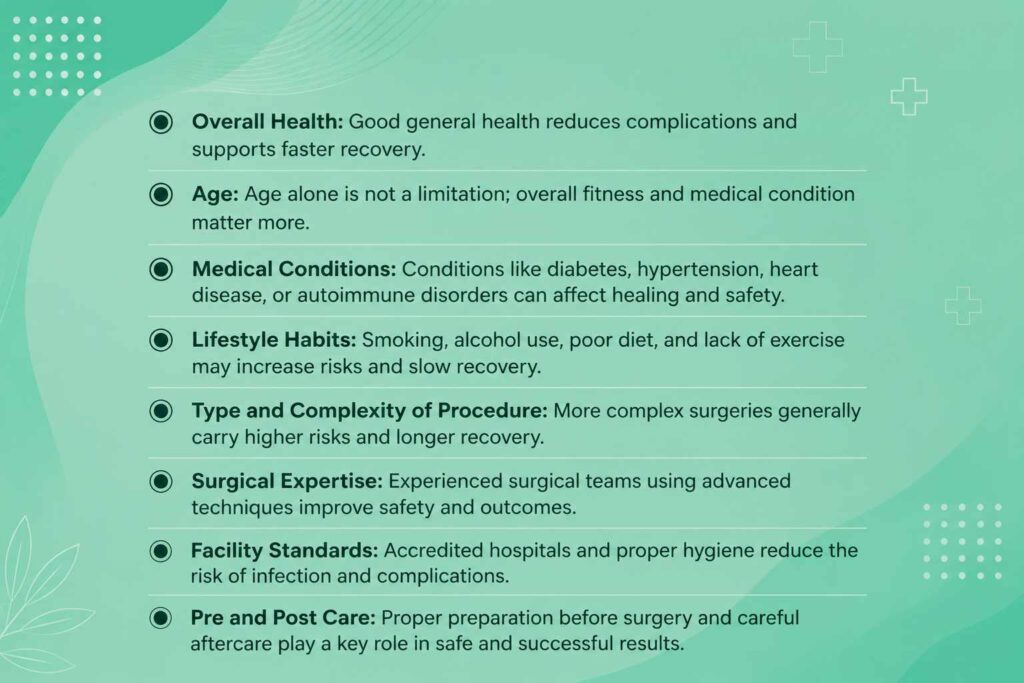
Infographic highlighting the key factors that influence cosmetic surgery safety, including overall health, lifestyle habits, medical conditions, and surgical expertise.

Several elements affect the Risks and Safety of Cosmetic Surgery.

Overall Health

Healthy patients generally recover faster and experience fewer complications.

Lifestyle Habits

Smoking, alcohol consumption, and poor nutrition may increase surgical risks.

Medical Conditions

Conditions that require additional evaluation include:

  • Diabetes
  • Heart disease
  • High blood pressure
  • Obesity
  • Autoimmune disorders

Age

Age alone is not the deciding factor. Overall health is far more important.

Types of Cosmetic Surgery and Their Safety Considerations

Facial Procedures

Examples include:

  • Rhinoplasty
  • Eyelid surgery
  • Facelift
  • Chin surgery

Potential concerns:

  • Swelling
  • Bruising
  • Temporary numbness
  • Asymmetry

Breast Procedures

Common surgeries include:

  • Breast augmentation
  • Breast reduction
  • Breast lift

Possible risks:

  • Implant-related complications
  • Infection
  • Capsular contracture
  • Changes in nipple sensation

Body Contouring Procedures

These include:

  • Liposuction
  • Tummy tuck
  • Body lift

Possible complications include:

  • Fluid accumulation
  • Skin irregularities
  • Blood clots
  • Delayed wound healing

Skin Procedures

Examples:

  • Scar revision
  • Mole removal
  • Skin tightening

Risks may include:

  • Pigmentation changes
  • Minor scarring
  • Infection

Signs of Possible Complications

Patients should seek medical attention if they notice:

  • High fever
  • Persistent bleeding
  • Severe swelling
  • Increasing pain
  • Difficulty breathing
  • Chest pain
  • Foul-smelling wound discharge
  • Sudden redness spreading around the incision

Early intervention often prevents serious complications.

How Cosmetic Surgery Safety Has Improved

Medical advancements continue to improve patient safety through:

  • Better surgical planning
  • Modern operating rooms
  • Advanced monitoring systems
  • Improved anesthesia
  • Better sterilization protocols
  • Enhanced recovery techniques
  • High-quality imaging technology

These developments have reduced complication rates for many procedures.

Importance of Proper Patient Evaluation

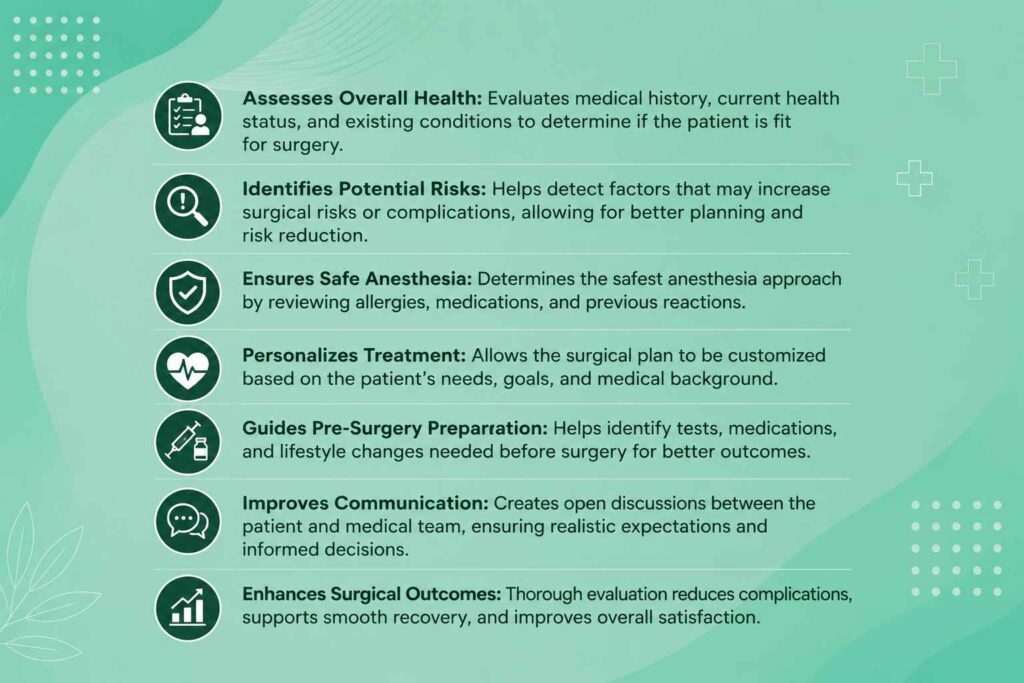
Infographic explaining the importance of proper patient evaluation before cosmetic surgery, including health assessment, risk identification, and treatment planning.

Before surgery, patients usually undergo:

  • Medical history review
  • Physical examination
  • Blood investigations
  • Medication review
  • Allergy assessment
  • Lifestyle evaluation

These assessments help determine whether surgery is appropriate.

Preparing for Cosmetic Surgery Safely

Preparation plays a major role in successful outcomes.

Before Surgery

Patients should:

  • Follow all medical instructions
  • Stop smoking if advised
  • Maintain healthy nutrition
  • Stay hydrated
  • Avoid certain medications if instructed
  • Arrange transportation and recovery support

Recovery Safety Tips

Recovery is an important part of achieving good results.

Helpful practices include:

  • Taking prescribed medications
  • Keeping wounds clean
  • Wearing compression garments when recommended
  • Avoiding heavy exercise
  • Attending follow-up appointments
  • Sleeping in recommended positions
  • Staying hydrated
  • Eating protein-rich foods

Benefits of Following Safety Guidelines

Patients who carefully follow instructions often experience:

  • Faster healing
  • Lower infection risk
  • Better cosmetic outcomes
  • Less discomfort
  • Reduced swelling
  • Improved scar appearance
  • Higher satisfaction

Myths About Cosmetic Surgery Safety

Myth 1: Cosmetic surgery is completely risk-free.

Every surgery carries some level of risk.

Myth 2: Recovery is always quick.

Recovery varies depending on the procedure and the individual.

Myth 3: Younger patients never experience complications.

Complications can occur at any age.

Myth 4: Minor procedures require no preparation.

Even minimally invasive treatments require proper planning.

Lifestyle Tips for Better Recovery

Healthy habits can improve healing.

  • Eat balanced meals
  • Drink plenty of water
  • Sleep adequately
  • Avoid smoking
  • Avoid alcohol during recovery
  • Walk gently as advised
  • Protect scars from sunlight

Emotional Preparation Before Surgery

Patients should:

  • Have realistic expectations
  • Understand recovery timelines
  • Be patient with healing
  • Discuss concerns openly
  • Focus on long-term results rather than immediate changes

Questions to Consider Before Cosmetic Surgery

Ask yourself:

  • Why do I want surgery?
  • What results do I expect?
  • Am I medically fit?
  • Do I understand the recovery process?
  • Can I follow post-operative instructions?

Being honest about these questions helps improve satisfaction.

Long-Term Safety After Cosmetic Surgery

Long-term results depend on:

  • Healthy lifestyle habits
  • Stable body weight
  • Good skincare
  • Regular follow-up visits
  • Sun protection
  • Proper scar care

Maintaining overall health helps preserve cosmetic results.

Conclusion

Understanding the Risks and Safety of Cosmetic Surgery allows patients to make informed and confident decisions. While modern cosmetic procedures have become safer than ever, every surgery carries potential risks that should never be overlooked. Careful planning, proper preparation, realistic expectations, and following post-operative instructions all contribute to better outcomes. If you are considering cosmetic surgery in Thrissur, taking time to learn about the procedure and prioritizing safety can help you achieve a smoother recovery and greater confidence in your decision. For additional evidence-based information about cosmetic surgery safety and patient guidance, visit the American Society of Plastic Surgeons .

Frequently Asked Questions

1. What are the common risks of cosmetic surgery? +
Common risks include infection, bleeding, swelling, bruising, scarring, anesthesia-related complications, and delayed wound healing. Most risks can be minimized with proper planning and aftercare.
2. Is cosmetic surgery generally safe? +
Yes. Cosmetic surgery is generally safe when patients are carefully evaluated, appropriate surgical techniques are used, and post-operative instructions are followed.
3. Can complications occur after cosmetic surgery? +
Although many procedures are successful, complications such as infection, fluid buildup, excessive bleeding, or delayed healing may occasionally occur.
4. How can I reduce the risks of cosmetic surgery? +
You can reduce risks by maintaining good health, avoiding smoking, following medical advice, attending follow-up appointments, and carefully following recovery instructions.
5. Does age affect cosmetic surgery safety? +
Age alone is not the deciding factor. Overall health, medical history, and fitness for surgery have a greater impact on cosmetic surgery safety.
6. How long does recovery usually take? +
Recovery varies depending on the type of cosmetic procedure, but many patients notice significant improvement within a few weeks while complete healing may take several months.
7. Are cosmetic surgery scars permanent? +
Every surgical incision leaves a scar, but most scars gradually fade over time with proper wound care, sun protection, and healthy healing.
8. Why is post-operative care important? +
Proper post-operative care supports healing, lowers the chance of complications, reduces discomfort, and helps achieve the best possible cosmetic results.
9. Can lifestyle habits affect cosmetic surgery recovery? +
Yes. Smoking, excessive alcohol consumption, poor nutrition, dehydration, and inadequate sleep can slow healing and increase the risk of complications.
10. Why should I understand the Risks and Safety of Cosmetic Surgery before treatment? +
Understanding the Risks and Safety of Cosmetic Surgery helps you make informed decisions, prepare for recovery, recognize warning signs early, and improve your chances of achieving safe and satisfying results.

Sushrutha Institute of Plastic, Reconstructive & Aesthetic Surgery

Dr Jyoshid R Balan

Dr Jyoshid R Balan

Plastic & Reconstructive Surgeon

SIPRAS, Elite Mission Hospital, Thrissur

Dr Pradeep Kumar

Dr Pradeep Kumar

Plastic, Reconstructive & Aesthetic Surgeon

SIPRAS, Elite Mission Hospital, Thrissur

Dr Prince H P

Dr Prince H P

Senior Consultant Plastic Surgeon

SIPRAS, Elite Mission Hospital, Thrissur

Dr Vinu Roy

Dr Vinu Roy

Plastic & Reconstructive Surgeon

SIPRAS, Elite Mission Hospital, Thrissur

Dr Ajai K S

Dr Ajai K S

Plastic & Reconstructive Surgeon

SIPRAS, Elite Mission Hospital, Thrissur