Cosmetic surgery can improve appearance and confidence, but the journey does not end when the procedure is completed. Recovery After Cosmetic Surgery plays a major role in achieving the best possible results. Proper healing, following medical advice, maintaining a healthy lifestyle, and giving your body enough time to recover all contribute to successful outcomes. Whether you undergo a facial procedure or body contouring treatment in Thrissur, understanding the recovery process helps you prepare mentally and physically.

Every individual heals differently depending on factors such as age, overall health, lifestyle, and the type of cosmetic procedure performed. While some people return to their daily routine within a few days, others may require several weeks or months before they experience complete healing.

This guide explains everything you need to know about Recovery After Cosmetic Surgery, including the healing stages, recovery timeline, essential aftercare, warning signs, and practical tips that support a smooth and comfortable recovery.

Why Recovery After Cosmetic Surgery Is So Important

Many people focus only on the cosmetic procedure itself, but recovery is equally important. The healing period allows tissues to repair, swelling to reduce, and final results to gradually appear.

Proper recovery can help:

  • Reduce swelling and bruising
  • Lower the risk of infection
  • Improve surgical outcomes
  • Promote faster healing
  • Minimize complications
  • Support scar healing
  • Increase comfort during recovery
  • Enhance long-term cosmetic results

Ignoring recovery instructions may delay healing and negatively affect the final appearance.

Understanding the Healing Process

Every cosmetic procedure triggers the body’s natural healing response. This process occurs in several stages.

Inflammatory Phase

The first few days after surgery involve inflammation. During this stage, your body begins repairing damaged tissues.

Common experiences include:

  • Swelling
  • Mild pain
  • Bruising
  • Redness
  • Tightness

These symptoms are generally expected and gradually improve.

Repair Phase

New tissue begins forming over the following weeks. Collagen production increases, helping wounds strengthen.

During this stage:

  • Bruising fades
  • Swelling slowly decreases
  • Incisions begin healing
  • Energy levels improve

Remodeling Phase

The final healing stage can continue for several months.

During this period:

  • Scars soften
  • Skin adjusts
  • Final contour develops
  • Results become more noticeable

Patience is important because complete healing often takes longer than expected.

Factors That Affect Recovery After Cosmetic Surgery

Healing varies from person to person.

Several factors influence recovery.

Age

Younger individuals often heal faster due to better tissue regeneration.

Overall Health

People with chronic medical conditions may require additional healing time.

Nutrition

Healthy foods rich in vitamins and protein support tissue repair.

Smoking

Smoking significantly delays wound healing by reducing oxygen supply.

Alcohol Consumption

Alcohol may increase swelling and interfere with medications.

Physical Activity

Returning to strenuous activities too soon may increase complications.

Procedure Type

Minor cosmetic procedures generally recover faster than major surgeries.

Common Symptoms During Recovery After Cosmetic Surgery

Understanding what is normal helps reduce unnecessary anxiety.

Patients commonly experience:

  • Mild pain
  • Swelling
  • Bruising
  • Temporary numbness
  • Itching around healing skin
  • Fatigue
  • Tightness
  • Mild drainage from incision sites

These symptoms usually improve gradually.

Recovery Timeline After Cosmetic Surgery

Although every recovery is unique, a general timeline helps set realistic expectations.

First 24 Hours

During the first day:

  • Rest is essential.
  • Follow medication schedules.
  • Drink enough fluids.
  • Avoid unnecessary movement.
  • Keep dressings clean.

Most patients require assistance at home.

Days 2–7

During the first week:

  • Swelling usually reaches its peak.
  • Bruising becomes more visible.
  • Walking short distances is encouraged.
  • Pain becomes easier to manage.
  • Follow-up appointments may occur.

Adequate sleep helps accelerate recovery.

Weeks 2–4

Many patients begin feeling significantly better.

During this period:

  • Bruising fades
  • Swelling gradually improves
  • Energy increases
  • Light daily activities resume
  • Incisions continue healing

Heavy lifting should still be avoided.

One to Three Months

Healing becomes more noticeable.

Patients often experience:

  • Better mobility
  • Reduced swelling
  • Improved appearance
  • Softer scars
  • Increased confidence

The body continues repairing tissues internally.

Six Months to One Year

Final cosmetic results usually become visible.

During this stage:

  • Scars mature
  • Skin texture improves
  • Swelling nearly disappears
  • Surgical results stabilize

Patience is essential because internal healing continues even after external wounds appear healed

Essential Aftercare Tips for Recovery After Cosmetic Surgery

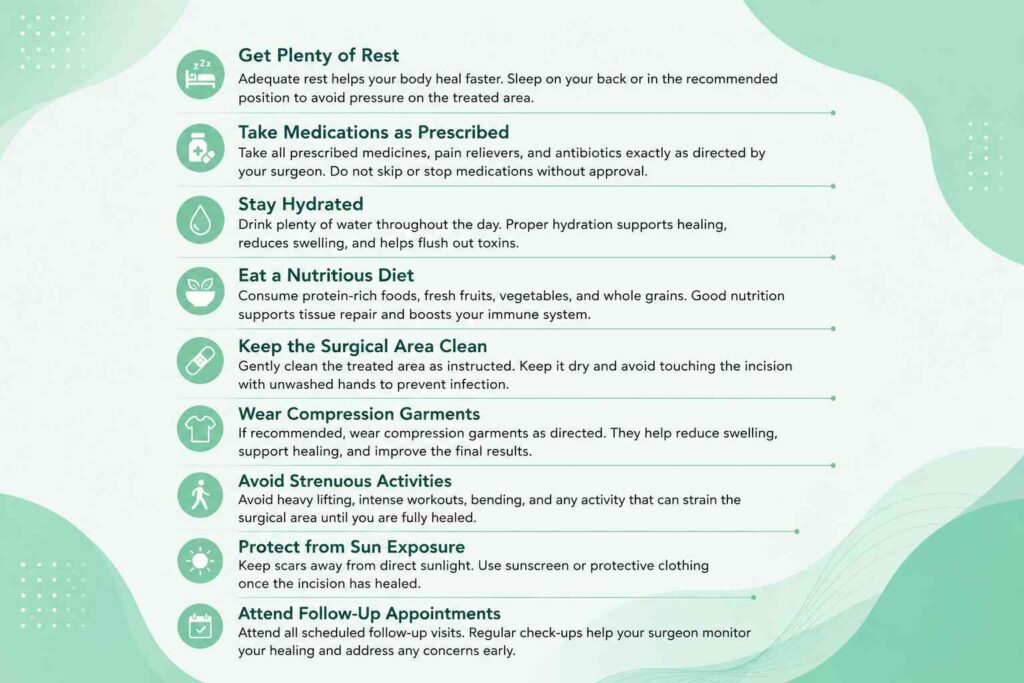
Infographic showing essential aftercare tips for Recovery After Cosmetic Surgery, including rest, hydration, nutrition, medication, wound care, and follow-up appointments.

Following aftercare instructions supports safe healing.

Get Plenty of Rest

Your body heals most efficiently while resting.

Aim for:

  • Regular sleep
  • Comfortable positioning
  • Limited physical stress

Stay Hydrated

Water supports circulation and tissue repair.

Drink enough fluids throughout the day unless otherwise instructed.

Eat Nutritious Foods

A balanced diet promotes healing.

Include:

  • Lean protein
  • Fresh vegetables
  • Fruits
  • Whole grains
  • Healthy fats
  • Foods rich in Vitamin C
  • Zinc-rich foods

Good nutrition supports collagen production.

Take Medications Correctly

Only take medications exactly as instructed.

These may include:

  • Pain medication
  • Antibiotics
  • Anti-inflammatory medicines

Never stop prescribed medication without professional advice.

Wear Compression Garments

Some cosmetic procedures require compression garments.

Benefits include:

  • Reduced swelling
  • Better circulation
  • Improved contour
  • Increased comfort

Wear them for the recommended duration.

Avoid Smoking

Smoking significantly slows healing.

It can:

  • Reduce blood flow
  • Increase infection risk
  • Delay tissue repair
  • Worsen scars

Avoid smoking before and after surgery whenever possible.

Protect Incisions

Keep surgical areas:

  • Clean
  • Dry
  • Protected
  • Free from unnecessary pressure

Proper wound care reduces infection risk and promotes smoother healing.

Attend Follow-Up Visits

Regular appointments allow recovery to be monitored.

Healthcare professionals can:

  • Check healing progress
  • Remove stitches if necessary
  • Identify complications early
  • Adjust recovery recommendations

Skipping appointments is never recommended.

Foods That Support Recovery After Cosmetic Surgery

Nutrition plays an important role in Recovery After Cosmetic Surgery. Eating a balanced diet provides the nutrients your body needs to repair tissues, reduce inflammation, and strengthen the immune system.

 Protein-Rich Foods

Protein is essential for rebuilding tissues after surgery.

Good sources include:

  • Eggs
  • Fish
  • Chicken
  • Turkey
  • Beans
  • Lentils
  • Greek yogurt
  • Tofu

 Vitamin C

Vitamin C supports collagen production and wound healing.

Include foods such as:

  • Oranges
  • Kiwi
  • Strawberries
  • Bell peppers
  • Broccoli
  • Tomatoes

 Zinc

Zinc contributes to healthy skin repair.

Foods rich in zinc include:

  • Pumpkin seeds
  • Chickpeas
  • Nuts
  • Whole grains
  • Lean meat

Healthy Fats

Healthy fats help reduce inflammation.

Choose:

  • Avocados
  • Olive oil
  • Walnuts
  • Almonds
  • Flaxseeds

 Stay Hydrated

Water is just as important as food during Recovery After Cosmetic Surgery.

Aim to:

  • Drink water throughout the day
  • Limit sugary beverages
  • Avoid excessive caffeine if advised
  • Stay hydrated before and after light activity

Activities to Avoid During Recovery After Cosmetic Surgery

Protecting the healing area is essential.

Avoid the following until you receive medical clearance.

 Heavy Exercise

Intense workouts may:

  • Increase swelling
  • Cause bleeding
  • Delay healing
  • Place stress on surgical areas

 Heavy Lifting

Avoid lifting heavy objects because it can strain healing tissues.

 Swimming

Pools, lakes, and hot tubs may expose healing wounds to bacteria.

 Direct Sun Exposure

Healing skin is highly sensitive.

Protect scars by:

  • Wearing protective clothing
  • Using sunscreen after wounds have healed
  • Avoiding prolonged sunlight

 Smoking and Alcohol

Both can interfere with the body’s natural healing process.

Avoid them during Recovery After Cosmetic Surgery whenever possible.

Pain Management During Recovery After Cosmetic Surgery

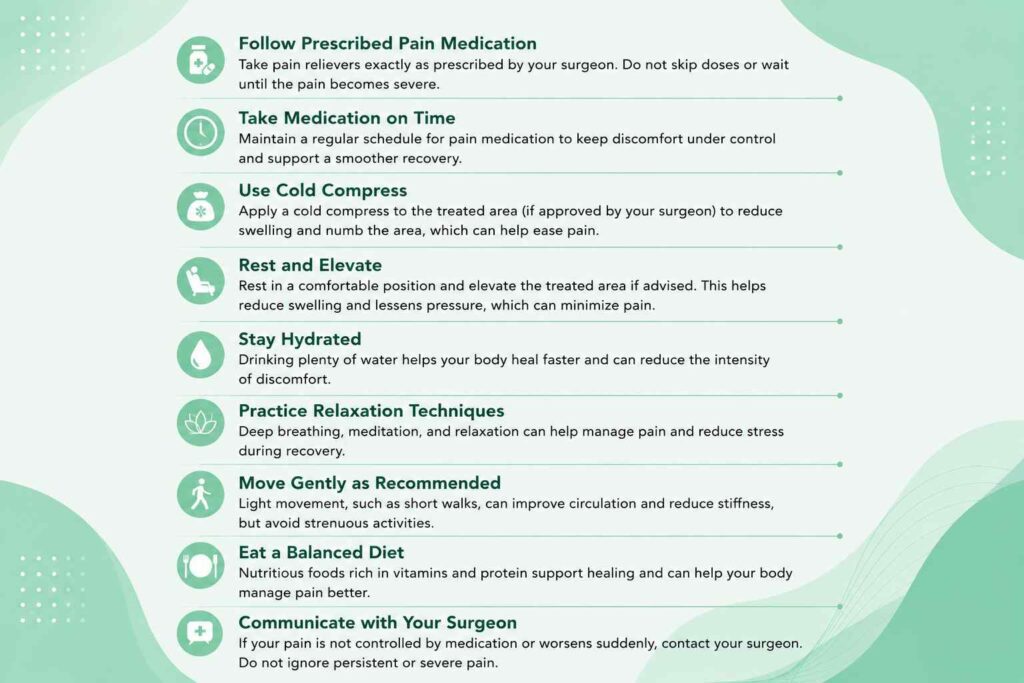
Infographic illustrating pain management during recovery after cosmetic surgery, including medication, cold compresses, hydration, rest, relaxation techniques, and healthy nutrition.

Some discomfort is expected, especially during the first few days.

Pain can usually be managed by:

  • Taking prescribed medications
  • Resting adequately
  • Using cold compresses if recommended
  • Wearing compression garments
  • Sleeping in the recommended position

Never take additional medications without professional guidance.

Managing Swelling and Bruising

Swelling is one of the most common parts of Recovery After Cosmetic Surgery.

To reduce swelling:

  • Elevate the treated area when appropriate
  • Wear compression garments
  • Avoid salty foods
  • Stay hydrated
  • Walk short distances
  • Avoid strenuous activities

Bruising usually fades over several weeks.

Caring for Surgical Scars

Scars naturally improve over time.

To encourage healthy scar healing:

  • Keep the incision clean
  • Avoid scratching
  • Follow wound care instructions
  • Protect scars from sunlight
  • Use scar treatments only when recommended

Most scars gradually soften and become less noticeable over several months.

Emotional Recovery After Cosmetic Surgery

Recovery involves emotional healing as well as physical healing.

Many patients experience changing emotions during the healing period.

Common feelings include:

  • Excitement
  • Anxiety
  • Temporary disappointment due to swelling
  • Impatience
  • Increased confidence as healing progresses

Remember that the final cosmetic result often takes several months to become visible.

Sleep Tips for Recovery After Cosmetic Surgery

Quality sleep allows the body to repair itself.

Helpful sleep habits include:

  • Sleeping on your back if advised
  • Keeping the head elevated after facial procedures
  • Using extra pillows for comfort
  • Following recommended sleeping positions
  • Avoiding pressure on treated areas

Good sleep can improve both comfort and healing.

Exercise After Cosmetic Surgery

Returning to physical activity should happen gradually.

Week One

  • Gentle walking
  • Light stretching only if approved

Weeks Two to Four

Depending on healing progress:

  • Longer walks
  • Light household activities

After Medical Clearance

Gradually resume:

  • Strength training
  • Cardio
  • Running
  • Yoga
  • Swimming

Never rush back into vigorous exercise.

Warning Signs That Need Medical Attention

While most recoveries are uncomplicated, some symptoms require prompt evaluation.

Seek medical advice if you experience:

  • High fever
  • Severe or worsening pain
  • Heavy bleeding
  • Excessive swelling
  • Pus or foul-smelling drainage
  • Difficulty breathing
  • Chest pain
  • Persistent vomiting
  • Sudden redness spreading around the incision

Early attention can help prevent more serious complications.

Benefits of Following Proper Recovery Guidelines

Following aftercare instructions offers several advantages.

Benefits include:

  • Faster healing
  • Better cosmetic outcomes
  • Lower infection risk
  • Reduced swelling
  • Improved scar appearance
  • Greater comfort
  • Increased confidence
  • More predictable long-term results

Every healthy habit contributes to successful Recovery After Cosmetic Surgery.

Common Mistakes to Avoid During Recovery After Cosmetic Surgery

Avoiding these mistakes can make healing smoother.

Returning to Work Too Soon

Rest allows the body to recover effectively.

Ignoring Medication Instructions

Take medications exactly as directed.

Missing Follow-Up Appointments

Regular reviews help monitor healing progress.

Not Drinking Enough Water

Dehydration can slow recovery.

Poor Nutrition

Balanced meals support tissue repair.

Smoking

Smoking significantly delays healing and increases complication risks.

Resuming Exercise Too Early

Physical strain may damage healing tissues.

Touching Incisions Frequently

Keeping the surgical area clean helps prevent infection.

Long-Term Care After Cosmetic Surgery

Even after the initial healing phase, maintaining healthy habits helps preserve your results.

Long-term care includes:

  • Eating a balanced diet
  • Staying physically active
  • Maintaining a stable weight
  • Protecting skin from sun damage
  • Drinking enough water
  • Following skincare recommendations
  • Attending routine follow-up visits if advised

These habits support both your overall health and the longevity of your cosmetic results.

Tips for a Smooth Recovery After Cosmetic Surgery

To make Recovery After Cosmetic Surgery as comfortable as possible:

  • Prepare your home before surgery.
  • Arrange transportation if needed.
  • Keep essential supplies nearby.
  • Wear loose, comfortable clothing.
  • Follow all aftercare instructions.
  • Eat nutritious meals.
  • Stay hydrated.
  • Get enough sleep every night.
  • Avoid smoking and alcohol.
  • Be patient with the healing process.
  • Contact your healthcare provider if anything feels unusual.

A thoughtful recovery plan can help you heal safely while achieving the best possible outcome.

Conclusion

Recovery After Cosmetic Surgery is an important phase that directly influences your comfort, healing, and final results. While every person’s recovery journey is different, following aftercare instructions, maintaining a healthy lifestyle, eating nutritious foods, staying hydrated, getting enough rest, and attending follow-up appointments can make the healing process smoother and safer.

It is normal to experience swelling, bruising, and mild discomfort during the early stages of healing, but these symptoms usually improve with time and proper care. Avoid rushing back into strenuous activities, protect your surgical area, and allow your body the time it needs to recover naturally.

By understanding what to expect and following recommended recovery practices, you can maximize the benefits of your procedure and enjoy long-lasting results. If you have concerns during Recovery After Cosmetic Surgery, seek timely medical advice rather than waiting for symptoms to worsen. Taking the right steps today helps support a healthier and more comfortable recovery journey in Thrissur. For additional guidance on healing and post-operative care, visit the American Society of Plastic Surgeons (ASPS) Patient Safety Resources for reliable, patient-focused information on cosmetic surgery recovery.

Frequently Asked Questions

1. How long does Recovery After Cosmetic Surgery usually take? +
Recovery After Cosmetic Surgery varies depending on the procedure, your overall health, and how well you follow aftercare instructions. Initial healing may take a few weeks, while complete healing can take several months.
2. Is swelling normal during Recovery After Cosmetic Surgery? +
Yes. Swelling is a normal part of Recovery After Cosmetic Surgery and generally improves gradually over several weeks with proper rest, hydration, and aftercare.
3. When can I return to work after cosmetic surgery? +
The timeline depends on the type of cosmetic procedure and your recovery progress. Some people return within a few days, while others may require several weeks before resuming work.
4. Can I exercise during Recovery After Cosmetic Surgery? +
Light walking is often encouraged to improve circulation, but strenuous exercise and heavy lifting should be avoided until your healthcare provider confirms it is safe.
5. What foods help Recovery After Cosmetic Surgery? +
Protein-rich foods, fresh fruits, vegetables, whole grains, healthy fats, and adequate water intake support tissue repair and promote smoother Recovery After Cosmetic Surgery.
6. How can I reduce scarring after cosmetic surgery? +
Keep the incision clean, protect scars from sunlight, avoid smoking, and use scar care products only if recommended to support healthy scar healing.
7. When can I shower after cosmetic surgery? +
The appropriate time depends on the procedure performed and your healing progress. Always follow your healthcare provider's instructions before getting the surgical area wet.
8. What should I avoid during Recovery After Cosmetic Surgery? +
Avoid smoking, alcohol, heavy lifting, strenuous exercise, swimming, and direct sun exposure to healing scars until you are fully recovered or advised otherwise.
9. How do I know if my recovery is progressing normally? +
Gradual improvement in swelling, bruising, pain, and mobility usually indicates healthy healing. Contact your healthcare provider if symptoms suddenly worsen or signs of infection develop.
10. When will I see the final cosmetic results? +
While noticeable improvements often appear within a few weeks, the final results of Recovery After Cosmetic Surgery usually become visible after several months as swelling completely subsides and tissues fully heal.

Sushrutha Institute of Plastic, Reconstructive & Aesthetic Surgery

Dr Jyoshid R Balan

Dr Jyoshid R Balan

Plastic & Reconstructive Surgeon

SIPRAS, Elite Mission Hospital, Thrissur

Dr Pradeep Kumar

Dr Pradeep Kumar

Plastic, Reconstructive & Aesthetic Surgeon

SIPRAS, Elite Mission Hospital, Thrissur

Dr Prince H P

Dr Prince H P

Senior Consultant Plastic Surgeon

SIPRAS, Elite Mission Hospital, Thrissur

Dr Vinu Roy

Dr Vinu Roy

Plastic & Reconstructive Surgeon

SIPRAS, Elite Mission Hospital, Thrissur

Dr Ajai K S

Dr Ajai K S

Plastic & Reconstructive Surgeon

SIPRAS, Elite Mission Hospital, Thrissur