
Preparing for Cosmetic Surgery involves more than choosing a procedure or booking a date. It means understanding your goals, checking your health, planning recovery, and following medical advice. For patients in Kerala, organised preparation can make consultations clearer and support realistic expectations. Every operation and every patient is different, so instructions from your plastic surgeon and anaesthesia team should always take priority. This guide explains the medical, emotional, and practical steps that support informed decision-making before an aesthetic procedure.
For more information about consultation, personalised treatment planning, patient safety, surgery, and aftercare, read our guide to choosing a specialised cosmetic surgery hospital.
What Does Preparing for Cosmetic Surgery Mean?
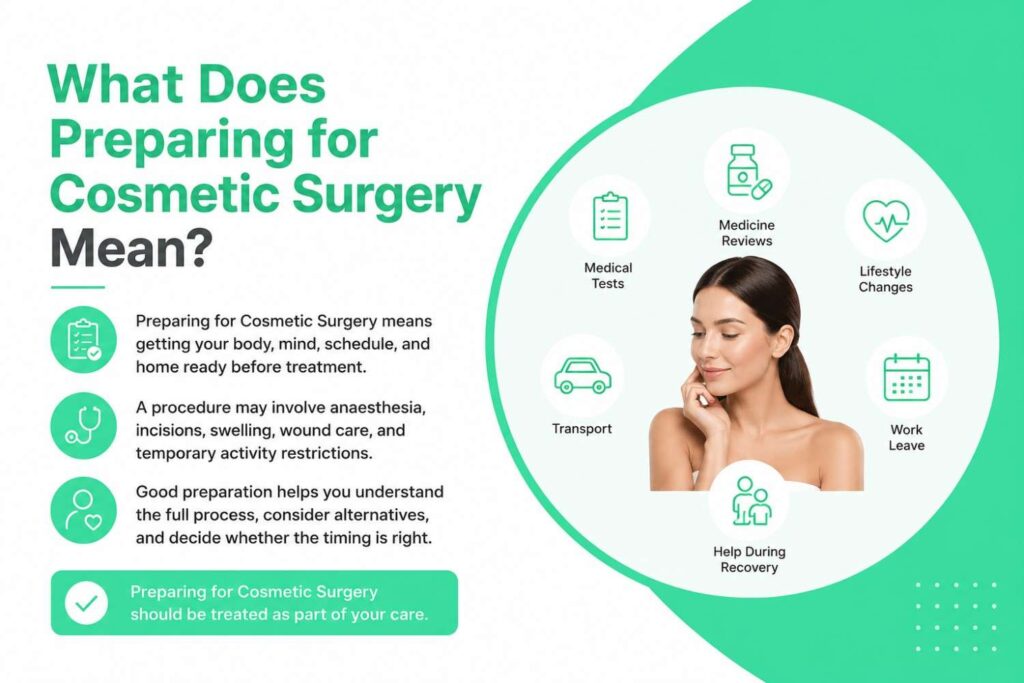
Preparing for Cosmetic Surgery means getting your body, mind, schedule, and home ready before treatment. It may include medical tests, medicine reviews, lifestyle changes, transport, work leave, and help during early recovery.
Cosmetic surgery is elective, but it is still surgery. A procedure may involve anaesthesia, incisions, swelling, wound care, and temporary activity restrictions. Good preparation helps you understand the full process instead of focusing only on the expected appearance after healing.
Preparing for Cosmetic Surgery should be treated as part of your care. It gives you time to ask questions, consider alternatives, understand limitations, and decide whether the timing is right.
Common Reasons People Consider Cosmetic Surgery
People consider cosmetic procedures for many personal reasons. The decision should come from the individual rather than pressure, criticism, or unrealistic social expectations.
Common reasons include:
- Improving facial or body proportions
- Addressing changes after pregnancy or weight loss
- Reducing excess skin or localised fat
- Restoring breast shape or volume
- Correcting a feature that has caused long-term concern
- Refreshing visible signs of ageing
- Improving comfort in clothing
- Combining functional and aesthetic improvement in selected cases
When Preparing for Cosmetic Surgery, discuss your motivation honestly. A responsible consultation should explore what you want to change, why it matters, and whether the proposed treatment can address that concern.
Types of Procedures to Understand Before Surgery
Preparing for Cosmetic Surgery depends on the procedure. Anaesthesia, dressings, mobility, follow-up, and recovery time can vary considerably.
Facial Procedures
Facial surgery may include rhinoplasty, facelift surgery, eyelid surgery, chin reshaping, fat grafting, or ear correction. Temporary swelling, bruising, tightness, nasal blockage, or altered sensation may occur.
Preparing for Cosmetic Surgery may include arranging extra pillows, avoiding pressure on the treated area, and organising help with meals or household work.
Breast Procedures
Breast augmentation, reduction, lift, reconstruction, and male breast reduction require different plans. When Preparing for Cosmetic Surgery, some patients need a support garment and temporary limits on lifting, driving, or overhead movement.
Ask how long help may be needed, when driving can resume, and which sleeping position is recommended.
Body Contouring Procedures
Liposuction, tummy tuck surgery, arm lift, thigh lift, and post-weight-loss body contouring may involve compression garments, drains, walking instructions, and longer activity restrictions.
Preparing for Cosmetic Surgery involving the abdomen or several body areas often requires detailed planning for stairs, bathing, cooking, childcare, and household tasks.
Hair and Skin-Related Procedures
When Preparing for Cosmetic Surgery for hair or skin treatments, recovery may be shorter, but aftercare remains important. Hair transplantation, scar revision, fat transfer, and selected skin procedures may require gentle cleansing, sun protection, prescribed medicines, and protection from friction.
Symptoms and Health Signs to Report
A key part of Preparing for Cosmetic Surgery is reporting current symptoms and recent health changes. Even a minor issue may affect surgery timing or anaesthesia planning.
Contact your medical team if you develop:
- Fever, cough, sore throat, or breathing symptoms
- A skin infection, wound, rash, or boil
- Vomiting, diarrhoea, or dehydration
- New chest pain, breathlessness, or fainting
- Unusual blood pressure or blood sugar readings
- Tooth infection or another active infection
- New swelling or pain in a leg
- An allergic reaction
- Pregnancy or possible pregnancy
- A newly prescribed medicine
Do not hide symptoms because you fear postponement. Delaying an operation can sometimes be the safest choice. Preparing for Cosmetic Surgery requires honest communication about your health.
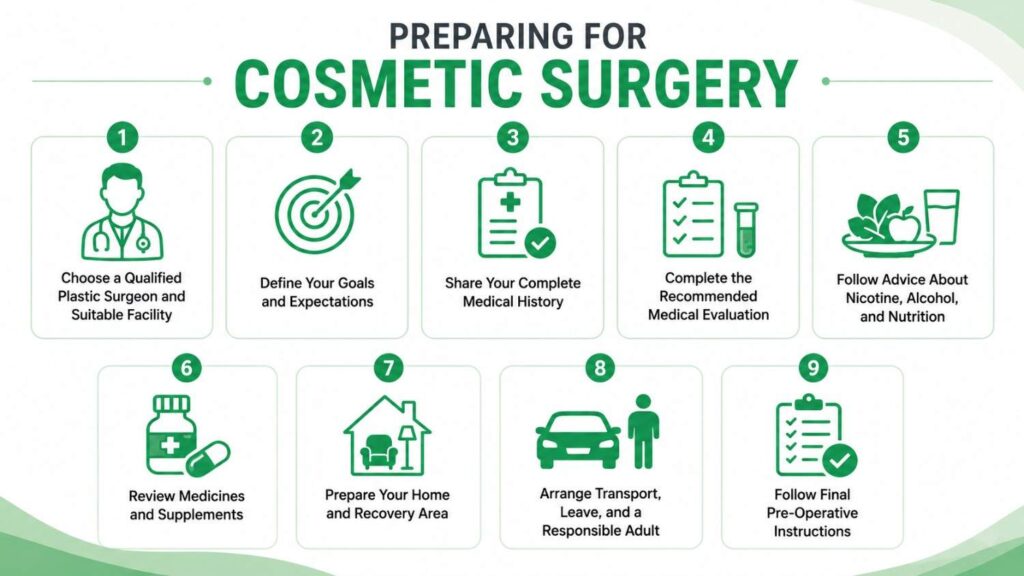
9 Essential Steps for Preparing for Cosmetic Surgery
1. Choose a Qualified Plastic Surgeon and Suitable Facility
The first step in Preparing for Cosmetic Surgery is checking the surgeon’s training, registration, experience, and familiarity with the procedure.
Ask where the operation will take place, who will provide anaesthesia, and what support is available if an unexpected problem occurs.
A consultation should include:
- A proper physical examination
- Discussion of suitable alternatives
- Possible risks and complications
- Expected recovery time
- Limitations of the procedure
- Realistic expected results
- Follow-up and aftercare requirements
Avoid making a decision based only on edited photographs, social media trends, discounts, or claims of perfection.
2. Define Your Goals and Expectations
Write down the exact change you hope to achieve. Reference photographs can help explain a preference, but your result cannot copy another person’s appearance.
Anatomy, skin quality, general health, age, and healing pattern influence the outcome.
Preparing for Cosmetic Surgery means understanding that bruising, swelling, and scars are part of healing. The final result may take several weeks or months to become visible.
Ask the surgeon:
- What level of improvement is realistic?
- What cannot be changed through the procedure?
- Where are the scars likely to be?
- How long may swelling remain?
- Could more than one treatment stage be necessary?
Realistic expectations can help you make a more balanced decision and manage the recovery period more comfortably.
3. Share Your Complete Medical History
Tell the medical team about previous operations, medical conditions, allergies, bleeding concerns, pregnancy history, anaesthesia reactions, and family history of surgical complications.
Provide a complete list of:
- Prescription medicines
- Over-the-counter medicines
- Vitamins and minerals
- Herbal products
- Protein or fitness supplements
- Hormonal treatments
- Injections
- Skin and hair medicines
- Nicotine products
- Alcohol use
- Recreational substances
Never stop an important medicine on your own. When Preparing for Cosmetic Surgery, medicine changes should be guided by the prescribing doctor and surgical team.
Hiding medical information can affect anaesthesia planning, bleeding risk, wound healing, and recovery. Accurate information allows the team to provide instructions based on your individual health needs.
4. Complete the Recommended Medical Evaluation
Depending on your procedure, age, and health, you may need blood tests, imaging, an electrocardiogram, pregnancy testing, or clearance from another specialist.
These assessments may review:
- Haemoglobin levels
- Blood sugar
- Kidney function
- Liver function
- Blood clotting
- Infection risk
- Heart health
- Existing medical conditions
Complete the tests within the recommended time and ensure the results reach the correct medical team.
Preparing for Cosmetic Surgery becomes more organised when health concerns are identified early. An abnormal result may require additional testing, treatment, a change in the surgical plan, or a new procedure date.
5. Follow Advice About Nicotine, Alcohol, and Nutrition
Nicotine can affect blood flow and wound healing. Your surgeon may ask you to stop smoking, vaping, nicotine gum, or other nicotine products for a defined period before and after surgery.
Do not replace cigarettes with another nicotine product unless the surgeon approves it.
Alcohol may affect hydration, medicines, anaesthesia, and recovery. Ask the medical team when alcohol should be avoided.
Good nutrition is also important when Preparing for Cosmetic Surgery. Eat balanced meals that include:
- Protein-rich foods
- Vegetables
- Fruits
- Whole grains
- Adequate fluids
Avoid crash diets immediately before surgery. Sudden dietary restrictions may reduce energy and nutrient intake.
Patients with diabetes, anaemia, kidney disease, digestive conditions, or other nutritional concerns may need individual advice.
6. Review Medicines and Supplements
Some medicines and supplements can affect bleeding, blood pressure, blood sugar, or anaesthesia. Your medical team may provide written instructions explaining what to continue, change, or temporarily avoid.
Do not assume that a natural product is harmless. Herbal tablets, high-dose vitamins, weight-loss products, and gym supplements can still affect treatment.
A written medication schedule is useful when Preparing for Cosmetic Surgery. Include:
- Product name
- Dose
- Usual timing
- Reason for taking it
- Date of any planned change
- Instructions for surgery morning
Bring the updated list to your consultations and on the day of surgery.
7. Prepare Your Home and Recovery Area
Create a clean and comfortable recovery area before going to the hospital. Keep common items within easy reach so you do not need to bend, stretch, or climb unnecessarily.
Useful items may include:
- Prescribed medicines
- Drinking water
- Simple, easy-to-prepare meals
- Clean pillows and bedding
- Loose or front-opening clothes
- Recommended support garments
- Written aftercare instructions
- Phone and charger
- Thermometer
- Clinic and emergency contact details
When Preparing for Cosmetic Surgery, consider stairs, pets, children, cooking, cleaning, laundry, and bathroom access.
Arrange practical support instead of expecting to manage every task alone. Help may be especially important after abdominal, breast, arm, or multiple-area procedures.
8. Arrange Transport, Leave, and a Responsible Adult
You may not be allowed to drive after sedation, anaesthesia, or certain pain medicines. Arrange reliable transport to and from the hospital.
A responsible adult may need to stay with you during the first night or for the period recommended by your surgeon.
Plan work leave according to your procedure and occupation. Desk work, driving, lifting, public speaking, prolonged standing, and physically demanding work have different recovery requirements.
Preparing for Cosmetic Surgery also means avoiding travel, strenuous exercise, major social events, and heavy responsibilities until they are expected to be manageable.
Allow some flexibility in your schedule because recovery speed varies from person to person.
9. Follow Final Pre-Operative Instructions
Before surgery, you may receive instructions about:
- Fasting
- Bathing
- Skin preparation
- Arrival time
- Clothing
- Jewellery
- Contact lenses
- Makeup
- Nail products
- Medicines to take that morning
Read the instructions carefully and set reminders.
Fasting rules are particularly important because eating or drinking at the wrong time can affect anaesthesia safety. Contact the hospital if you are unsure whether a food, drink, sweet, or medicine is permitted.
Wear comfortable clothing and bring all requested records. Preparing for Cosmetic Surgery early makes the final day calmer and reduces avoidable confusion.
Benefits of Preparing for Cosmetic Surgery Properly
Preparing for Cosmetic Surgery carefully cannot remove every surgical risk, but it can improve communication and help you follow medical advice accurately.
Possible benefits include:
- Better understanding of the procedure
- More realistic expectations
- Early identification of health concerns
- Clearer medicine management
- Reduced last-minute stress
- Safer transport arrangements
- Better support during early recovery
- Improved wound-care planning
- More organised follow-up care
- Faster access to help when concerns arise
- More confident decision-making
Preparing for Cosmetic Surgery also gives you permission to reconsider. Seeking another opinion, changing the date, choosing a different treatment, or deciding not to proceed are all valid choices.
The decision should feel informed, voluntary, and appropriate for your current health and personal circumstances.
Treatments, Medicines, and Aftercare to Discuss
When Preparing for Cosmetic Surgery, the exact treatment and aftercare plan depends on the operation.
Your surgeon may discuss:
- Local or general anaesthesia
- Antibiotics
- Pain relief
- Anti-nausea medicine
- Wound dressings
- Surgical drains
- Compression garments
- Scar care
- Follow-up appointments
Ask how and when to use every medicine. Confirm which side effects are expected and which symptoms require urgent medical attention.
Do not apply unapproved creams, oils, herbal products, supplements, or home remedies to the surgical area.
Preparing for Cosmetic Surgery should include written guidance about:
- Wound and dressing care
- Bathing and showering
- Recommended sleeping position
- Walking and movement
- Diet and hydration
- Compression garment use
- Drain care
- Driving and work restrictions
- Exercise and lifting
- Follow-up appointments
- Scar care and sun exposure
Keep these instructions where both you and your caregiver can find them.
Mistakes to Avoid
When Preparing for Cosmetic Surgery, common mistakes include:
- Hiding medical conditions or nicotine use
- Stopping prescribed medicines without advice
- Beginning new supplements close to surgery
- Ignoring fasting instructions
- Planning to drive yourself home
- Failing to arrange a responsible adult
- Returning to work or exercise too early
- Expecting immediate final results
- Booking surgery immediately before travel
- Planning a major event too close to surgery
- Using unapproved products on incisions
- Missing follow-up appointments
Preparing for Cosmetic Surgery requires honesty, flexibility, and enough time to plan. A general checklist can help, but it does not replace individual medical instructions.
Conclusion
Preparing for Cosmetic Surgery is a complete process involving surgeon selection, realistic expectations, accurate health information, medical checks, lifestyle guidance, home planning, and recovery support. It also means accepting that healing takes time and instructions vary according to the patient and procedure.
A thoughtful plan helps you ask better questions and make an informed choice. Follow the advice of your surgeon, anaesthesia team, and treating doctors rather than relying only on general online information. When Preparing for Cosmetic Surgery in Kerala, allow enough time to organise support, understand possible risks, and prepare for each stage from consultation to follow-up care.
To learn more about cosmetic and reconstructive plastic surgery, visit the American Society of Plastic Surgeons (ASPS).
FREQUENTLY ASKED QUESTIONS
Sushrutha Institute of Plastic, Reconstructive & Aesthetic Surgery


Dr Pradeep Kumar
Plastic, Reconstructive & Aesthetic Surgeon
SIPRAS, Elite Mission Hospital, Thrissur