Burns and traumatic injuries can affect much more than the surface of the skin. Severe burns, accidents, deep wounds, and tissue loss can damage muscles, nerves, blood vessels, and other structures. Plastic Surgery for Burns and Trauma in Kerala focuses on repairing damaged tissues, restoring movement and function, managing scars, and supporting physical recovery.

Modern reconstructive techniques can be used during the early stages of an injury or later when scars, contractures, or functional problems develop. Treatment depends on the severity and location of the injury, the amount of tissue damage, and the patient’s overall condition.

What Is Plastic Surgery for Burns and Trauma

Plastic Surgery for Burns and Trauma in Kerala is a specialized area of reconstructive surgery designed to repair and restore tissues affected by burns, accidents, wounds, and other traumatic injuries.

The main objective is not simply to improve appearance. Reconstructive plastic surgery aims to restore normal or useful function while also improving the appearance of damaged areas whenever possible.

Treatment may involve:

  • Wound cleaning and surgical debridement
  • Skin grafting
  • Local tissue reconstruction
  • Skin flaps
  • Scar revision
  • Contracture release
  • Tissue expansion
  • Microsurgical reconstruction
  • Reconstruction of damaged facial structures
  • Repair of soft-tissue defects

Depending on the injury, treatment may require a single procedure or several stages of reconstruction.

Common Causes of Burns and Traumatic Injuries

Burn and trauma injuries can happen in many different situations. Some injuries are minor and heal naturally, while deeper injuries may result in permanent tissue damage.

Common Causes of Burns

  • Hot water or steam
  • Fire and flames
  • Hot oil and cooking accidents
  • Electrical injuries
  • Chemical exposure
  • Contact with hot objects
  • Industrial accidents

Common Causes of Trauma

  • Road traffic accidents
  • Workplace injuries
  • Falls
  • Machinery-related injuries
  • Sports injuries
  • Animal-related injuries
  • Deep cuts or lacerations
  • Crush injuries

The severity of tissue damage depends on factors such as wound depth, affected body area, blood supply, contamination, and associated injuries.

Types of Burn Injuries That May Need Reconstruction

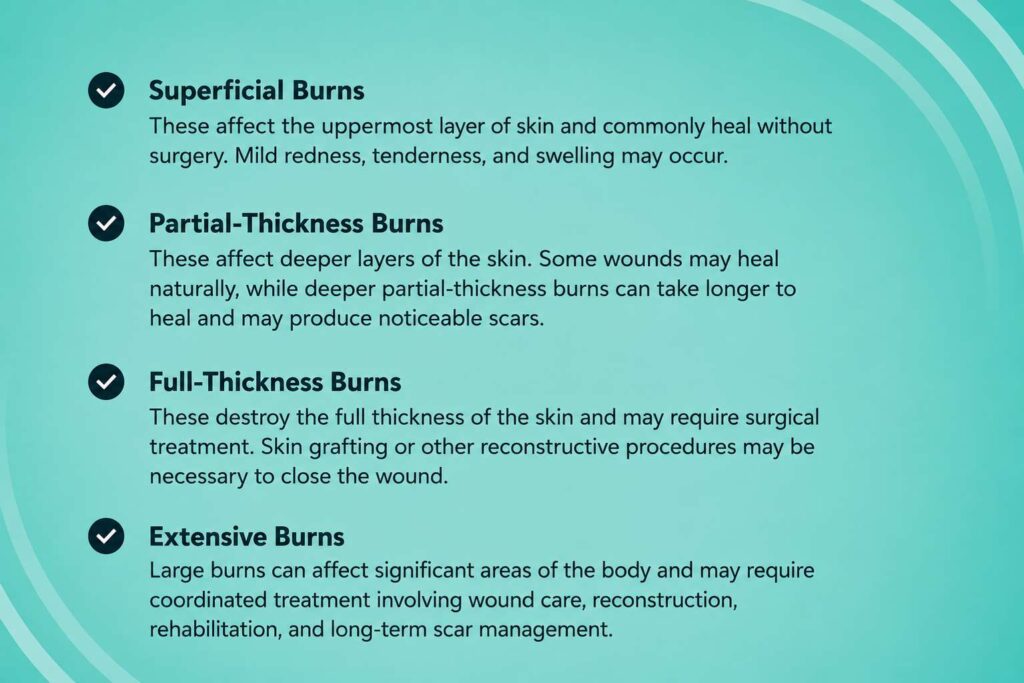
Types of burn injuries that may need reconstruction, including superficial, partial-thickness, full-thickness, and extensive burns

Burns are generally classified according to how deeply they damage the skin and underlying tissues.

Superficial Burns

These affect the uppermost layer of skin and commonly heal without surgery. Mild redness, tenderness, and swelling may occur.

Partial-Thickness Burns

These affect deeper layers of the skin. Some wounds may heal naturally, while deeper partial-thickness burns can take longer to heal and may produce noticeable scars.

Full-Thickness Burns

These destroy the full thickness of the skin and may require surgical treatment. Skin grafting or other reconstructive procedures may be necessary to close the wound.

Extensive Burns

Large burns can affect significant areas of the body and may require coordinated treatment involving wound care, reconstruction, rehabilitation, and long-term scar management.

How Trauma Can Damage Skin and Soft Tissue

Traumatic injuries may cause tissue loss, open wounds, crushing, or separation of skin from underlying structures. In severe cases, bones, tendons, nerves, or blood vessels may also become exposed or damaged.

Plastic Surgery for Burns and Trauma in Kerala can play an important role when normal wound healing cannot adequately restore the damaged area.

Reconstructive surgery may help:

  • Cover exposed bone or tendons
  • Close large wounds
  • Restore missing soft tissue
  • Improve movement around joints
  • Protect important underlying structures
  • Reduce the effects of severe scarring
  • Reconstruct damaged facial or body areas

The surgical plan is individualized according to the injury and the patient’s recovery needs.

Signs That Reconstructive Treatment May Be Needed

Not every burn or traumatic wound requires reconstructive surgery. However, certain problems may indicate that specialist assessment is appropriate.

These can include:

  • A wound that cannot close naturally
  • Significant loss of skin or soft tissue
  • Exposed tendons, bones, or other structures
  • Severe scar formation
  • Tight scars restricting movement
  • Difficulty moving a joint after a burn
  • Distortion of facial features after trauma
  • Persistent functional problems
  • Large or deep wounds
  • Scars that cause discomfort or limitation

Early assessment can help determine whether reconstruction should be performed immediately or planned after the initial injury has stabilized.

Important Treatments Used in Plastic Surgery for Burns and Trauma

Several reconstructive techniques are available. The choice depends on wound size, depth, location, blood supply, and the surrounding tissue.

Skin Grafting

A skin graft involves taking healthy skin from another part of the body and placing it over a wound.

Skin grafts may be used for:

  • Burn wounds
  • Large skin defects
  • Traumatic wounds
  • Areas where skin has been lost
  • Wounds that cannot close directly

The donor area generally heals over time, while the grafted skin becomes part of the reconstructed wound.

Local Flaps

A local flap uses nearby skin and tissue to cover a defect. Because the tissue remains connected to its blood supply, it can provide durable coverage for selected wounds.

Regional Flaps

Regional flaps use tissue from a nearby body region to reconstruct a larger or more complex defect.

Free Flap Reconstruction

Free flap surgery involves transferring tissue from one part of the body to another. Microsurgical techniques are used to connect small blood vessels so that the transferred tissue receives an adequate blood supply.

This can be particularly useful for complex traumatic injuries with significant tissue loss.

Scar Revision

Scar revision aims to improve the appearance, flexibility, or function of problematic scars. It may be considered when a scar is unusually prominent, tight, irregular, or functionally restrictive.

Contracture Release

A burn scar can sometimes tighten as it heals. This is called a contracture. Contractures around joints, the neck, mouth, or other areas can restrict movement.

Surgical release and reconstructive techniques may help improve flexibility and function.

Plastic Surgery for Burns and Trauma in Kerala: Functional Reconstruction

A major goal of Plastic Surgery for Burns and Trauma in Kerala is functional restoration.

For example, a scar across a joint may prevent normal movement. A burn scar around the mouth may interfere with eating or facial movement. A tight neck scar can restrict neck movement.

Reconstruction may therefore focus on restoring:

  • Joint movement
  • Hand function
  • Facial movement
  • Neck mobility
  • Skin flexibility
  • Normal tissue coverage
  • Protection of underlying structures

Functional reconstruction is planned according to the specific limitations caused by the injury.

Facial Burns and Trauma Reconstruction

The face is particularly important because it affects appearance, communication, eating, breathing, and facial expression.

Facial burn or trauma reconstruction may address injuries involving:

  • Eyelids
  • Nose
  • Lips
  • Cheeks
  • Forehead
  • Ears
  • Jawline
  • Facial soft tissue

Treatment may involve scar management, skin grafting, local flaps, tissue rearrangement, or more advanced reconstructive procedures.

Because facial structures are highly visible and functionally important, treatment planning generally considers both appearance and function.

Hand and Limb Trauma Reconstruction

The hands contain delicate structures including tendons, nerves, blood vessels, bones, and joints. Severe trauma can therefore have a major effect on everyday activities.

Reconstructive surgery may help manage:

  • Loss of skin
  • Deep wounds
  • Tendon exposure
  • Nerve-related injuries
  • Soft-tissue defects
  • Burn contractures
  • Scar-related restriction

For limb injuries, preserving useful function is often a key objective of reconstruction.

Benefits of Reconstructive Plastic Surgery

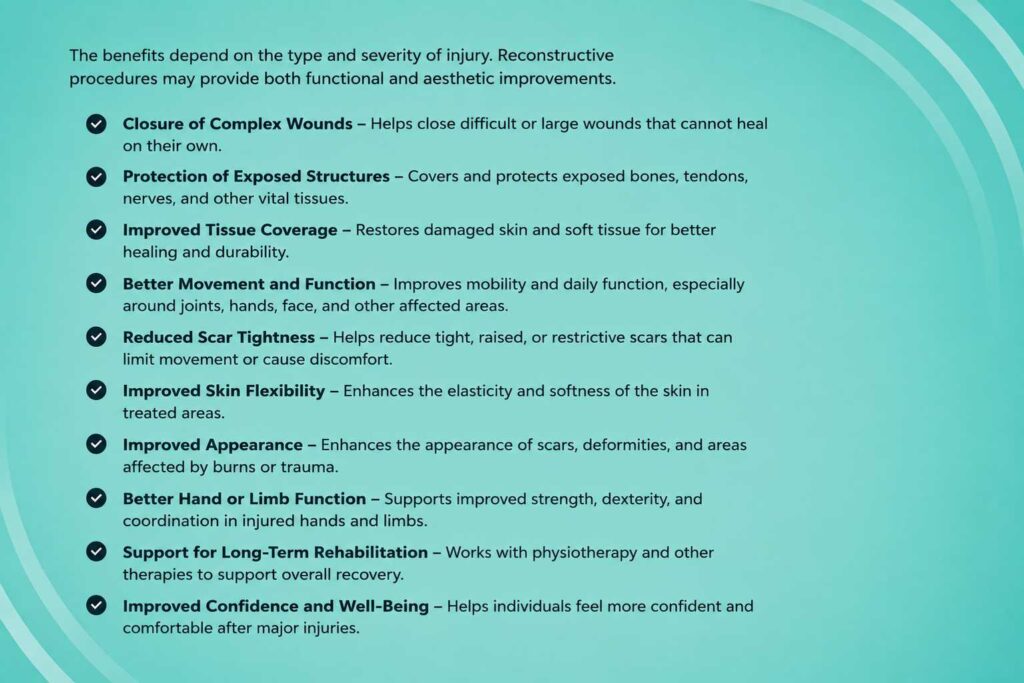
Benefits of reconstructive plastic surgery for improving wounds, movement, scars, and tissue function

The benefits depend on the type and severity of injury. Reconstructive procedures may provide both functional and aesthetic improvements.

Potential benefits include:

  • Closure of complex wounds
  • Protection of exposed structures
  • Improved tissue coverage
  • Better movement
  • Reduced scar tightness
  • Improved skin flexibility
  • Improved appearance
  • Better hand or limb function
  • Support for long-term rehabilitation
  • Improved confidence following major injury

Reconstructive surgery cannot always completely restore an injured area to its original condition. The expected outcome depends on the extent of tissue damage and the patient’s healing response.

How Treatment Is Planned

Treatment planning begins with a detailed evaluation of the injury and the patient’s overall condition.

The assessment may include:

  • Physical examination
  • Evaluation of wound depth
  • Assessment of tissue loss
  • Examination of blood supply
  • Review of previous treatments
  • Assessment of movement and function
  • Evaluation of scars or contractures
  • Imaging when clinically necessary

The surgeon may discuss whether reconstruction should be performed immediately or after the wound has stabilized.

Complex injuries may require collaboration between plastic surgeons and other specialists, depending on the structures involved.

Recovery After Burns and Trauma Reconstruction

Recovery varies significantly depending on the procedure.

After surgery, patients may need:

  • Wound care
  • Dressing changes
  • Pain management
  • Antibiotics when clinically indicated
  • Physical therapy
  • Occupational therapy
  • Scar management
  • Follow-up examinations

Rehabilitation is particularly important when an injury affects the hands, arms, legs, face, or joints.

Patients should follow postoperative instructions carefully and attend scheduled follow-up appointments. Healing continues for weeks or months, and scars can gradually change in appearance and flexibility over a longer period.

Scar Management After Burns and Trauma

Scarring is a natural part of wound healing, but severe scars can become thick, raised, itchy, painful, or restrictive.

Scar management may include:

  • Silicone-based scar treatments
  • Pressure therapy
  • Massage when recommended
  • Stretching exercises
  • Physiotherapy
  • Laser-based scar treatments in selected cases
  • Steroid treatment for certain scars
  • Surgical scar revision

The appropriate approach depends on the type and maturity of the scar.

Tips for Better Recovery

Recovery after reconstructive surgery requires patience and consistent care.

Helpful measures may include:

  • Follow wound-care instructions carefully
  • Keep surgical areas clean as advised
  • Avoid unnecessary pressure on healing tissues
  • Perform prescribed exercises
  • Attend follow-up appointments
  • Use recommended scar treatments consistently
  • Protect healing skin from excessive sun exposure
  • Maintain adequate nutrition
  • Avoid smoking because it can interfere with wound healing
  • Report unusual swelling, discharge, fever, or increasing pain promptly

Do not start exercises, scar treatments, or other interventions without appropriate medical guidance.

Risks and Possible Complications

Like other surgical procedures, reconstructive surgery carries potential risks. The level of risk depends on the injury, procedure, and individual health factors.

Possible complications include:

  • Infection
  • Bleeding
  • Delayed wound healing
  • Graft failure
  • Flap complications
  • Poor scar formation
  • Recurrence of contracture
  • Changes in sensation
  • Swelling
  • Pain
  • Need for additional surgery

In complex injuries, more than one reconstructive procedure may sometimes be required.

When Should You Consider a Plastic Surgeon

A plastic surgeon may be consulted when a burn or traumatic injury causes significant skin loss, scarring, functional limitation, or tissue damage.

Specialist evaluation may be especially important when:

  • A wound is deep or extensive
  • Skin has been lost
  • Important structures are exposed
  • A burn crosses a major joint
  • Scar tissue restricts movement
  • A facial injury changes function or appearance
  • A previous reconstruction has developed complications
  • A wound is not healing as expected

Early specialist assessment can help establish an appropriate reconstructive strategy.

Conclusion

Plastic Surgery for Burns and Trauma in Kerala provides reconstructive options for people dealing with complex burns, traumatic wounds, tissue loss, scars, and movement restrictions. Techniques such as skin grafting, flap surgery, microsurgical reconstruction, contracture release, and scar revision can be selected according to the patient’s individual needs.

The most appropriate treatment depends on the severity and location of the injury, tissue condition, functional limitations, and overall health. A detailed specialist evaluation can help determine whether immediate reconstruction, staged treatment, scar management, or rehabilitation is most appropriate.

With appropriate surgical planning and postoperative care, reconstructive treatment can help restore tissue coverage, improve function, manage problematic scars, and support long-term recovery in Kerala.  For reliable information on burn treatment and recovery, you can also refer to the World Health Organization (WHO) information on burns.

Frequently Asked Questions

1. What is plastic surgery for burns and trauma? +
Plastic surgery for burns and trauma is reconstructive surgery used to repair skin and soft-tissue damage caused by burns, accidents, wounds, and other traumatic injuries. Treatment can focus on restoring function, protecting tissues, and improving appearance.
2. Can plastic surgery treat severe burn scars? +
Yes. Depending on the type and severity of the scar, treatment may include scar revision, contracture release, skin grafting, flap reconstruction, or other scar-management methods.
3. Is skin grafting used for burn injuries? +
Yes. Skin grafting may be used for selected burn wounds where sufficient skin has been lost and the wound cannot heal effectively on its own. Healthy skin is taken from another area and placed over the affected wound.
4. Can reconstructive surgery improve movement after a burn? +
It can. Burn contractures may restrict movement around joints or other areas. Contracture release and reconstructive procedures may help improve flexibility, movement, and overall function.
5. Can facial trauma be treated with reconstructive plastic surgery? +
Yes. Facial reconstruction can address soft-tissue loss, scars, deformities, and functional problems resulting from burns or traumatic injuries. Treatment may involve skin grafts, flaps, scar management, or other reconstructive techniques.
6. What is a flap in reconstructive surgery? +
A flap is tissue transferred to cover a wound while maintaining or establishing an appropriate blood supply. Flaps can provide durable coverage for complex wounds involving significant skin or soft-tissue loss.
7. What is microsurgery in trauma reconstruction? +
Microsurgery uses specialized techniques to connect very small blood vessels and, when required, nerves. It allows tissue from another part of the body to be transferred to a complex wound while maintaining its blood supply.
8. How long does recovery take after reconstructive surgery? +
Recovery varies according to the injury, surgical procedure, and individual healing. Some wounds may recover within weeks, while complex reconstruction and scar maturation can require several months or longer.
9. Will reconstructive surgery completely remove burn scars? +
Not necessarily. Treatment can reduce the visibility or tightness of scars and improve function, but complete removal of a burn scar is generally not possible. Results depend on the type, location, and severity of the scar.
10. Can old burn injuries still be treated? +
Yes. Some people seek reconstructive treatment months or years after a burn because of contractures, problematic scars, or functional limitations. Treatment depends on the condition of the affected area and the individual's needs.

Sushrutha Institute of Plastic, Reconstructive & Aesthetic Surgery

Dr Jyoshid R Balan

Dr Jyoshid R Balan

Plastic & Reconstructive Surgeon

SIPRAS, Elite Mission Hospital, Thrissur

Dr Pradeep Kumar

Dr Pradeep Kumar

Plastic, Reconstructive & Aesthetic Surgeon

SIPRAS, Elite Mission Hospital, Thrissur

Dr Prince H P

Dr Prince H P

Senior Consultant Plastic Surgeon

SIPRAS, Elite Mission Hospital, Thrissur

Dr Vinu Roy

Dr Vinu Roy

Plastic & Reconstructive Surgeon

SIPRAS, Elite Mission Hospital, Thrissur

Dr Ajai K S

Dr Ajai K S

Plastic & Reconstructive Surgeon

SIPRAS, Elite Mission Hospital, Thrissur