Elite Mission Hospital · Koorkenchery, Thrissur
24 × 7 Emergency Plastic Surgery Care
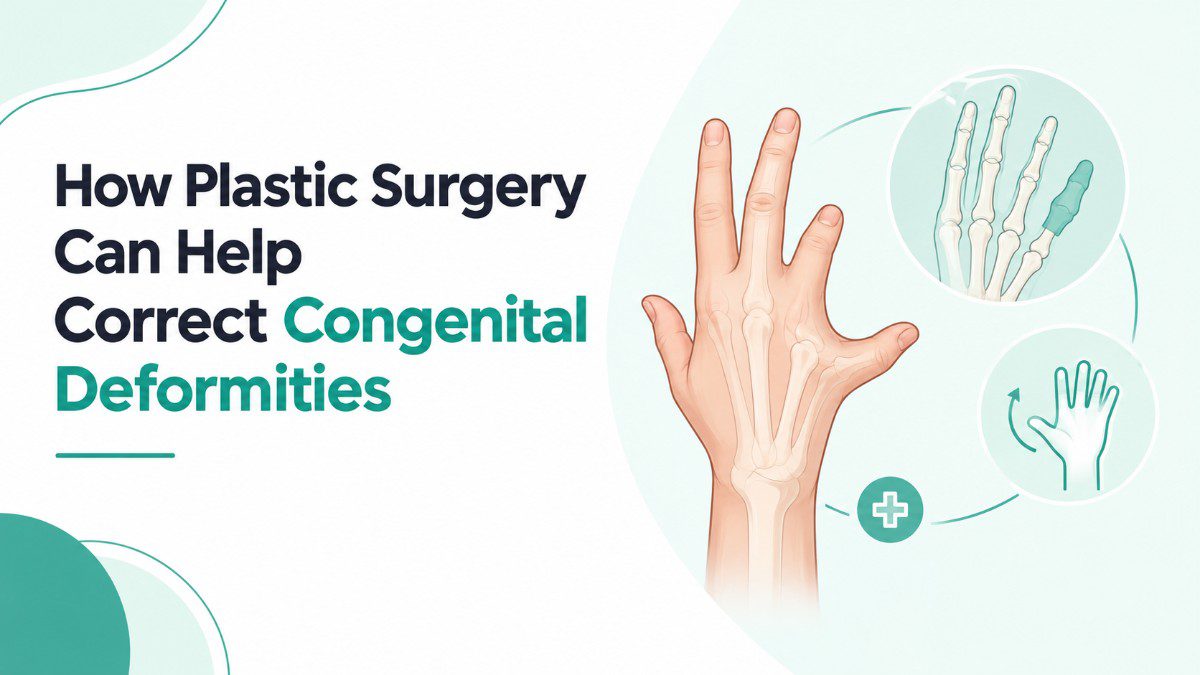
How plastic surgery can help correct Congenital Deformities ?, Plastic Surgery for Congenital Deformities may help address structural differences present from birth, improve physical function and support an individual’s quality of life. Congenital deformities can affect different parts of the body, including the hands, face, ears, limbs and other structures. Some mainly affect appearance, while others may interfere with movement, feeding, breathing or other everyday activities. The appropriate treatment depends on the type of condition, its severity, the person’s age and individual needs.
Reconstructive plastic surgery focuses on improving the structure and function of affected tissues where possible. Depending on the condition, treatment may involve correcting a structural difference, releasing tight tissues, reconstructing missing or underdeveloped areas, or improving the function of an affected body part. Not every congenital condition requires surgery, and some may benefit from observation, therapy or care from multiple specialists.
Congenital deformities are structural differences that are present at birth. They develop during pregnancy and can affect bones, skin, muscles, nerves or other tissues. Their characteristics vary widely: some are minor and cause few practical difficulties, while others may affect important functions or require staged treatment as a child grows.
These conditions can occur for different reasons. Some are associated with genetic factors, while others may develop through a combination of influences during pregnancy. In many cases, the exact cause is not identified. A congenital condition is not necessarily caused by something a parent did or did not do.
Examples of congenital differences that may be assessed by reconstructive specialists include:
Cleft lip and cleft palate: Differences in the development of the upper lip or roof of the mouth that may affect feeding, speech, dental development or facial structure.
Congenital hand differences: Conditions such as syndactyly, in which fingers are joined, or differences in the number, shape or development of the fingers.
Ear deformities: Differences in the size, shape or development of the external ear.
Facial differences: Structural variations that may affect facial symmetry or the development of particular features.
Congenital differences of the limbs: Conditions involving the development or formation of an arm, hand, leg or foot.
Other soft-tissue differences: Conditions involving skin or underlying tissues that may require specialist assessment.
The appropriate treatment is different for each condition. Some require only monitoring, while others may need surgery, rehabilitation or coordinated care involving several medical specialties.
Reconstructive plastic surgery may help correct or reduce the effects of certain congenital differences. The purpose of treatment is not simply to change appearance. Depending on the condition, surgery may aim to improve movement, release restricted tissues, separate joined structures, provide tissue coverage or address a structural problem that affects everyday function.
Some congenital differences can limit how a body part moves or works. For example, joined fingers may restrict independent movement, while certain structural differences in the hand may affect gripping and handling objects.
When an appropriate surgical option is available, reconstruction may help improve the function of the affected area. The expected benefit depends on the underlying anatomy, the tissues involved and whether nerves, tendons, joints or bones are affected.
Surgery may be combined with occupational therapy, physiotherapy or other supportive care when needed. The aim is to develop a treatment plan that addresses the individual’s functional needs rather than assuming that every structural difference should be corrected surgically.
Some congenital conditions involve tissues that have not developed in the usual way. Reconstructive procedures may help reshape, reposition, separate or rebuild selected structures, depending on the diagnosis.
For instance, surgery may be considered for certain ear differences or congenital hand conditions. The technique selected depends on the specific anatomy and the extent of the difference. In some cases, reconstruction involves several stages rather than one operation.
The surgeon assesses the potential benefits, limitations and risks before recommending a procedure. The aim is to achieve a meaningful improvement while protecting existing function and accounting for future growth where relevant.
The role of reconstructive plastic surgery varies according to the congenital condition being treated. A specialist evaluates the affected structures, existing function and likely benefits before deciding whether an operation is appropriate.
Congenital hand differences can affect the number, shape, position or separation of the fingers. One example is syndactyly, where two or more fingers are joined by skin and, in some cases, deeper tissues. Other conditions may involve differences in thumb development or the formation of the hand.
When a congenital hand difference interferes with movement or the development of hand function, surgery may be considered. For syndactyly, a procedure may separate joined fingers and use suitable tissue coverage to help the fingers heal independently. The precise approach depends on which fingers are involved and whether bones, nails, tendons or blood vessels are affected.
The timing of surgery is important because children’s hands continue to grow and develop. The surgeon considers the specific condition, the potential effect on growth and the functional needs of the child when discussing treatment options.
Cleft lip and cleft palate are congenital conditions that affect the development of the upper lip and the roof of the mouth. They can influence feeding, speech, dental development and facial structure, depending on the type and extent of the cleft.
Treatment generally requires coordinated care involving specialists from different fields. Surgery may be part of the treatment plan, but the timing and type of procedure depend on the child’s needs. Follow-up care may include support for speech, hearing, dental development and other related concerns.
Plastic surgery can contribute to reconstructing the affected structures and improving function. However, treatment is not always completed in a single operation, and some children may need further procedures as they grow.
Some children are born with ears that differ in size, shape or development. The effect may be mainly structural or cosmetic, although certain conditions can occur alongside differences in hearing or other parts of the ear.
The need for treatment depends on the specific condition. A specialist may assess the external ear, surrounding tissues and any associated functional concerns before discussing suitable options. In selected cases, reconstruction may help create or improve the shape of the external ear.
The appropriate technique and timing vary according to the child’s anatomy and development. Families should understand the likely outcome, possible limitations and recovery requirements before deciding on treatment.
Congenital differences may also affect other facial structures or parts of the body. Some involve soft tissues, while others affect the underlying bones or the relationship between different structures.
Reconstructive treatment is planned according to the specific diagnosis and the impact of the condition. Some patients may need surgery to improve function, while others may consider treatment for a structural concern that affects daily life. In more complex cases, plastic surgeons may work with other specialists to coordinate care.
Not every congenital difference requires correction. A careful assessment helps establish whether surgery is likely to offer a meaningful benefit and whether observation, therapy or another approach may be more appropriate.
Treatment planning begins with an assessment of the congenital condition and how it affects the individual. The surgeon considers the patient’s medical history, the structures involved, current function and the goals of treatment.
The assessment may include a physical examination and, where necessary, imaging or other investigations. These help clarify the anatomy and identify any associated concerns that may influence the procedure.
The planning process may consider:
The type and severity of the condition: The extent of the structural difference helps determine which treatments may be suitable.
Current function: The surgeon assesses whether the condition affects movement, sensation or other important activities.
Age and growth: For children, the timing of intervention may need to account for ongoing development.
Associated conditions: Some congenital differences require assessment by additional specialists.
Expected benefits and limitations: The likely improvement, surgical risks and possibility of further treatment should be discussed before a decision is made.
The plan should be individualised rather than based only on the appearance of the affected area. Patients and families should have an opportunity to understand the available options and discuss their concerns with the treating team.
Age can influence the timing of surgery for congenital conditions, especially in children. Some procedures may be recommended early because a structural difference could interfere with function or normal development. Other procedures may be planned later, when the child has grown or when the relevant tissues are better suited to reconstruction.
There is no single ideal age for every congenital condition. The decision depends on the diagnosis, the severity of the problem, the potential effect on growth and the benefits and risks of intervention at different stages.
For example, a congenital hand condition may require consideration of how finger growth and movement could be affected over time. Conditions involving the face or ear may have different timing considerations depending on the structures involved and the planned reconstruction.
Parents and caregivers should discuss the recommended timing, expected recovery and any potential need for additional procedures with the specialist. Regular follow-up may also be important to monitor development and determine whether the treatment plan needs adjustment.
Preparing for reconstructive surgery begins with understanding the condition, the proposed procedure and the expected recovery process. The preparation required depends on the patient’s age, general health and the complexity of the operation.
During the consultation, the surgeon reviews the patient’s medical history, examines the affected area and discusses suitable treatment options. Patients and parents or caregivers should share information about existing health conditions, medications, allergies and any previous procedures. The surgeon may recommend additional assessments or investigations when necessary.
Before surgery, it is helpful to discuss the following:
Purpose of the procedure: Understand which structural or functional concern the operation is intended to address.
Expected results: Ask what improvement may be possible and what limitations could remain.
Risks and alternatives: Discuss potential complications and whether non-surgical management or observation is appropriate.
Recovery requirements: Understand wound care, activity restrictions, follow-up visits and any recommended rehabilitation.
Further treatment: Clarify whether the condition may require staged reconstruction or additional procedures as the patient grows.
For children, parents and caregivers should understand the instructions provided by the treating team and know how to support the child’s recovery. Following preoperative guidance, including instructions about eating, drinking and prescribed medicines, is important for safety.
Preparation should be specific to the procedure rather than based on general advice alone. The surgical team can explain which steps are necessary for the individual case.
Recovery varies depending on the condition treated, the procedure performed and the patient’s age and health. Some operations involve a relatively small area, while more complex reconstructions may require a longer period of healing and follow-up.
After surgery, the treated area may need dressings, protection or temporary restrictions on movement. The surgeon will explain how to care for the wound, when dressings should be reviewed and which activities should be avoided during early recovery.
For procedures involving the hands or limbs, rehabilitation may be recommended to help maintain or develop movement. Some patients may need splints or guided exercises. The type and timing of rehabilitation depend on the tissues involved and the procedure performed.
Children may need additional support from parents or caregivers to follow postoperative instructions. Follow-up appointments help the surgical team monitor healing, assess function and identify any concerns that need attention.
Recovery should not be judged by appearance alone. The treated area may continue to develop as swelling settles and scars mature. In children, growth may also influence the longer-term outcome. Patients and families should follow the individual care plan and discuss concerns with the treating team.
As with any operation, reconstructive surgery carries potential risks. These vary according to the patient’s health, the condition being treated and the complexity of the procedure.
Possible complications include infection, bleeding, delayed wound healing, changes in sensation and scar formation. The reconstructed area may not achieve the intended degree of function or appearance, and some conditions may require further surgery.
The outcome also depends on the underlying anatomy. If a congenital difference involves bones, nerves, tendons or other important structures, surgery may improve selected aspects of the condition without fully correcting every limitation. Some differences may continue to affect function despite treatment.
For children, growth can influence the long-term result. A procedure that addresses a structural concern at one stage of development may need to be reviewed later. This does not mean that further surgery will always be necessary; the need for additional treatment depends on the individual condition and progress.
Before deciding on surgery, patients or their caregivers should discuss the potential benefits, limitations, risks and alternatives with the surgeon. Clear expectations help families make informed decisions and understand the purpose of treatment.
Congenital differences affect people in different ways. For some, the main concern is a limitation in movement or everyday function. Others may experience practical difficulties related to the structure of an affected body part. The effect on confidence and social experiences can also vary between individuals.
When a congenital condition creates a problem that can be addressed surgically, reconstruction may help improve function or reduce the impact of the structural difference. For example, treatment for selected hand conditions may support more independent finger movement, while other procedures may address tissue structure or coverage.
However, quality of life is influenced by more than surgical results. Rehabilitation, ongoing medical care, family support and access to appropriate services can also play important roles. Treatment decisions should respect the individual’s needs and preferences rather than assuming that every congenital difference must be corrected.
A thoughtful approach considers both medical indications and the person’s priorities. The goal is to identify realistic ways to support function, comfort and well-being while recognising the limits of available treatment.
A specialist assessment may be appropriate when a congenital difference affects movement, everyday activities, tissue structure or another concern that may benefit from reconstructive care. Parents may also seek an evaluation when they want to understand a child’s condition, possible treatment options or the appropriate timing of intervention.
An assessment does not automatically mean surgery is required. The surgeon can explain whether reconstruction may offer a meaningful benefit, whether monitoring or supportive treatment is suitable, and whether another specialist should be involved.
Consider seeking an assessment if:
A congenital hand or limb difference appears to restrict movement or practical function.
A structural difference requires clarification or treatment planning.
A child has a congenital condition for which the timing of intervention may influence development.
You want to understand the possible benefits, risks and limitations of reconstructive surgery.
Previous treatment has not addressed a functional concern or further review has been recommended.
The appropriate next step depends on the specific condition and the patient’s circumstances. A qualified specialist can provide an individual assessment and explain the available options.
Congenital deformities include a wide range of conditions, so treatment cannot follow one standard approach. Some differences require only observation, while others may benefit from reconstructive surgery, rehabilitation or coordinated care with other specialists.
Plastic surgery may help address selected structural differences, improve function and provide tissue reconstruction where appropriate. The decision to operate depends on the diagnosis, the potential benefit, the patient’s age and health, and the risks associated with the proposed procedure.
For patients and families considering treatment, a detailed consultation provides an opportunity to understand the condition, explore suitable options and discuss realistic expectations. Individualised planning and appropriate follow-up are important parts of congenital reconstructive care.
Reconstructive plastic surgery may help address structural differences present from birth, improve selected physical functions and reconstruct affected tissues. The treatment depends on the condition, its severity, the patient's age and individual needs.
Depending on the specialist's scope of care, reconstructive procedures may be considered for selected congenital hand differences, cleft lip, cleft palate, ear deformities and other structural differences affecting soft tissues or body structures. Treatment suitability varies by condition.
Yes, in selected cases. Surgery may help improve movement, release restricted tissues or reconstruct affected structures. The expected benefit depends on the underlying anatomy and whether bones, nerves, tendons or joints are involved.
There is no single ideal age for every congenital condition. Timing depends on the diagnosis, functional needs, severity and the child's growth and development. A specialist can explain whether early treatment or a later procedure is more appropriate.
Some congenital hand differences may be treated surgically. For example, selected cases of syndactyly, where fingers are joined, may be treated with a procedure to separate them. The surgical approach depends on the structures involved and the child's hand development.
No. Some congenital differences may only require monitoring, while others may benefit from therapy or coordinated specialist care. Surgery is considered when it is likely to provide a meaningful benefit for the individual's condition and needs.
Treatment planning may include reviewing medical history, examining the affected area and assessing function. Additional investigations or input from other specialists may be needed. The plan considers the condition, age, expected benefits, risks and possible alternatives.
Recovery depends on the procedure, the patient's age and the tissues involved. Care may include wound management, follow-up appointments and, in some cases, physiotherapy or occupational therapy. The treating surgeon provides guidance based on the individual procedure.
Potential risks include infection, bleeding, delayed healing, scarring and results that differ from expectations. Some conditions may require additional procedures as the patient grows. The specific risks depend on the condition and the planned surgery.
Consider a specialist assessment if a congenital difference affects movement, everyday activities or the structure of an affected body part, or if you need guidance about treatment timing. An assessment helps determine whether surgery, monitoring or another form of care is appropriate.
EXCELLENTTrustindex verifies that the original source of the review is Google. നമസ്തേ എൻ്റെ പേര് ദിദീഷ് കഴിഞ്ഞ ആഴ്ച ഞാൻ ഒരു അപകടം പറ്റി Elite ഹോസ്പിറ്റലിൽ അഡ്മിറ്റ് ആയിരുന്നു ഒപ്പം എൻ്റെ ചേട്ടനും ഉണ്ടായിരുന്നു ഡോർ കട്ട് ചെയ്യുന്നതിനിടെ കട്ടർ തെറിച്ചു കാൽപാദം പകുതി മുറിഞ്ഞ് . ചേട്ടന് കാൽമുട്ടിൽ ആയിരുന്നു ഓപറേഷൻ കഴിഞ്ഞു വീട്ടിൽ ആണ് രണ്ടാളും സുഖമായിരിക്കുന്നു. എൻ്റെ കാൽപാദം മുറിച്ചു മാറ്റും എന്ന ഒരു പേടി മാത്രേ എനിക്കുണ്ടായിരുന്നുള്ളു പക്ഷെ അങ്ങനെ ഒന്നും സംഭവിച്ചില്ല എല്ലാ സ്റ്റാഫിനും നന്ദി പറയുന്നു കാരണം വന്നപ്പോ തൊട്ട് എല്ലാവരും സമാതാനിപ്പിക്കായിരുന്നൂ എല്ലാവരോടും സ്നേഹം അറിയിക്കുന്നു പ്രത്യേകിച്ച് ഡോക്ടറോട് 🙏🏻Trustindex verifies that the original source of the review is Google. Excellent center for all cosmetic procedures... highly recommendedTrustindex verifies that the original source of the review is Google. The surgery is in a seamless hospital and everything is very excellent
This website uses cookies to ensure you get the best experience on our website.

