
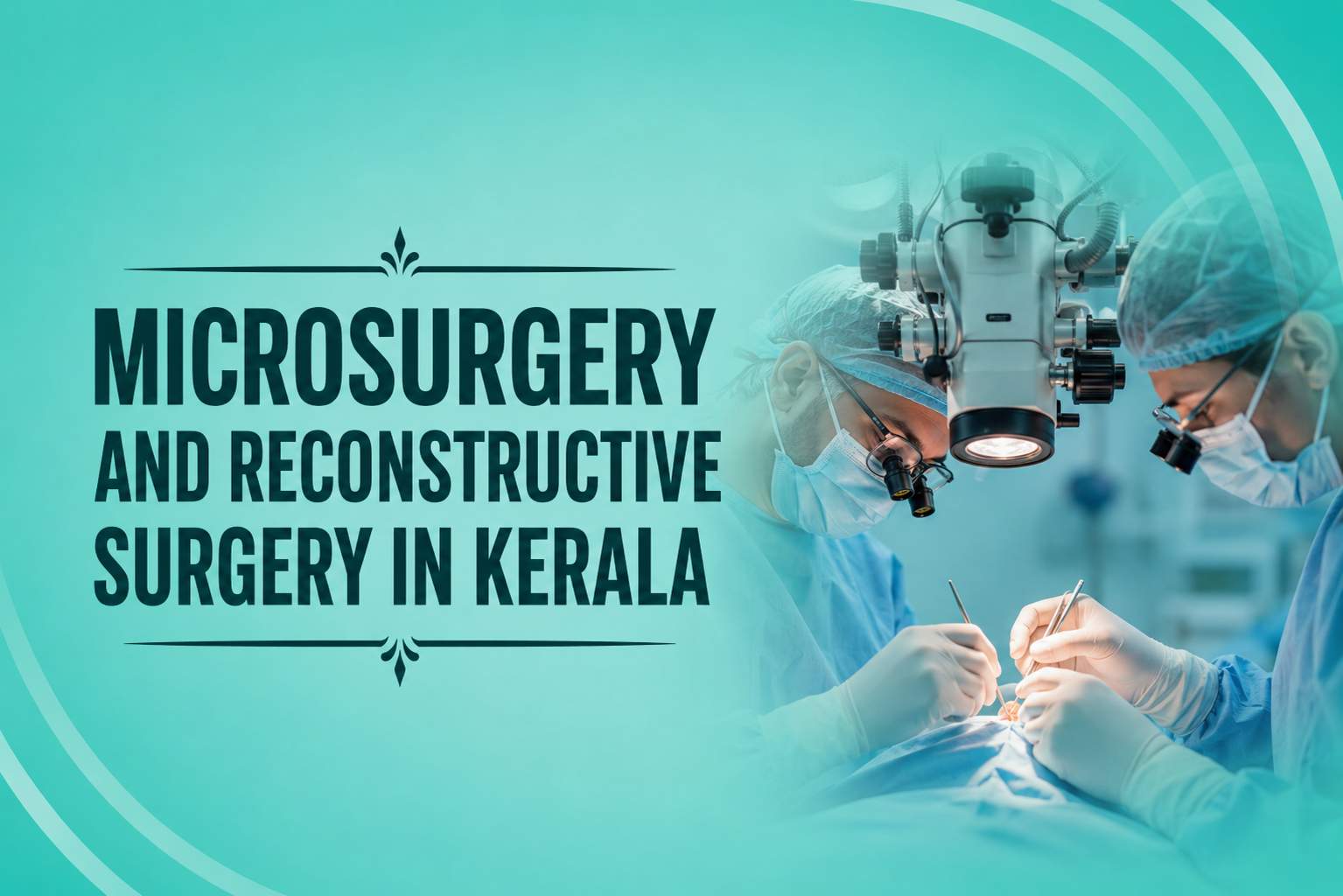
Microsurgery and Reconstructive Surgery in Kerala combines advanced surgical techniques with detailed anatomical reconstruction to restore function, structure, and appearance after injury, disease, cancer treatment, congenital conditions, or tissue loss. Microsurgery uses specialized instruments and magnification to work with very small blood vessels and nerves, while reconstructive surgery focuses on rebuilding or restoring damaged areas.
Unlike cosmetic procedures that are primarily performed to change appearance, reconstructive procedures are generally intended to restore areas affected by medical conditions, trauma, surgery, or developmental abnormalities. The treatment plan depends on the affected body part, the extent of tissue damage, overall health, and the desired functional outcome.
What Is Microsurgery and Reconstructive Surgery
Microsurgery is a specialized surgical discipline that allows surgeons to operate on extremely small anatomical structures. Surgical microscopes or high-powered magnification systems are commonly used to identify tiny blood vessels and nerves.
Reconstructive surgery involves repairing, replacing, or rebuilding tissue that has been damaged or lost. Depending on the condition, reconstruction may involve skin, muscle, bone, nerves, blood vessels, or combinations of different tissues.
Microsurgery and Reconstructive Surgery in Kerala may be considered when conventional surgical techniques cannot adequately restore the affected area.
Common goals include:
- Restoring movement and physical function
- Reconstructing damaged or missing tissue
- Improving blood supply to transplanted tissue
- Repairing injured nerves
- Closing complex wounds
- Restoring body structure after cancer treatment
- Supporting recovery following severe trauma
- Addressing certain congenital abnormalities
When Is Microsurgery and Reconstructive Surgery Needed
There are several situations in which reconstructive procedures may be recommended. The need depends on the nature and severity of tissue damage.
Common indications include:
- Severe injuries caused by accidents
- Extensive soft-tissue damage
- Complex wounds
- Burns
- Tissue loss following infection
- Reconstruction after cancer surgery
- Nerve injuries
- Blood vessel injuries
- Congenital differences
- Complex hand or limb injuries
- Facial trauma
- Breast reconstruction
- Non-healing wounds
In some cases, reconstruction is performed immediately during the original surgery. In others, it may be planned after the initial injury or treatment has stabilized.
Conditions That May Require Reconstructive Procedures
There are several situations in which reconstructive procedures may be recommended. The need depends on the nature and severity of tissue damage.
Common indications include:
- Severe injuries caused by accidents
- Extensive soft-tissue damage
- Complex wounds
- Burns
- Tissue loss following infection
- Reconstruction after cancer surgery
- Nerve injuries
- Blood vessel injuries
- Congenital differences
- Complex hand or limb injuries
- Facial trauma
- Breast reconstruction
- Non-healing wounds
In some cases, reconstruction is performed immediately during the original surgery. In others, it may be planned after the initial injury or treatment has stabilized.
3. Conditions That May Require Reconstructive Procedures
The causes leading to reconstructive surgery vary significantly. Understanding the underlying problem is important because the surgical approach is selected according to the condition.
Trauma and Accidental Injuries
Road accidents, workplace injuries, sports injuries, and other forms of trauma can cause significant damage to skin, muscle, nerves, blood vessels, and bone.
Microsurgical techniques can sometimes help restore circulation or reconnect damaged structures.
Cancer Treatment
Cancer surgery can occasionally result in the loss of substantial tissue. Reconstructive surgery may be used to restore the affected region while supporting functional recovery.
Congenital Conditions
Some individuals are born with structural differences that affect function or appearance. Reconstructive procedures may be considered depending on the specific condition.
Severe Wounds
Large wounds that cannot be closed using conventional methods may require advanced reconstruction. The objective is often to provide durable tissue coverage and protect deeper structures.
Nerve and Blood Vessel Injuries
Small nerves and blood vessels can be difficult to repair using standard surgical techniques. Microsurgery provides the magnification and precision needed for certain complex repairs.
Types of Microsurgery and Reconstructive Surgery
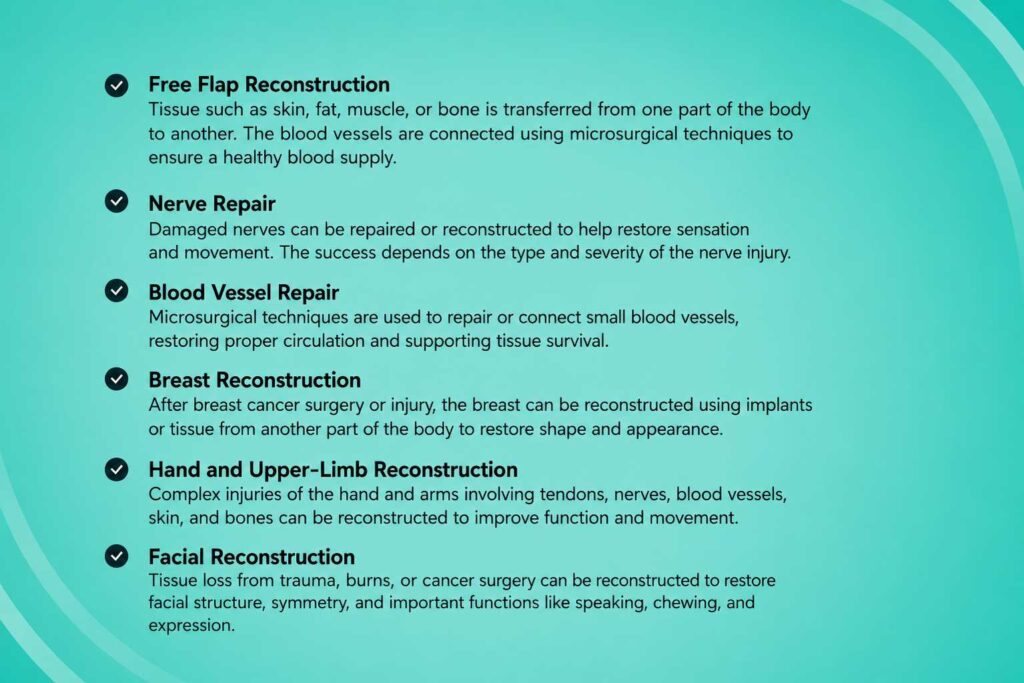
There is no single reconstructive procedure suitable for every patient. Different techniques are selected according to the location and extent of tissue damage.
Free Flap Reconstruction
A free flap involves transferring tissue from one part of the body to another. The transferred tissue may include skin, fat, muscle, or bone.
The blood vessels supplying the tissue are connected to blood vessels at the reconstruction site using microsurgical techniques.
Nerve Repair
Damaged nerves may sometimes be repaired or reconstructed to support the return of sensation or movement. Recovery depends on the type and severity of nerve injury.
Blood Vessel Repair
Microsurgical blood vessel repair can help restore circulation when important vessels have been damaged or when transferred tissue requires a new blood supply.
Breast Reconstruction
Reconstruction may be considered after breast cancer surgery. Depending on individual circumstances, reconstruction may use implants or tissue from another part of the body.
Hand and Upper-Limb Reconstruction
Complex hand injuries can affect skin, tendons, nerves, blood vessels, and bones simultaneously. Reconstructive surgery may address several structures during a carefully planned procedure.
Facial Reconstruction
Facial trauma and cancer treatment can sometimes result in tissue loss. Reconstruction aims to restore facial structure while preserving important functions such as eating, speaking, breathing, and facial movement.
Symptoms and Signs That May Indicate the Need for Reconstruction
Reconstructive surgery is not usually based on symptoms alone. A clinical assessment is needed to determine whether surgery is appropriate.
However, certain signs may indicate a complex reconstructive problem, including:
- Persistent tissue loss
- Large or deep wounds
- Visible structural damage
- Loss of sensation after an injury
- Reduced movement
- Poor wound healing
- Exposed bone, tendon, or other deeper structures
- Significant scarring affecting movement
- Loss of tissue following cancer treatment
- Persistent problems after previous surgery
Anyone experiencing these problems should receive an appropriate medical assessment rather than attempting to determine the need for microsurgery independently.
Benefits of Microsurgery and Reconstructive Surgery
The main purpose of reconstruction is to restore function and provide durable tissue coverage. Depending on the condition, patients may experience several potential benefits.
Functional Restoration
Reconstruction can help restore movement, sensation, structural stability, or other physical functions affected by tissue loss.
Tissue Coverage
Complex wounds may require healthy tissue to cover exposed structures and create a stable environment for healing.
Improved Structural Appearance
Reconstructive procedures can restore lost or damaged body structures and may improve overall appearance as part of the reconstruction.
Better Quality of Life
Restoring function and reducing the effects of major tissue damage may help individuals return to everyday activities.
Precise Tissue Transfer
Microsurgical techniques allow specific tissue to be transferred while preserving or establishing its blood supply.
Support After Cancer Treatment
Reconstruction can help restore areas affected by cancer surgery and may form an important part of comprehensive cancer care.
It is important to understand that outcomes vary. Reconstruction is not always able to return an area completely to its original condition.
How Is Microsurgery and Reconstructive Surgery Performed
The exact surgical process depends on the procedure being performed.
The treatment may involve several stages:
- Clinical assessment: The surgical team evaluates the injury, disease, tissue condition, and overall health.
- Imaging and investigations: Additional tests may be performed to understand blood vessels, bones, soft tissue, or other structures.
- Treatment planning: The appropriate reconstructive method is selected.
- Preparation of the affected area: Damaged or unhealthy tissue may need to be removed or treated.
- Tissue reconstruction: Tissue may be repaired, transferred, or transplanted depending on the surgical plan.
- Microsurgical connection: Tiny blood vessels or nerves may be connected under magnification.
- Wound closure: The reconstructed area is carefully closed and protected.
- Postoperative monitoring: Blood circulation and tissue viability may be closely monitored during early recovery.
The complexity and duration of surgery can differ considerably from one patient to another.
What Happens During Recovery
Recovery after Microsurgery and Reconstructive Surgery in Kerala depends on the procedure, the patient’s health, the area treated, and whether multiple structures were reconstructed.
During the early recovery period, the surgical team may monitor:
- Blood flow to reconstructed tissue
- Wound healing
- Swelling
- Pain
- Signs of infection
- Sensation and movement
- Overall tissue viability
Patients may need to limit physical activity initially. Physiotherapy or occupational therapy may also be recommended when reconstruction involves a limb, hand, joint, or other functional area.
Recovery can take weeks or months. Nerve recovery, in particular, may take considerably longer because nerves regenerate slowly.
Following postoperative instructions is important for protecting the surgical site and supporting healing.
Risks and Possible Complications
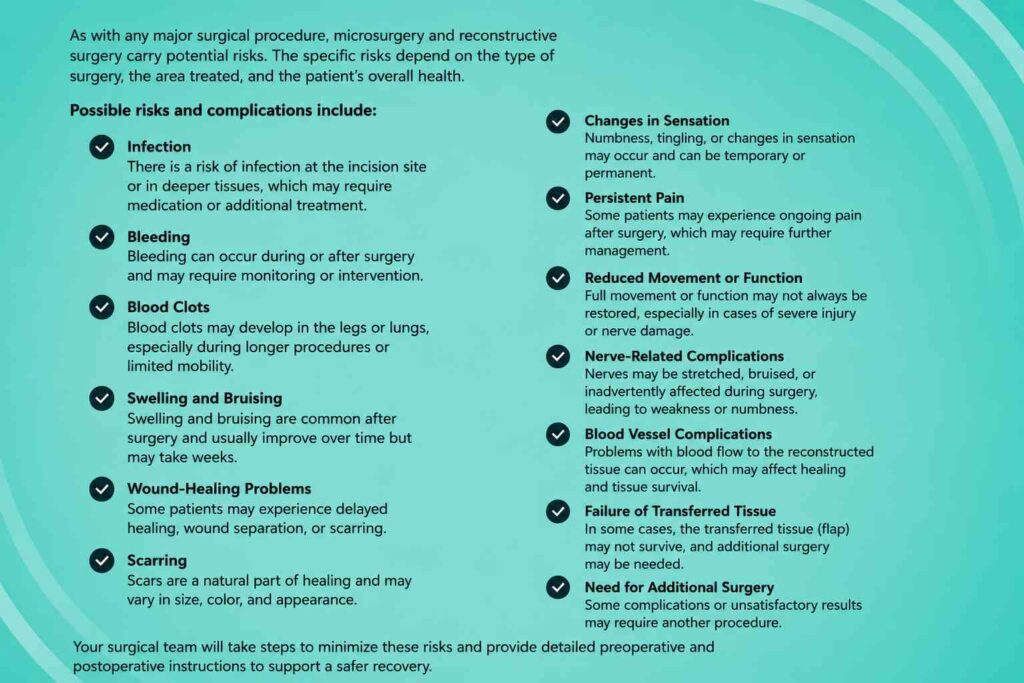
As with any major surgical procedure, microsurgery and reconstruction have potential risks. The specific risks depend on the type of operation.
Possible complications include:
- Infection
- Bleeding
- Blood clots
- Swelling
- Wound-healing problems
- Scarring
- Changes in sensation
- Persistent pain
- Reduced movement
- Nerve-related complications
- Blood vessel blockage
- Failure of transferred tissue
- Need for additional surgery
Smoking, certain medical conditions, poor circulation, and some medications may affect healing. A complete medical history should therefore be discussed before surgery.
Who May Be a Suitable Candidate
Suitability is determined individually. A person may be considered for reconstructive microsurgery when there is a structural or functional problem that can potentially be addressed surgically.
Potential candidates may include people with:
- Complex traumatic injuries
- Significant tissue loss
- Difficult wounds
- Nerve damage
- Blood vessel injuries
- Tissue defects following cancer surgery
- Certain congenital conditions
- Complex limb or hand injuries
- Areas requiring specialized tissue coverage
Good general health can support recovery, although patients with medical conditions may still be candidates after appropriate assessment and optimization.
The surgical team will consider the benefits, risks, alternatives, and expected recovery before recommending a procedure.
How to Prepare for Reconstructive Surgery
Good preparation can help patients understand the procedure and plan for recovery.
Before surgery, patients should:
- Provide a complete medical history
- Discuss all current medications
- Mention previous surgeries
- Follow recommended investigations
- Discuss allergies
- Follow instructions regarding food and medications before surgery
- Avoid smoking when advised
- Arrange appropriate postoperative support
- Understand the expected recovery period
- Ask about activity restrictions
Patients should also discuss realistic expectations. Reconstruction can provide substantial functional and structural improvement, but complete restoration is not guaranteed.
How to Choose the Right Reconstructive Treatment
The appropriate technique depends on several factors rather than simply choosing the most advanced procedure.
Important considerations include:
- Type of tissue affected
- Size and location of the defect
- Blood supply
- Nerve involvement
- Bone involvement
- Previous surgeries
- Overall health
- Functional requirements
- Expected recovery
- Long-term goals
A detailed consultation helps determine whether microsurgery, another reconstructive technique, staged treatment, or non-surgical management is more appropriate.
Tips for Better Recovery
Recovery instructions vary according to the procedure, but several general principles can be helpful.
Follow Postoperative Instructions
Medication, wound care, activity, and follow-up instructions should be followed carefully.
Protect the Surgical Area
Avoid unnecessary pressure, trauma, or excessive movement until the surgical team confirms that normal activity can resume.
Attend Follow-Up Appointments
Follow-up visits allow the medical team to monitor healing and identify potential complications early.
Maintain Appropriate Nutrition
Adequate nutrition supports tissue repair. Patients should follow dietary recommendations provided by their healthcare team.
Stop Smoking
Smoking can interfere with blood flow and wound healing. Patients should discuss smoking cessation with their healthcare provider.
Complete Rehabilitation
Physiotherapy or occupational therapy may be important for restoring movement and function after certain reconstructive procedures.
Conclusion
Microsurgery and Reconstructive Surgery in Kerala can play an important role in restoring tissue, function, and structural integrity after complex injuries, cancer treatment, congenital conditions, or significant tissue loss.
The field combines detailed anatomical knowledge, specialized surgical techniques, and careful postoperative monitoring. Depending on the condition, treatment may involve free flap reconstruction, nerve repair, blood vessel repair, breast reconstruction, hand reconstruction, facial reconstruction, or other specialized procedures.
The most appropriate treatment depends on the individual patient’s condition rather than a single standard technique. A detailed evaluation is therefore essential before making treatment decisions.
Recovery also requires patience. Healing, rehabilitation, and functional improvement may continue for several months, particularly when nerves or complex structures are involved.
For individuals considering Microsurgery and Reconstructive Surgery in Kerala, understanding the procedure, expected benefits, possible risks, recovery requirements, and long-term goals can help support informed discussions with a qualified surgical team. You can learn more about reconstructive surgery and microsurgical techniques from the American Society of Plastic Surgeons (ASPS), which provides reliable information on reconstructive procedures and patient care.
