Elite Mission Hospital · Koorkenchery, Thrissur
24 × 7 Emergency Plastic Surgery Care
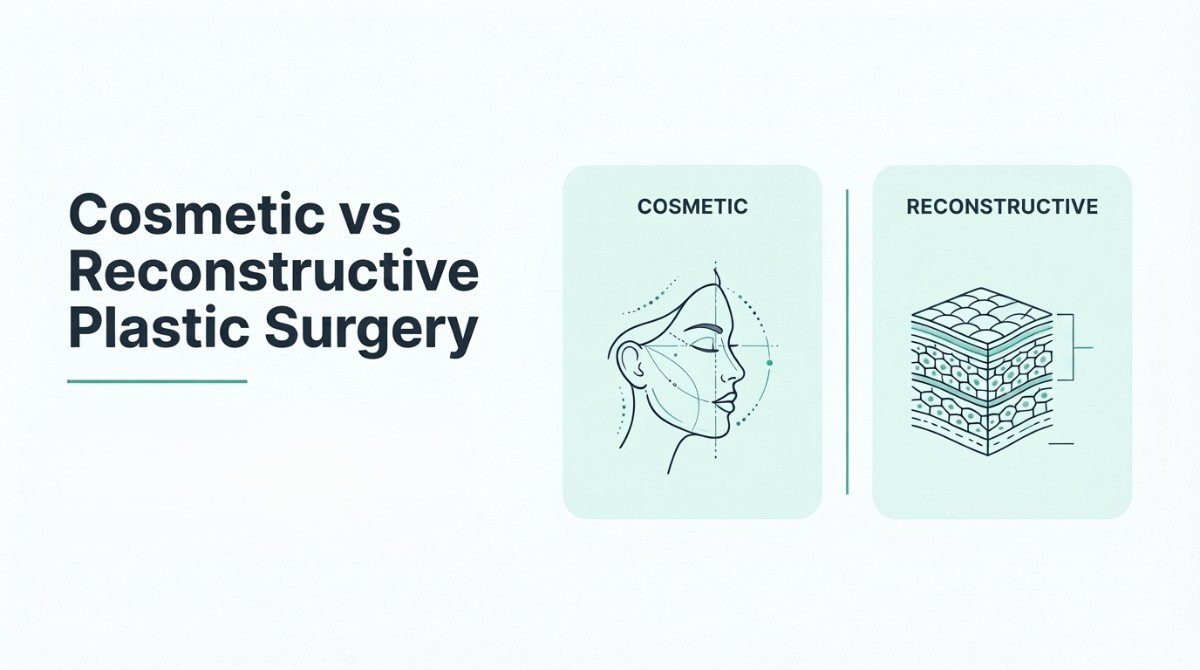
Cosmetic vs Reconstructive Plastic Surgery refers to two closely related areas of plastic surgery that have different primary goals. Cosmetic procedures generally focus on changing or enhancing appearance, while reconstructive procedures aim to repair abnormalities and restore form or function affected by injuries, burns, congenital conditions or disease. Some treatments may address both goals, depending on the patient’s needs.
Understanding the difference can help patients make informed decisions about treatment. The right approach depends on the condition being treated, overall health, expectations and the potential benefits and limitations of each procedure. At Sushrutha Institute of Plastic, Reconstructive and Aesthetic Surgery (SIPRAS), patients can learn about plastic surgery services and the assessment process for their individual concerns.
Cosmetic plastic surgery is primarily concerned with modifying a person’s appearance. It may involve changing the shape, size, contour or proportions of a particular body feature. People consider these procedures for different reasons, including personal aesthetic preferences, age-related changes or concerns about specific physical features.
The aim is to achieve an outcome that is appropriate for the person’s anatomy and expectations. However, surgery cannot guarantee perfect symmetry or a particular appearance, and the final result may be influenced by healing, skin characteristics, scarring and other individual factors.
Several procedures fall within aesthetic plastic surgery.
Rhinoplasty: Changes the shape or structure of the nose. Some procedures may also address functional concerns affecting breathing.
Blepharoplasty: Alters the upper or lower eyelids by addressing selected skin or tissue changes.
Facelift surgery: Addresses certain age-related changes in facial tissues.
Liposuction: Removes selected deposits of fat to change body contours. It is not a treatment for obesity.
Abdominoplasty: Removes excess abdominal skin and may involve tightening the abdominal wall in suitable patients.
Breast surgery: Procedures may change breast size, shape or position according to individual needs.
The suitability of any procedure depends on a medical assessment rather than the desired change alone. A surgeon considers health, medical history, expectations and the potential risks before determining whether surgery is appropriate.
Cosmetic procedures may change specific physical features, but they cannot stop the natural ageing process or guarantee improvements in every aspect of a person’s life. Results also vary between individuals.
In some cases, a non-surgical treatment or no treatment may be a reasonable alternative. Patients should understand the expected outcome, recovery requirements, possible complications and long-term considerations before deciding to proceed.
Reconstructive plastic surgery focuses on repairing or rebuilding body structures affected by injury, burns, congenital differences, disease or previous surgery. Depending on the condition, the objective may be to restore function, provide tissue coverage, correct a structural abnormality or improve the appearance of an affected area.
Unlike procedures performed primarily for aesthetic reasons, reconstructive treatment often addresses a specific physical problem. However, improving appearance can also be an important part of reconstruction, particularly when an injury or condition has changed the appearance of the face or another visible area.
Reconstructive surgery may be considered in several situations.
Burn injuries: Severe burns can cause scars that tighten as they heal. These scars may restrict movement around the neck, hands, elbows or other joints. Treatment may aim to release tight tissue, improve movement and provide suitable coverage.
Congenital conditions: Some differences present from birth affect the development of body structures. Depending on the condition, reconstructive treatment may help improve form, function or both.
Traumatic injuries: Accidents can damage skin, soft tissue, nerves, blood vessels and other structures. Reconstruction may be needed to repair damaged areas or cover tissue that has been lost.
Cancer-related defects: Surgery to remove a tumour can leave a defect that requires reconstruction. The treatment plan depends on the location and extent of tissue removal and any additional treatment required.
Complex wounds: Some wounds do not heal adequately with routine wound care. Selected cases may require specialised tissue coverage or reconstruction.
Scar-related problems: Certain scars can cause tightness, discomfort or movement restrictions. Treatment may be considered when these problems affect function or when the scar requires further assessment.
A reconstructive procedure may address more than the visible appearance of an affected area. An injury to the hand, for instance, can interfere with grip, sensation or everyday activities. A tight burn scar near a joint may restrict movement. Reconstructive treatment may aim to address these limitations as well as improve the appearance of the affected tissue.
The result depends on the original injury or condition, the amount of tissue involved, the patient’s health and the available treatment options. Some patients may need rehabilitation or more than one procedure to achieve their treatment goals.
Although both branches use plastic surgery techniques, their objectives and treatment considerations can vary.
Cosmetic surgery mainly aims to change or enhance appearance. Reconstructive surgery primarily aims to repair a structural problem or restore form and function affected by a medical condition, injury or congenital difference.
This distinction is useful, but it is not absolute. A reconstructive procedure may improve appearance, while certain cosmetic procedures may also address a functional concern.
People may seek cosmetic treatment because they want to change a particular feature. Reconstructive treatment is more commonly considered when a physical abnormality, tissue loss or injury requires repair.
The reason for treatment helps determine the appropriate approach. A clinical assessment is still necessary because similar-looking concerns may have different causes and treatment requirements.
Cosmetic outcomes are generally assessed against realistic aesthetic goals, along with safety, healing and function. Reconstructive outcomes may also be evaluated through wound healing, tissue coverage, movement, structural stability and the ability to perform everyday activities.
In both cases, results depend on individual circumstances. No procedure can guarantee a particular outcome, and some conditions may require further treatment.
Cosmetic procedures may involve reshaping, contouring, lifting or removing selected tissue. Reconstructive procedures may require skin grafts, tissue flaps, scar release or microsurgical techniques, depending on the problem.
There is considerable overlap between these methods. The surgeon selects an approach based on the anatomy, the treatment objective and the condition being addressed.
Neither category is automatically more complex than the other. Some cosmetic procedures involve extensive surgery, while some reconstructive procedures may be relatively limited. Complex reconstruction may require multiple stages, particularly when significant tissue has been damaged or lost.
The extent of treatment depends on the individual case rather than the category of surgery.
Recovery varies according to the procedure, the patient’s health and the amount of tissue involved. Some cosmetic operations require a period of restricted activity and follow-up care. Complex reconstruction may also involve wound management, rehabilitation or additional procedures.
Patients should follow the recovery instructions provided by their treating team. The expected recovery period should be discussed before treatment and adjusted to the individual’s needs.
The cost of either type of surgery can depend on the procedure, anaesthesia, hospital stay, investigations, surgical materials, follow-up and whether additional treatment is required.
Elective cosmetic procedures are commonly excluded from health insurance coverage, whereas some medically necessary reconstructive procedures may be eligible under particular policies. Coverage depends on the insurer’s terms, exclusions and approval requirements. Patients should confirm the details directly with their insurer rather than assume that a procedure will be covered.
Yes. The two categories can overlap when a procedure addresses both appearance and function. The main distinction is the primary purpose of treatment, not necessarily the surgical technique used.
Consider a person who has sustained a facial injury. Surgery may be needed to repair damaged structures or improve function, while also restoring facial contour. Similarly, scar revision may be considered when tight scar tissue restricts movement, even though improving the scar’s visible appearance may also matter to the patient.
Reconstruction after cancer surgery may restore the shape of an area where tissue has been removed. Certain procedures involving the eyelids or nose may also address both appearance-related and functional concerns, depending on the clinical findings.
These examples show why treatment should be planned around the person’s actual needs rather than a label alone. The surgeon can explain the main purpose of a proposed procedure, the expected benefits, possible limitations and whether treatment may need to be performed in stages.
The type of surgery is one of the main factors affecting the overall cost. Plastic surgery is a broad specialty, and different procedures require different levels of planning, surgical skill, equipment, and postoperative care.
Cosmetic procedures may include rhinoplasty, liposuction, tummy tuck surgery, breast procedures, and other operations designed to address a patient’s aesthetic concerns. Reconstructive procedures may involve repairing damaged tissue, correcting congenital differences, treating burn-related problems, or restoring function after trauma.
Each procedure has its own requirements. A relatively limited operation may require less operating time and fewer resources than a complex reconstruction involving several tissues or specialised surgical techniques.
The exact cost cannot be determined from the procedure name alone. The surgeon must assess the patient’s anatomy, medical history, goals, and the extent of correction required before recommending an appropriate approach.
The complexity of the operation has a direct influence on the resources needed to perform it. Surgical planning may become more demanding when a condition affects several tissue layers, involves previous surgical scars, or requires the reconstruction of delicate structures.
Longer procedures may require more operating-room time, anaesthesia support, surgical supplies, and postoperative monitoring. Complex reconstructive operations can also involve additional specialists or advanced techniques, depending on the patient’s needs.
For instance, correcting a minor deformity may involve a different surgical plan from reconstructing tissue damaged by a severe injury. Even when the broad objective is similar, the extent of the affected area and the expected functional outcome can change the treatment requirements.
A consultation helps the surgeon explain the complexity of the proposed operation and why one treatment plan may differ in cost from another.
The surgeon’s qualifications and experience are important considerations when planning plastic surgery. Different procedures demand different levels of specialist training, technical skill, and familiarity with the relevant anatomical structures.
Patients should check whether the surgeon has appropriate recognised qualifications and training in plastic and reconstructive surgery. It is also reasonable to ask about experience with the specific procedure being considered, the expected outcomes, potential complications, and available alternatives.
Fees may vary according to the surgeon’s expertise and the demands of the operation. However, price alone does not establish the quality or suitability of a surgeon.
The decision should consider qualifications, communication, the proposed treatment plan, safety arrangements, and the surgeon’s ability to explain realistic expectations. Patients should feel comfortable asking questions before making a decision.
The hospital or surgical facility is another factor affecting the cost of plastic surgery in Kerala. Procedures requiring an operating theatre, specialised instruments, anaesthesia facilities, or extended monitoring may involve different hospital charges from those associated with less complex treatment.
Hospital-related expenses can include:
Operating theatre and facility charges.
Surgical equipment and consumables.
Nursing and recovery-room care.
Inpatient accommodation, when required.
Monitoring and emergency support.
Laboratory or diagnostic services associated with treatment.
Reconstructive surgery may require additional infrastructure when the procedure involves complex tissue repair, microsurgery, or management of significant injuries.
Patients should ask which facilities are included in the estimate and whether any separate hospital charges may apply. The suitability of the facility and the safety arrangements should remain central considerations when comparing treatment options.
Anaesthesia is an important part of many plastic surgery procedures. The type of anaesthesia used depends on the operation, its duration, the patient’s medical history, and the surgeon’s and anaesthesiologist’s assessment.
Some procedures may be performed with local anaesthesia, sometimes with sedation, while others require general anaesthesia. The associated costs can vary according to the anaesthesia plan, the professional support required, monitoring, and recovery arrangements.
Patients should disclose existing medical conditions, allergies, previous reactions to anaesthesia, and all medicines or supplements they use. This information helps the clinical team assess risks and plan care appropriately.
The consultation and treatment estimate should clarify whether anaesthesia-related professional fees and monitoring costs are included in the quoted amount.
The decision begins with an assessment of the condition and the patient’s treatment goals. The surgeon reviews relevant medical history, examines the affected area and considers factors that could influence surgical safety or healing.
Depending on the condition, the assessment may include:
Physical examination: To understand the affected structures and the extent of the concern.
Medical history: To identify relevant conditions, medications, previous procedures and healing factors.
Functional assessment: To determine whether movement, sensation, breathing or another function is affected.
Treatment options: To consider whether surgery, non-surgical treatment, rehabilitation or observation may be appropriate.
Expected outcomes: To establish realistic goals and discuss limitations.
Recovery needs: To plan wound care, activity restrictions, rehabilitation and follow-up.
The treatment plan should reflect the patient’s circumstances and the clinical findings. It may also change if further information becomes available or if the condition requires a staged approach.
For more information about plastic and reconstructive surgery services, patients can visit the official SIPRAS website. General online information can support understanding, but it cannot determine whether a particular procedure is suitable for an individual.
Cosmetic and reconstructive surgery both carry potential risks. These may include bleeding, infection, reactions to anaesthesia, delayed healing, scarring, changes in sensation and the possibility of further treatment. The likelihood and nature of complications vary with the procedure and the patient’s health.
Recovery may involve swelling, bruising, discomfort and temporary restrictions on normal activities. Some reconstructive procedures require dressings, close monitoring of healing tissue or rehabilitation. Other operations may involve more than one stage before the intended treatment is complete.
Following post-operative instructions and attending recommended follow-up appointments are important parts of care. Patients should contact their medical team if they develop unexpected or worsening symptoms. Severe symptoms or signs of a possible serious complication require urgent medical attention.
It is important to understand that recovery timelines differ. A recovery period described for one procedure should not be assumed to apply to another. The treating surgeon can explain the expected course based on the operation performed and the individual’s circumstances.
The impact of plastic surgery depends on the problem being treated and the outcome achieved. Reconstructive treatment may help improve movement, provide tissue coverage or address a structural problem that interferes with daily activities. These changes may support greater comfort or independence for some patients.
Cosmetic surgery addresses appearance-related goals, but individual experiences and satisfaction vary. Surgery cannot guarantee increased confidence, emotional well-being or changes in social circumstances. Understanding what the procedure can realistically achieve is therefore an important part of making a decision.
In either category, treatment should be considered in terms of its likely benefits, limitations, risks and recovery demands. A carefully selected procedure may address a specific concern, but it is not suitable for everyone and should not be viewed as a guaranteed solution.
Sushrutha Institute of Plastic, Reconstructive and Aesthetic Surgery (SIPRAS) is located at Elite Mission Hospital, Koorkenchery, Thrissur, Kerala. The institute’s published service information describes aesthetic procedures and reconstructive care for selected conditions, including burn-related problems, congenital differences, traumatic injuries and tissue defects.
The appropriate treatment depends on the patient’s condition and individual assessment. People exploring plastic surgery can use the website of Sushrutha to learn more about its services and available care pathways.
Understanding the purpose of cosmetic and reconstructive procedures helps clarify why different treatment approaches may be recommended. Cosmetic surgery primarily addresses appearance-related goals, while reconstructive surgery focuses on repairing structural problems and restoring function where possible. Because the two can overlap, an individual clinical assessment is the appropriate starting point for determining which options may be suitable.
It mostly comes down to why the surgery is being done. Cosmetic plastic surgery is chosen to improve appearance. Reconstructive plastic surgery is done to repair or rebuild something affected by an injury, burn, illness or a condition present from birth, with the aim of restoring both shape and function. Some procedures do a little of both, and your surgeon can explain where your own situation fits.
The easiest way to find out is to talk to a plastic surgeon. They will ask about your concerns and health history, look at the area, and talk through what you hope to achieve. From there they can tell you whether cosmetic surgery, reconstructive surgery, a combination, or even a non-surgical option makes the most sense for you.
Mainly, yes. Cosmetic surgery is about helping you feel more comfortable with how you look. The right procedure depends on your anatomy, your health and what you expect, and it's important to know that no surgery can promise a particular look or a particular feeling afterwards. A realistic, honest consultation is the best starting point.
Reconstructive surgery covers a wide range of needs. These include differences someone is born with, burn injuries, wounds from accidents, facial injuries, loss of tissue, some defects after cancer surgery and certain problems that affect movement or everyday function. The right approach is different for every person and every condition.
Yes, sometimes. A good example is rebuilding tissue after an injury, which may help restore movement and also improve the shape of the area. How much each person gains depends on their own case, so it's worth asking your surgeon what is realistic for you.
Some basic surgical principles are common to both, but the methods depend on the goal and the tissue involved. Reconstruction may need skin grafts, tissue flaps or microsurgery, while cosmetic work is often about reshaping or contouring. Your surgeon will choose the technique that suits you after examining you in person.
Recovery depends on the procedure, how much tissue is involved, your general health and how your body heals. Complex reconstruction may involve rehabilitation or treatment in several stages, while some cosmetic procedures need a shorter recovery. Whichever you have, follow the instructions your own treating team gives you.
Not always. Some conditions can be treated with fairly small procedures. Others, such as complex injuries or a large loss of tissue, may need surgery in stages along with rehabilitation. It all depends on what needs to be repaired.
Most surgery leaves some kind of scar, though how noticeable it is can vary a great deal. The location, the type of procedure, the way your skin heals and how you care for the area all play a part. Surgeons plan incisions carefully, but nobody can promise a scar will disappear completely.
You can get in touch with Sushrutha Institute of Plastic, Reconstructive and Aesthetic Surgery (SIPRAS) at Elite Mission Hospital, Koorkenchery, Thrissur, Kerala, to learn about consultation and treatment options. Whether a treatment is right for you is decided after an individual clinical assessment.
EXCELLENTTrustindex verifies that the original source of the review is Google. നമസ്തേ എൻ്റെ പേര് ദിദീഷ് കഴിഞ്ഞ ആഴ്ച ഞാൻ ഒരു അപകടം പറ്റി Elite ഹോസ്പിറ്റലിൽ അഡ്മിറ്റ് ആയിരുന്നു ഒപ്പം എൻ്റെ ചേട്ടനും ഉണ്ടായിരുന്നു ഡോർ കട്ട് ചെയ്യുന്നതിനിടെ കട്ടർ തെറിച്ചു കാൽപാദം പകുതി മുറിഞ്ഞ് . ചേട്ടന് കാൽമുട്ടിൽ ആയിരുന്നു ഓപറേഷൻ കഴിഞ്ഞു വീട്ടിൽ ആണ് രണ്ടാളും സുഖമായിരിക്കുന്നു. എൻ്റെ കാൽപാദം മുറിച്ചു മാറ്റും എന്ന ഒരു പേടി മാത്രേ എനിക്കുണ്ടായിരുന്നുള്ളു പക്ഷെ അങ്ങനെ ഒന്നും സംഭവിച്ചില്ല എല്ലാ സ്റ്റാഫിനും നന്ദി പറയുന്നു കാരണം വന്നപ്പോ തൊട്ട് എല്ലാവരും സമാതാനിപ്പിക്കായിരുന്നൂ എല്ലാവരോടും സ്നേഹം അറിയിക്കുന്നു പ്രത്യേകിച്ച് ഡോക്ടറോട് 🙏🏻Trustindex verifies that the original source of the review is Google. Excellent center for all cosmetic procedures... highly recommendedTrustindex verifies that the original source of the review is Google. The surgery is in a seamless hospital and everything is very excellent
This website uses cookies to ensure you get the best experience on our website.

