Elite Mission Hospital · Koorkenchery, Thrissur
24 × 7 Emergency Plastic Surgery Care
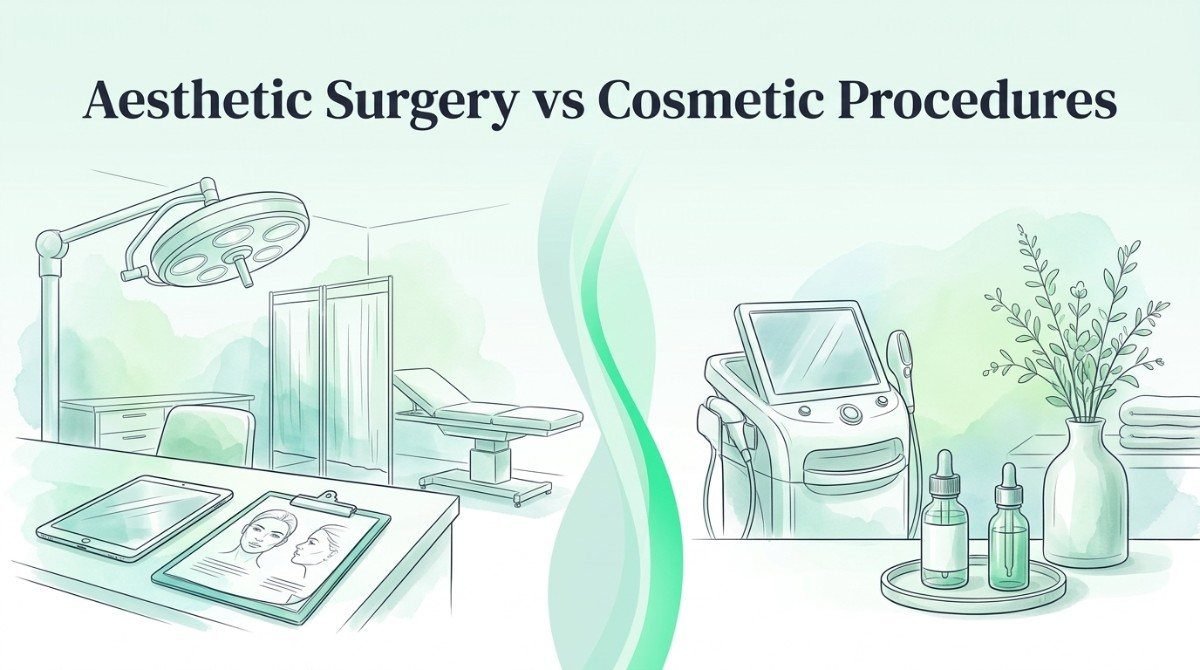
Aesthetic surgery vs cosmetic procedures is an important topic if you are exploring options to address appearance-related concerns. The two terms are often used interchangeably, but they can describe different treatment approaches, techniques and levels of medical intervention. In this article, “aesthetic surgery” refers to treatments that involve an operation, while “cosmetic procedures” refers to non-surgical treatments such as injectables, peels and laser therapy. Although “cosmetic” is sometimes used to include surgery as well, this distinction makes the comparison clearer. Understanding these differences can help you explore suitable options based on your concerns, medical history and expectations. At Sushrutha Institute of Plastic Surgery, a consultation with a plastic surgeon can help individuals understand the available surgical and non-surgical options and discuss their suitability based on individual needs.
Aesthetic surgery refers to surgical procedures performed mainly to modify or improve a person’s physical appearance. These procedures may change facial features, body contours or other physical characteristics, depending on your concerns and clinical suitability.
Unlike treatments that focus mainly on the skin, aesthetic surgery may involve modifying underlying tissues and structures. The approach depends on the area being treated, the intended change and your anatomy.
Commonly discussed aesthetic surgical procedures include:
Whether these procedures suit you depends on your medical history, physical condition, anatomy and expectations. A qualified plastic surgeon evaluates these factors before recommending a surgical approach.
Aesthetic surgery may require anaesthesia, pre-operative investigations, post-operative monitoring and a period of recovery. You should understand the surgical process and possible complications before deciding to proceed.
In this article, cosmetic procedures means non-surgical treatments intended to address appearance-related concerns without a conventional operation. They usually focus on skin texture, facial lines, volume changes, pigmentation and similar concerns. Techniques and requirements vary with the method used.
Commonly discussed non-surgical cosmetic procedures include:
The right treatment depends on your skin characteristics, medical history, allergies, expectations and the concern being assessed.
Many non-surgical treatments involve less recovery time than surgery, but they are not risk-free. Injections, chemical treatments and energy-based procedures can cause complications if performed without proper assessment, training or safety precautions. A consultation with a suitably qualified healthcare professional helps you understand your options, their limitations and possible adverse effects.
Although both approaches may address appearance-related concerns, their techniques, objectives, recovery requirements and risks differ. The seven differences below compare aesthetic surgery with non-surgical cosmetic procedures, which is how the term “cosmetic procedures” is used throughout this comparison.
Aesthetic surgery is performed by a qualified surgeon and may involve incisions, modifying tissues, removing excess tissue or reshaping anatomical structures. Rhinoplasty, for example, surgically reshapes the nose, while liposuction uses specialised techniques to remove localised fat.
Non-surgical cosmetic procedures generally use injections, chemical applications, microneedling or energy-based devices, and do not usually involve a conventional operation.
Some concerns can be addressed without surgery, while others need a surgical assessment.
Aesthetic surgery generally aims to change structure: facial proportions, body contours or excess tissue. Someone concerned about the shape of the nose, or about abdominal contour after weight change, may be assessed for a surgical option.
Non-surgical cosmetic procedures usually target surface and volume concerns such as fine lines, pigmentation, skin texture and mild loss of facial volume. A chemical peel, for instance, refreshes the skin’s surface, while a facelift repositions deeper tissues. Each has specific indications and limitations.
Not every appearance-related concern requires surgery, and a professional assessment helps decide which approach fits.
Aesthetic surgery involves varying degrees of tissue intervention and may require local anaesthesia, general anaesthesia or another suitable anaesthetic approach. It also involves incision placement, tissue healing, post-operative monitoring and infection prevention.
Non-surgical cosmetic procedures are generally less invasive. Some involve small needle punctures, while others use chemical solutions or specialised devices. Less invasive does not mean risk-free: injectables can cause complications, and chemical or energy-based treatments can injure the skin if performed inappropriately.
After aesthetic surgery, you may need a structured recovery period whose length depends on the operation, the technique, your general health and how you heal. Temporary swelling, bruising, discomfort and activity restrictions are common, and follow-up visits help monitor healing and identify complications early.
Non-surgical cosmetic procedures usually involve shorter recovery, with temporary redness, swelling, bruising, tenderness or skin sensitivity. Even so, aftercare instructions and short-term restrictions may still apply.
Before choosing a treatment, ask about expected recovery, work restrictions, activity limits and follow-up arrangements.
Some aesthetic surgical procedures produce long-lasting structural changes, but results are not necessarily permanent. Natural ageing, weight fluctuations and lifestyle factors continue to influence your appearance over time.
Non-surgical cosmetic results often have different maintenance needs. Many injectable treatments are temporary and need repeat sessions, and some skin treatments are planned as a series. The duration also depends on the technique, the products used, your individual response and aftercare.
Discuss realistic expectations and maintenance needs with your healthcare professional rather than relying on general timelines.
Both approaches need a proper assessment, but its focus differs. Before surgery, the plastic surgeon reviews your medical history, current conditions, medications and previous procedures, and carries out a physical examination to decide whether further investigations are needed. Before a non-surgical cosmetic procedure, the practitioner considers your skin type, allergies, medications and previous treatments.
In both cases, a consultation is not simply a chance to pick a treatment. It is how your suitability is determined. (See section 5 for what to ask.)
Every medical procedure carries risk, and the risks vary with the treatment and your health.
Aesthetic surgery may involve risks related to anaesthesia, bleeding, infection, scarring and wound healing, along with complications specific to the procedure. Non-surgical cosmetic procedures may cause bruising, swelling, infection, allergic reactions, pigmentation changes or skin injury, and some injectable procedures can lead to serious complications depending on the product, injection site and technique.
Safety depends largely on the professional’s qualifications, your own health, the suitability of the treatment, and the quality of products, hygiene and follow-up care. Ask about possible complications, warning signs and what to do if you react unexpectedly. (See section 6 for what to look for in a professional and facility.)
The right choice depends on the concern you want to address, the kind of change you want and your medical suitability.
If you are exploring changes to facial structure or body contours, discussing surgical options with a qualified plastic surgeon is a sensible start. Someone considering a change to the shape of the nose, for example, can learn whether rhinoplasty is appropriate. If your concerns are fine lines, pigmentation or skin texture, non-surgical cosmetic procedures may be worth exploring.
Your concern alone does not decide suitability. Medical history, existing conditions, medications, allergies, skin characteristics and expectations all matter. One treatment may not address every concern, and a treatment that looks less invasive can still be unsuitable if you have certain medical conditions.
In some cases, the two approaches are discussed together rather than as alternatives. For example, a surgeon may suggest a surgical procedure for a structural concern and a non-surgical treatment later to improve skin quality, or the reverse, depending on your goals and how your body responds. Your age, skin laxity, lifestyle and the time you can set aside for recovery can also influence which option is realistic. These are points to raise during consultation rather than assumptions to make in advance.
Make your decision only after understanding the benefits, possible complications, recovery requirements and alternatives of each option, rather than choosing a procedure because it is popular.
A consultation is your opportunity to understand the proposed treatment and learn about alternatives. Prepare questions in advance, such as:
The answers help you decide whether you are comfortable proceeding. Also discuss your own expectations: a healthcare professional should explain what a treatment can and cannot achieve, rather than making unrealistic promises.
Individuals exploring surgical treatment options can learn more about an Aesthetic Surgery Hospital in Kerala and consider the importance of professional consultation before selecting a procedure.
The qualifications and experience of the person treating you are central to your safety.
For aesthetic surgery, consult a suitably qualified plastic surgeon with relevant training and experience in the proposed operation. A qualified surgeon can assess your anatomy, history and expectations, then explain the procedure, anaesthesia, possible complications and recovery arrangements. For non-surgical cosmetic procedures, the practitioner should hold appropriate qualifications and specific training in the treatment offered. General experience in cosmetic care does not mean someone is qualified to perform every procedure.
Also consider the facility. Look for:
You should have enough time to understand the proposed treatment and ask questions before giving informed consent. Choose a professional based on qualifications, relevant experience and proper medical facilities, not on advertisements, trends or promotional claims.
Before proceeding with aesthetic surgery or a cosmetic procedure, think through these practical and medical points:
Aesthetic surgery and non-surgical cosmetic procedures serve different purposes. Surgery generally addresses structural changes and involves a longer recovery, while non-surgical procedures usually target skin quality and facial volume with shorter downtime. Neither option is better for everyone. The right choice depends on your concerns, medical history and expectations. The safest first step is a consultation with a qualified professional who can examine you in person, explain the benefits, risks and alternatives, and set realistic expectations. If you are considering aesthetic treatment, you can book a consultation at Sushrutha Institute of Plastic Surgery to discuss which approach may suit you.
Plastic, Reconstructive & Aesthetic Surgeon
SIPRAS, Elite Mission Hospital, Thrissur
Aesthetic surgery generally involves surgical procedures intended to address appearance-related concerns. Cosmetic procedures can include non-surgical treatments such as injectables, chemical peels and laser-based treatments. The terms may overlap in medical practice, so the specific treatment should always be clarified during consultation.
The terms aesthetic surgery and cosmetic surgery are often used interchangeably. Both can refer to surgical procedures intended to change or improve aspects of physical appearance. The terminology may vary depending on the professional, institution and context.
Examples of aesthetic surgery include rhinoplasty, facelift surgery, liposuction, eyelid surgery, breast augmentation, breast reduction and tummy tuck procedures. The suitability of each procedure depends on individual concerns, health history and clinical assessment.
Common non-surgical cosmetic procedures include botulinum toxin injections, dermal fillers, chemical peels, laser treatments and microneedling. These treatments differ in their purpose, method, potential side effects and aftercare requirements.
Non-surgical procedures generally involve less physical intervention than surgery, but they are not free from risks. Possible complications vary by treatment and may include swelling, bruising, irritation, infection or other treatment-specific effects. A qualified professional should explain the risks before any procedure.
Surgical procedures often require more recovery time than non-surgical treatments because the body needs time to heal after an operation. Recovery varies according to the procedure, individual health factors and the healing process. The treating surgeon can explain the expected recovery requirements.
The duration of results depends on the treatment, individual factors and changes that occur over time. Some surgical changes may be long-lasting, while non-surgical treatments may require repeat sessions or maintenance. No procedure can guarantee permanent results.
The appropriate option depends on the concern being addressed, your medical history, treatment goals and clinical suitability. A consultation with a qualified plastic surgeon can help assess available options, explain their limitations and discuss potential risks and recovery requirements.
A consultation allows the medical professional to understand your concerns, review relevant medical history and assess whether a treatment may be suitable. It is also an opportunity to discuss the procedure, possible complications, alternatives, recovery and realistic expectations before making a decision.
Aesthetic surgery should be performed by an appropriately qualified and trained plastic surgeon in a suitable medical facility. Non-surgical treatments should also be carried out by qualified professionals with relevant training and experience in the specific procedure. Patients should verify professional credentials and discuss safety arrangements before treatment.
EXCELLENTTrustindex verifies that the original source of the review is Google. നമസ്തേ എൻ്റെ പേര് ദിദീഷ് കഴിഞ്ഞ ആഴ്ച ഞാൻ ഒരു അപകടം പറ്റി Elite ഹോസ്പിറ്റലിൽ അഡ്മിറ്റ് ആയിരുന്നു ഒപ്പം എൻ്റെ ചേട്ടനും ഉണ്ടായിരുന്നു ഡോർ കട്ട് ചെയ്യുന്നതിനിടെ കട്ടർ തെറിച്ചു കാൽപാദം പകുതി മുറിഞ്ഞ് . ചേട്ടന് കാൽമുട്ടിൽ ആയിരുന്നു ഓപറേഷൻ കഴിഞ്ഞു വീട്ടിൽ ആണ് രണ്ടാളും സുഖമായിരിക്കുന്നു. എൻ്റെ കാൽപാദം മുറിച്ചു മാറ്റും എന്ന ഒരു പേടി മാത്രേ എനിക്കുണ്ടായിരുന്നുള്ളു പക്ഷെ അങ്ങനെ ഒന്നും സംഭവിച്ചില്ല എല്ലാ സ്റ്റാഫിനും നന്ദി പറയുന്നു കാരണം വന്നപ്പോ തൊട്ട് എല്ലാവരും സമാതാനിപ്പിക്കായിരുന്നൂ എല്ലാവരോടും സ്നേഹം അറിയിക്കുന്നു പ്രത്യേകിച്ച് ഡോക്ടറോട് 🙏🏻Trustindex verifies that the original source of the review is Google. Excellent center for all cosmetic procedures... highly recommendedTrustindex verifies that the original source of the review is Google. The surgery is in a seamless hospital and everything is very excellent
This website uses cookies to ensure you get the best experience on our website.