
Understanding what to expect before and after plastic surgery can make the surgical journey more organized and less stressful. Whether the procedure is cosmetic or reconstructive, proper preparation, realistic expectations, and careful aftercare can support a smoother recovery. Patients considering plastic surgery in Thrissur should understand that each procedure and recovery experience can vary depending on the treatment, overall health, and individual healing response.
Plastic surgery may involve procedures designed to improve appearance, restore function, repair damaged tissue, or reconstruct areas affected by injury, illness, or congenital conditions. Knowing what happens before surgery, during the early recovery period, and throughout healing can help patients prepare both physically and emotionally.
What to Expect Before and After Plastic Surgery
The experience of plastic surgery generally involves several stages rather than the operation alone. The process can begin weeks before the procedure and continue for several months while the body heals.
Before surgery, patients may undergo consultation, medical evaluation, diagnostic testing, treatment planning, and preparation instructions. After surgery, the focus shifts toward pain management, wound care, activity restrictions, follow-up appointments, and gradual return to normal activities.
Knowing what to expect before and after plastic surgery can help patients understand that recovery is a process. Swelling, bruising, temporary discomfort, changes in sensation, and restricted movement may occur depending on the procedure.
The recovery timeline also varies. A relatively minor procedure may involve a shorter recovery period, while extensive reconstructive surgery may require significantly more time.
What Happens During the Pre-Surgery Consultation
A detailed consultation is an important part of understanding what to expect before and after plastic surgery. During the consultation, the healthcare team reviews the patient’s concerns, goals, medical history, and suitability for the planned procedure.
Medical History and Evaluation
The medical assessment may include:
- Previous surgeries
- Existing medical conditions
- Current medications and supplements
- Allergies
- Previous reactions to anesthesia
- Smoking or tobacco use
- Previous healing problems
- Relevant family medical history
Patients should provide accurate information because these details can influence surgical planning and recovery.
Discussion of Treatment Goals
The consultation is also an opportunity to discuss expectations. Patients should explain what they hope to achieve and ask questions about possible outcomes.
Plastic surgery can improve specific physical concerns, but it cannot always create a perfect or completely predictable result. Individual anatomy, skin quality, healing capacity, and the type of procedure can affect the final outcome.
Understanding the Procedure
Patients should understand:
- What the procedure involves
- How long surgery may take
- Whether anesthesia is required
- Where the procedure will be performed
- Expected recovery time
- Possible risks and complications
- Follow-up requirements
- When normal activities can resume
Clear communication before surgery can reduce uncertainty and help patients prepare appropriately.
How Should You Prepare Before Plastic Surgery
Preparation is one of the most important parts of what to expect before and after plastic surgery. Specific instructions depend on the procedure, but several general preparation steps may apply.
Follow Medical Instructions
Patients should carefully follow instructions provided by their healthcare team. These may include guidance about eating, drinking, medications, hygiene, and activity before surgery.
Some medications or supplements may need to be adjusted before an operation. Patients should never stop prescribed medication without discussing it with their healthcare provider.
Arrange Help at Home
Depending on the procedure and anesthesia, patients may need assistance immediately after surgery. Arranging transportation and support in advance can make the early recovery period easier.
It may be useful to prepare:
- Comfortable clothing
- Prescribed medications
- Wound-care supplies recommended by the healthcare team
- Easy-to-prepare meals
- A comfortable resting area
- Necessary personal items within easy reach
Avoid Unapproved Changes
Patients should avoid making last-minute changes to medication, supplements, diet, exercise, or lifestyle without professional guidance.
Smoking can interfere with wound healing and may increase surgical complications. If the healthcare provider recommends stopping tobacco use before surgery, patients should follow that advice carefully.
What Can You Expect Immediately After Plastic Surgery
Understanding what to expect before and after plastic surgery also means knowing what may happen immediately after the procedure.
After surgery, patients may initially remain in a recovery area while healthcare professionals monitor vital signs and recovery from anesthesia.
Depending on the operation, temporary effects may include:
- Swelling
- Bruising
- Mild to moderate discomfort
- Tightness
- Temporary numbness
- Reduced movement
- Fatigue
- Mild drainage from the surgical area
These effects can be expected after many types of surgery, but the exact experience varies considerably.
Pain management is generally planned according to the procedure and individual needs. Patients should take medication only as directed by their healthcare provider.
Some patients may go home the same day, while others may need observation or an overnight hospital stay.
What Is Recovery Like After Plastic Surgery
Recovery is a gradual process, and knowing what to expect before and after plastic surgery can help patients avoid becoming concerned when healing does not happen immediately.
The First Few Days
The early recovery period often involves rest and careful monitoring of the surgical area. Swelling and bruising may be more noticeable during the first several days.
Patients may be instructed to:
- Rest adequately
- Keep the surgical area protected
- Take prescribed medication correctly
- Follow wound-care instructions
- Avoid strenuous activity
- Attend scheduled follow-up appointments
The First Few Weeks
As healing progresses, swelling and bruising generally begin to decrease. However, the body may still require additional time to recover.
Depending on the operation, patients may gradually resume walking, household activities, work, and exercise according to professional advice.
Returning to strenuous exercise too quickly can place unnecessary stress on healing tissues. Activity should therefore be increased gradually and only when appropriate.
Long-Term Healing
Some plastic surgery results become noticeable relatively quickly, while others continue developing as swelling decreases and tissues settle.
Scars may also change over time. Initially, scars may appear darker, firmer, or more noticeable before gradually becoming less prominent.
What Are the Common Symptoms After Plastic Surgery
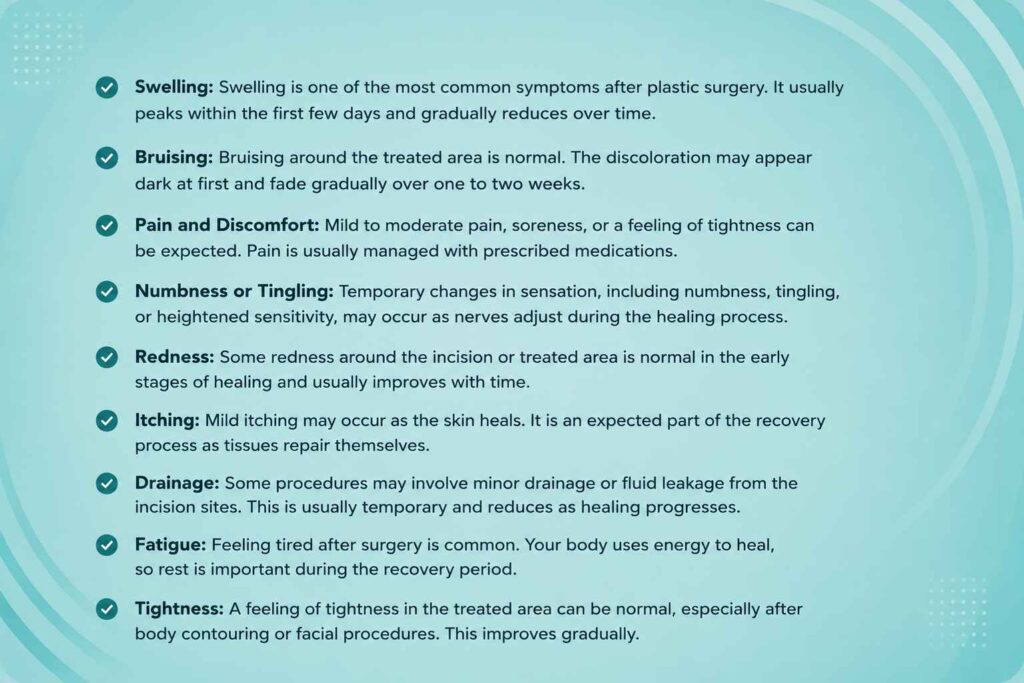
Certain symptoms are common during recovery, but patients should understand the difference between expected healing changes and symptoms that may require medical attention.
Common Recovery Symptoms
Depending on the procedure, normal postoperative symptoms may include:
- Mild swelling
- Bruising
- Tenderness
- Temporary numbness
- Mild itching during healing
- Tightness around the treated area
- Tiredness
- Temporary changes in skin sensation
The severity and duration of these symptoms vary from person to person.
When to Contact the Healthcare Team
Patients should promptly contact their healthcare team if they experience concerning symptoms such as:
- Severe or rapidly increasing pain
- Significant or persistent bleeding
- Increasing redness or warmth
- Pus-like drainage
- Fever
- Sudden worsening swelling
- Difficulty breathing
- Chest pain
- Significant changes in consciousness or alertness
Emergency symptoms require immediate medical attention.
What Are the Benefits of Understanding the Recovery Process
Knowing what to expect before and after plastic surgery can provide several practical benefits.
Better Preparation
Patients who understand the recovery process can arrange transportation, home assistance, time away from work, and necessary supplies before surgery.
More Realistic Expectations
Healing does not necessarily produce an immediate final result. Understanding this can help patients avoid judging the outcome too early.
Improved Aftercare
Following wound-care, medication, activity, and follow-up instructions can support appropriate recovery.
Reduced Uncertainty
Knowing what may happen during each stage of recovery can make the experience more predictable and easier to manage.
What Are the Different Types of Plastic Surgery
Plastic surgery broadly includes cosmetic and reconstructive procedures. The specific preparation and recovery requirements depend heavily on the operation performed.
Cosmetic Plastic Surgery
Cosmetic procedures are generally performed to modify or enhance specific aspects of physical appearance.
Examples can include:
- Rhinoplasty
- Breast augmentation
- Breast reduction
- Abdominoplasty
- Liposuction
- Facelift procedures
- Eyelid surgery
- Body contouring
Each procedure has different risks, preparation requirements, and recovery timelines.
Reconstructive Plastic Surgery
Reconstructive procedures are designed to restore form and, when possible, function following conditions such as injuries, burns, congenital differences, cancer treatment, or tissue loss.
Examples may include:
- Burn reconstruction
- Scar revision
- Skin grafting
- Tissue reconstruction
- Breast reconstruction
- Hand reconstruction
- Facial reconstruction
- Microsurgical reconstruction
Because reconstructive procedures can be complex, recovery may vary significantly depending on the extent of tissue involvement.
How Can You Support a Smooth Recovery
Good postoperative care is an important part of what to expect before and after plastic surgery.
Follow Instructions Carefully
Patients should follow all postoperative instructions provided by their healthcare team. This may include wound care, medication schedules, activity restrictions, and follow-up appointments.
Protect the Surgical Area
The surgical area should be handled according to professional instructions. Patients should avoid unnecessary pressure, rubbing, or manipulation unless specifically advised.
Maintain Appropriate Nutrition
Adequate nutrition supports the body’s healing process. A balanced diet containing sufficient protein, vitamins, minerals, and fluids may be helpful during recovery.
Get Adequate Rest
Sleep and rest allow the body to devote resources toward recovery. Patients should balance rest with gentle movement when permitted.
Attend Follow-Up Appointments
Follow-up appointments allow the healthcare team to assess healing and identify potential complications early.
What Should You Avoid During Recovery
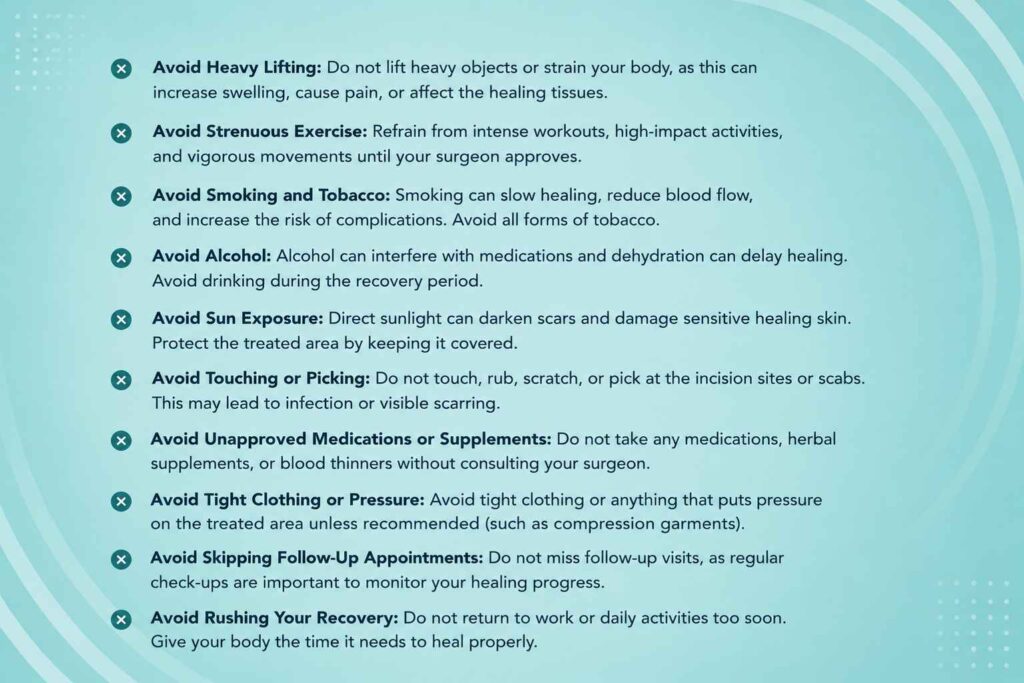
Knowing what to avoid is just as important as knowing what to expect before and after plastic surgery.
Patients may be advised to avoid:
- Heavy lifting
- Vigorous exercise
- Smoking or tobacco exposure
- Unapproved medications or supplements
- Excessive sun exposure to healing scars
- Scratching or picking at healing areas
- Missing follow-up appointments
- Returning to demanding activities too soon
The exact restrictions depend on the operation. Patients should follow individualized medical advice rather than relying solely on general recovery information.
How Long Does Plastic Surgery Recovery Take
There is no single recovery timeline that applies to every plastic surgery procedure.
Minor procedures may allow a relatively quick return to routine activities, while major operations can require weeks or longer before normal activities are fully resumed.
Several factors influence recovery, including:
- Type and extent of surgery
- Surgical technique
- Overall health
- Age
- Skin and tissue characteristics
- Smoking status
- Nutrition
- Activity level
- Presence of other medical conditions
- Individual healing response
It is important to distinguish between returning to routine activities and achieving the final surgical result. A patient may resume normal daily activities while deeper tissues are still healing.
What Questions Should You Ask Before Plastic Surgery
Patients can make their consultation more useful by preparing questions in advance.
Important questions may include:
- What does the procedure involve?
- What preparation is required?
- What type of anesthesia will be used?
- How long will recovery take?
- What activities should be avoided?
- What type of pain or discomfort is expected?
- How should the surgical area be cared for?
- When can I return to work?
- When can I exercise?
- What complications should I watch for?
- When are follow-up appointments scheduled?
- When should I expect the final result?
A clear discussion can help patients understand both the benefits and limitations of treatment.
Tips for Managing Expectations Before and After Plastic Surgery
Having realistic expectations is an important part of what to expect before and after plastic surgery.
Patients should remember that:
- Results can vary between individuals.
- Healing takes time.
- Temporary swelling can affect appearance.
- Scars may gradually change.
- Final results may take months to become clear.
- Lifestyle and postoperative care can influence recovery.
- No surgical procedure can guarantee a specific aesthetic result.
Good communication with the healthcare team can help patients understand what is realistically achievable.
When Should You Seek Medical Advice After Surgery
Patients should not hesitate to contact their healthcare team when something feels significantly different from the expected recovery process.
Particular attention should be given to sudden changes, worsening symptoms, or signs of infection or other complications.
Potential warning signs can include severe pain that is not controlled as expected, significant bleeding, persistent fever, increasing redness, abnormal discharge, breathing difficulties, or rapidly developing swelling.
When in doubt, contacting the healthcare provider is generally safer than attempting to diagnose a postoperative problem independently.
Conclusion
Understanding what to expect before and after plastic surgery can help patients prepare realistically for consultation, surgery, recovery, and long-term healing. The process involves more than the procedure itself. Medical evaluation, preparation, postoperative care, activity restrictions, follow-up appointments, and patience are all important components of recovery.
Every surgical experience is different, so patients should follow personalized instructions from their healthcare team rather than comparing their recovery directly with another person’s experience. With appropriate preparation and responsible aftercare, patients can approach their procedure with a clearer understanding of the recovery journey.
For patients considering plastic surgery in Thrissur, having an informed discussion with a qualified healthcare professional can help clarify the procedure, expected recovery, potential risks, and appropriate aftercare. For reliable guidance on what to expect before and after plastic surgery, the American Society of Plastic Surgeons (ASPS) provides detailed information on preparation, recovery, aftercare, and patient safety.
Frequently Asked Questions
Sushrutha Institute of Plastic, Reconstructive & Aesthetic Surgery


Dr Pradeep Kumar
Plastic, Reconstructive & Aesthetic Surgeon
SIPRAS, Elite Mission Hospital, Thrissur