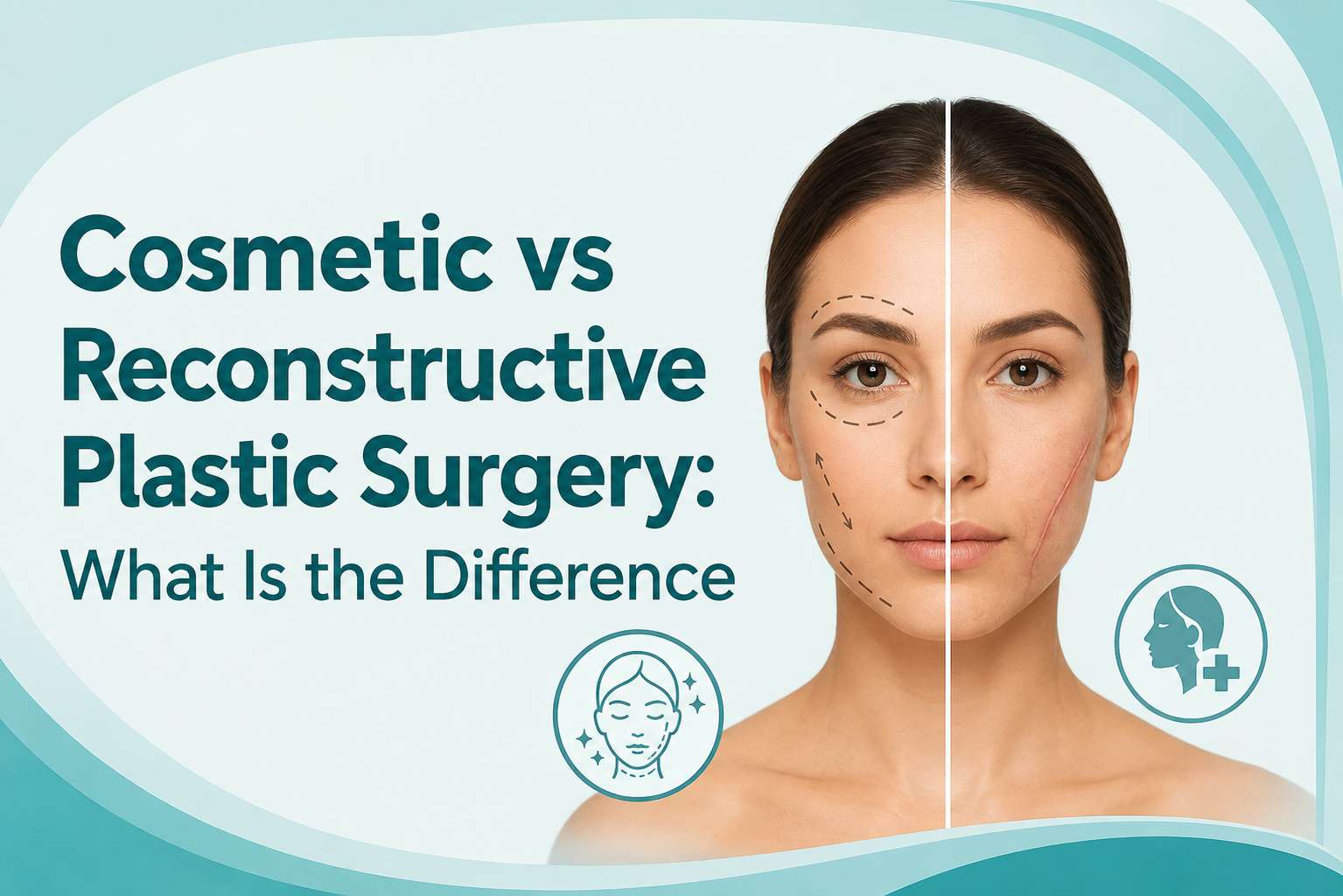
Understanding the difference between cosmetic vs reconstructive plastic surgery can help patients make informed decisions about their treatment. Although both fall under the broader field of plastic surgery, their goals, indications, and expected outcomes can be quite different. In Thrissur, patients may consider plastic surgery for appearance enhancement, restoration after injury, correction of congenital conditions, or improvement of function.

Cosmetic surgery generally focuses on changing or enhancing a person’s appearance, while reconstructive surgery aims to restore form and function affected by injury, disease, surgery, burns, or congenital conditions. In some cases, reconstructive procedures can also improve appearance as part of the overall treatment.

What Is Cosmetic vs Reconstructive Plastic Surgery

The main difference between cosmetic vs reconstructive plastic surgery is the primary purpose of the procedure.

Cosmetic plastic surgery is performed mainly to enhance or modify physical appearance. A person may choose cosmetic surgery because they are unhappy with a particular feature or want to achieve a specific aesthetic change.

Reconstructive plastic surgery, on the other hand, is primarily performed to restore body structures affected by medical conditions, trauma, congenital abnormalities, burns, tumors, or previous surgical procedures.

While the two areas have different objectives, there can be some overlap. Reconstructive surgery may produce significant cosmetic improvements, while certain cosmetic procedures may also provide functional benefits.

The most appropriate procedure depends on the patient’s individual anatomy, medical history, concerns, and treatment goals.

What Is Cosmetic Plastic Surgery

Cosmetic plastic surgery is a branch of plastic surgery that focuses primarily on improving appearance, symmetry, proportion, or specific physical features.

People may consider cosmetic procedures when they want to change an area of the body that they feel does not match their aesthetic preferences.

Common Cosmetic Plastic Surgery Procedures

Some commonly performed cosmetic procedures include:

  • Rhinoplasty for changing the shape or proportions of the nose
  • Facelift surgery for addressing facial aging
  • Eyelid surgery for modifying the appearance of the upper or lower eyelids
  • Breast augmentation for increasing breast volume
  • Breast reduction for reducing breast size and improving proportions
  • Liposuction for removing localized areas of fat
  • Abdominoplasty, commonly known as tummy tuck surgery
  • Body contouring after significant weight loss
  • Otoplasty for changing the appearance of prominent ears

The exact procedure selected depends on the patient’s goals and physical characteristics.

Cosmetic surgery is generally elective, meaning it is not usually required to treat a medical emergency. Patients should have realistic expectations and understand both the potential benefits and limitations before deciding on surgery.

What Is Reconstructive Plastic Surgery

Reconstructive plastic surgery is designed primarily to restore the appearance and function of body parts affected by injury, disease, congenital abnormalities, burns, or medical treatment.

The objective may be to rebuild tissue, improve movement, restore structural integrity, close wounds, or help a person return to normal activities.

Common Reasons for Reconstructive Surgery

Reconstructive procedures may be considered following:

  • Severe burns
  • Accidental injuries
  • Facial trauma
  • Congenital abnormalities
  • Skin and soft-tissue defects
  • Cancer surgery
  • Breast reconstruction after mastectomy
  • Complex wounds
  • Hand injuries
  • Scarring that restricts movement
  • Tissue loss caused by infection or trauma

Reconstructive surgery can involve skin, fat, muscle, bone, nerves, blood vessels, or combinations of these tissues.

The procedure may range from relatively simple wound closure to advanced microsurgical reconstruction involving tissue transfer and blood vessel repair.

What Are the Main Differences Between Cosmetic and Reconstructive Surgery

The distinction between cosmetic vs reconstructive plastic surgery can be understood by comparing their primary objectives.

FeatureCosmetic Plastic SurgeryReconstructive Plastic Surgery
Primary goalImprove appearanceRestore form and function
Common reasonAesthetic concernInjury, disease, congenital condition, or tissue loss
Medical necessityUsually electiveOften medically indicated
Main focusAppearance and proportionFunction, structure, and restoration
ExamplesRhinoplasty, facelift, liposuctionBurn reconstruction, trauma repair, breast reconstruction
Patient expectationsAesthetic improvementFunctional and structural restoration
Treatment planningBased largely on aesthetic goalsBased on medical needs and anatomy

Despite these differences, the boundaries are not always absolute. A reconstructive procedure can improve appearance, and a cosmetic procedure may sometimes improve function.

What Conditions May Lead to Reconstructive Surgery

Unlike cosmetic surgery, reconstructive surgery is often associated with an underlying condition or event.

Trauma and Accidental Injuries

Serious injuries can damage skin, muscle, bone, nerves, and blood vessels. Reconstruction may be required to repair damaged tissues and restore movement or appearance.

Burns

Deep or extensive burns can cause significant tissue damage and scarring. Reconstructive surgery may help release tight scar tissue, restore movement, or improve affected areas.

Cancer Treatment

Cancer surgery may require removal of part of a breast, face, skin, or another body structure. Reconstruction can help restore the affected area after cancer treatment.

Congenital Conditions

Some people are born with structural differences that affect appearance or function. Reconstructive procedures may help correct or improve these conditions.

Complex Wounds

Large or difficult-to-heal wounds may require specialized reconstruction to provide adequate tissue coverage and protect underlying structures.

These situations demonstrate why reconstructive plastic surgery is closely connected to restoring health, function, and quality of life.

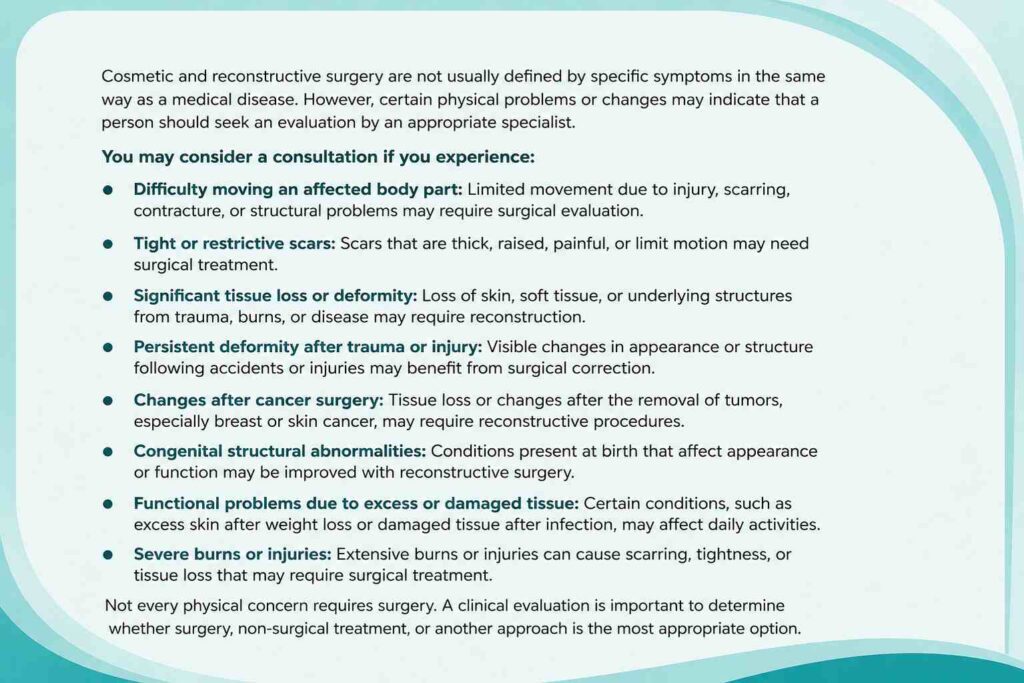
Are There Symptoms That Require Plastic Surgery

Symptoms and physical concerns that may require plastic surgery evaluation

Cosmetic and reconstructive surgery are not usually defined by specific symptoms in the same way as a medical disease.

However, certain physical problems may indicate that a person should seek an evaluation by an appropriate specialist.

Examples can include:

  • Difficulty moving an affected body part
  • Tight or restrictive scars
  • Significant tissue loss
  • Persistent deformity following trauma
  • Changes after cancer surgery
  • Congenital structural abnormalities
  • Functional problems caused by excess or damaged tissue
  • Severe changes following burns or injuries

Not every physical concern requires surgery. A clinical evaluation is necessary to determine whether surgery, nonsurgical treatment, observation, or another approach is appropriate.

What Are the Benefits of Cosmetic Plastic Surgery

The potential benefits of cosmetic surgery depend on the procedure and the individual’s goals.

Possible benefits may include:

  • Improved body proportions
  • Changes in facial or body contours
  • Correction of specific aesthetic concerns
  • Improved symmetry
  • Greater satisfaction with appearance
  • Improved fit of certain clothing
  • Possible improvement in self-confidence

However, cosmetic surgery should not be viewed as a guarantee of improved emotional well-being. The results vary between individuals, and surgery cannot create perfection.

A detailed consultation is important for discussing realistic outcomes.

What Are the Benefits of Reconstructive Plastic Surgery

The potential benefits of reconstructive surgery can extend beyond appearance.

Depending on the condition, reconstruction may help:

  • Restore damaged body structures
  • Improve physical function
  • Protect exposed tissues
  • Release restrictive scars
  • Improve mobility
  • Reconstruct areas affected by cancer surgery
  • Restore tissue following trauma
  • Improve symmetry following tissue loss
  • Support recovery after severe burns
  • Improve overall quality of life

Reconstructive treatment is often planned around the patient’s functional needs as well as their appearance.

How Are Cosmetic and Reconstructive Procedures Performed

The surgical technique depends on the specific procedure, the treatment area, and the amount of tissue involved.

Some procedures involve reshaping existing tissue. Others may require removing excess tissue, repositioning tissue, or transferring tissue from another part of the body.

Reconstructive surgery may sometimes involve advanced techniques such as:

  • Skin grafting
  • Tissue expansion
  • Local tissue flaps
  • Regional flaps
  • Free tissue transfer
  • Microsurgery
  • Scar revision
  • Nerve repair
  • Tendon repair

Cosmetic procedures can also involve advanced surgical techniques, including tissue repositioning, contouring, fat transfer, and minimally invasive approaches where appropriate.

The surgeon selects the technique according to the patient’s anatomy, medical requirements, and desired outcome.

What Is the Recovery Like

Recovery varies significantly between procedures.

Some cosmetic operations may allow a relatively quick return to normal activities, while more complex reconstructive procedures may require a longer recovery period.

Recovery can involve:

  • Temporary swelling
  • Bruising
  • Discomfort
  • Restricted physical activity
  • Wound care
  • Medication as prescribed
  • Follow-up appointments
  • Scar management
  • Gradual return to work and exercise

Patients should follow their postoperative instructions carefully. Attempting strenuous activity too early can interfere with healing.

Reconstructive surgery involving extensive tissue repair may require additional rehabilitation or physical therapy depending on the affected body part.

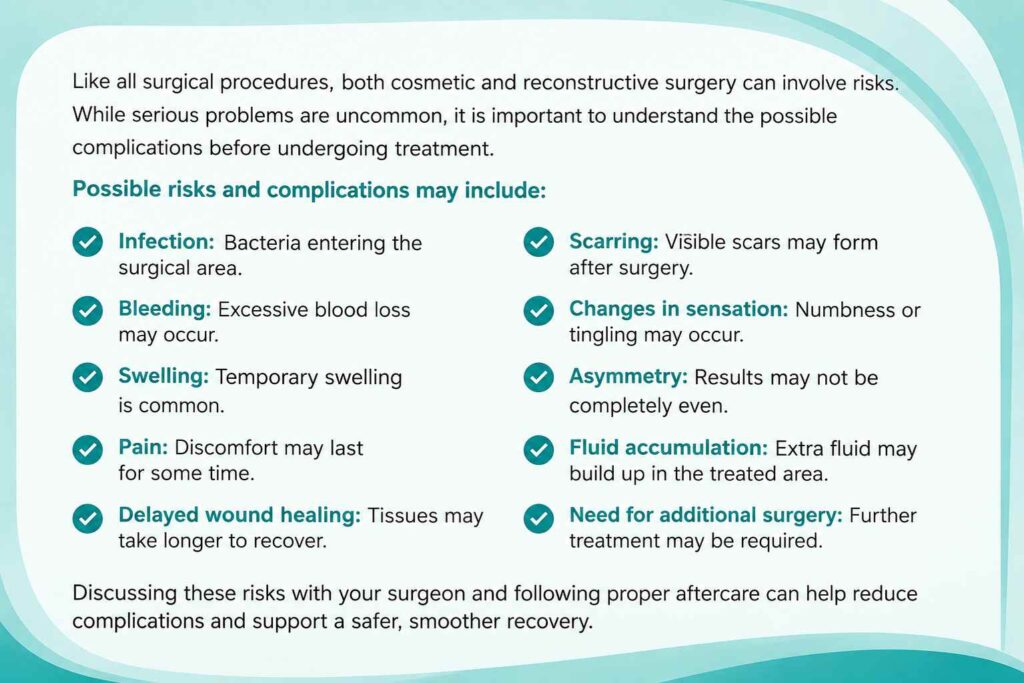
What Are the Possible Risks and Complications

Possible risks and complications of cosmetic and reconstructive plastic surgery

Like all surgical procedures, both cosmetic and reconstructive surgery can involve risks.

Potential complications may include:

  • Infection
  • Bleeding
  • Swelling
  • Pain
  • Delayed wound healing
  • Scarring
  • Changes in sensation
  • Asymmetry
  • Fluid accumulation
  • Blood clots
  • Anesthesia-related complications
  • Need for additional surgery

The risks depend on the type of operation, the patient’s overall health, the surgical site, and the complexity of the procedure.

Patients should discuss potential complications, expected recovery, and alternatives during their consultation.

How Do You Choose Between Cosmetic and Reconstructive Surgery

The choice is generally determined by the reason for treatment rather than simply by the body part being treated.

If the primary goal is to enhance or modify appearance without addressing damage or a medical defect, the procedure is generally considered cosmetic.

If the primary goal is to restore a body structure or function affected by trauma, disease, congenital abnormalities, burns, or previous medical treatment, it is generally considered reconstructive.

However, some procedures can have both cosmetic and functional objectives.

A consultation helps determine which treatment category applies and whether surgery is appropriate.

What Should You Discuss During a Plastic Surgery Consultation

A consultation is an important part of planning cosmetic vs reconstructive plastic surgery.

Patients should be prepared to discuss:

  • Their primary concern
  • Desired outcome
  • Previous surgeries
  • Existing medical conditions
  • Current medications
  • Allergies
  • Smoking or tobacco use
  • Previous anesthesia experiences
  • Expected recovery time
  • Potential complications
  • Alternative treatment options
  • Possible need for additional procedures

It is also useful to ask how long recovery may take and what restrictions will apply after surgery.

Clear communication helps establish realistic expectations and supports safer treatment planning.

Tips for Preparing for Plastic Surgery

Whether a procedure is cosmetic or reconstructive, preparation can influence the overall surgical experience.

Before Surgery

Patients should:

  • Follow the surgeon’s preoperative instructions
  • Provide complete medical information
  • Discuss all medications and supplements
  • Follow recommended fasting instructions
  • Arrange transportation if required
  • Plan appropriate assistance during early recovery
  • Prepare the home for postoperative needs
  • Understand wound-care instructions
  • Attend required preoperative assessments

Patients should also avoid making important decisions based solely on photographs or online testimonials. Individual anatomy and healing can produce different results.

Cosmetic vs Reconstructive Plastic Surgery: Which One Is Right for You

There is no universal answer because the appropriate approach depends on why surgery is being considered.

Cosmetic surgery is primarily concerned with aesthetic enhancement, while reconstructive surgery focuses on restoring form and function following a medical or structural problem.

The distinction becomes especially important when patients are considering surgery after trauma, burns, cancer treatment, congenital conditions, or significant tissue loss.

A qualified plastic surgery evaluation can help determine the appropriate treatment plan based on the individual’s condition and goals.

Conclusion

The distinction between cosmetic vs reconstructive plastic surgery mainly comes down to the purpose of treatment. Cosmetic procedures focus primarily on enhancing appearance, whereas reconstructive procedures aim to restore structures and functions affected by injury, disease, burns, congenital conditions, or medical treatment.

Both areas require careful assessment, realistic expectations, appropriate surgical planning, and proper postoperative care. Understanding the differences can help patients ask better questions and make informed decisions about their treatment. For patients considering plastic surgery in Thrissur, a professional consultation can help determine the most appropriate approach based on individual needs.  For more information about plastic and reconstructive surgery, visit the American Society of Plastic Surgeons (ASPS) to learn about different procedures, treatment goals, and patient considerations.

Frequently Asked Questions

1. What is the main difference between cosmetic and reconstructive plastic surgery? +
Cosmetic plastic surgery primarily focuses on improving or enhancing appearance, while reconstructive plastic surgery aims to restore form and function affected by injury, disease, burns, congenital conditions, or other medical problems.
2. Is reconstructive surgery only performed after accidents? +
No. Reconstructive surgery may also be performed after cancer treatment, burns, congenital abnormalities, complex wounds, infections, and other conditions that cause tissue or functional problems.
3. Is cosmetic surgery medically necessary? +
Most cosmetic procedures are elective rather than medically necessary. They are generally performed to change or enhance appearance according to the patient's aesthetic preferences and treatment goals.
4. Can reconstructive surgery improve appearance? +
Yes. Although the primary goal of reconstructive surgery is restoration of form and function, it can also improve symmetry, contour, scarring, and the overall appearance of the affected area.
5. Can one surgery be both cosmetic and reconstructive? +
Yes. Some procedures can have both functional and aesthetic goals. For example, reconstructive surgery may restore function while also improving the appearance of an area affected by injury, disease, or tissue loss.
6. What procedures are considered cosmetic plastic surgery? +
Common cosmetic procedures include rhinoplasty, facelift surgery, eyelid surgery, breast augmentation, breast reduction, liposuction, tummy tuck surgery, and body contouring. The appropriate procedure depends on the individual's goals and anatomy.
7. What procedures are considered reconstructive plastic surgery? +
Reconstructive procedures may include burn reconstruction, skin grafting, scar release, breast reconstruction, trauma reconstruction, tissue flap surgery, and microsurgical reconstruction, depending on the patient's condition.
8. Does reconstructive surgery always require multiple operations? +
Not necessarily. Some conditions can be treated with a single procedure, while complex injuries, extensive tissue loss, burns, or certain congenital conditions may require staged reconstruction and more than one operation.
9. How long does recovery take after plastic surgery? +
Recovery varies depending on the type of procedure, surgical technique, patient's health, and complexity of treatment. Some procedures have shorter recovery periods, while extensive reconstructive surgery may require several weeks or longer.
10. Are cosmetic and reconstructive surgeries safe? +
Both cosmetic and reconstructive surgeries have potential risks. Safety depends on factors such as the procedure, the patient's health, surgical planning, anesthesia, postoperative care, and appropriate follow-up.

Sushrutha Institute of Plastic, Reconstructive & Aesthetic Surgery

Dr Jyoshid R Balan

Dr Jyoshid R Balan

Plastic & Reconstructive Surgeon

SIPRAS, Elite Mission Hospital, Thrissur

Dr Pradeep Kumar

Dr Pradeep Kumar

Plastic, Reconstructive & Aesthetic Surgeon

SIPRAS, Elite Mission Hospital, Thrissur

Dr Prince H P

Dr Prince H P

Senior Consultant Plastic Surgeon

SIPRAS, Elite Mission Hospital, Thrissur

Dr Vinu Roy

Dr Vinu Roy

Plastic & Reconstructive Surgeon

SIPRAS, Elite Mission Hospital, Thrissur

Dr Ajai K S

Dr Ajai K S

Plastic & Reconstructive Surgeon

SIPRAS, Elite Mission Hospital, Thrissur