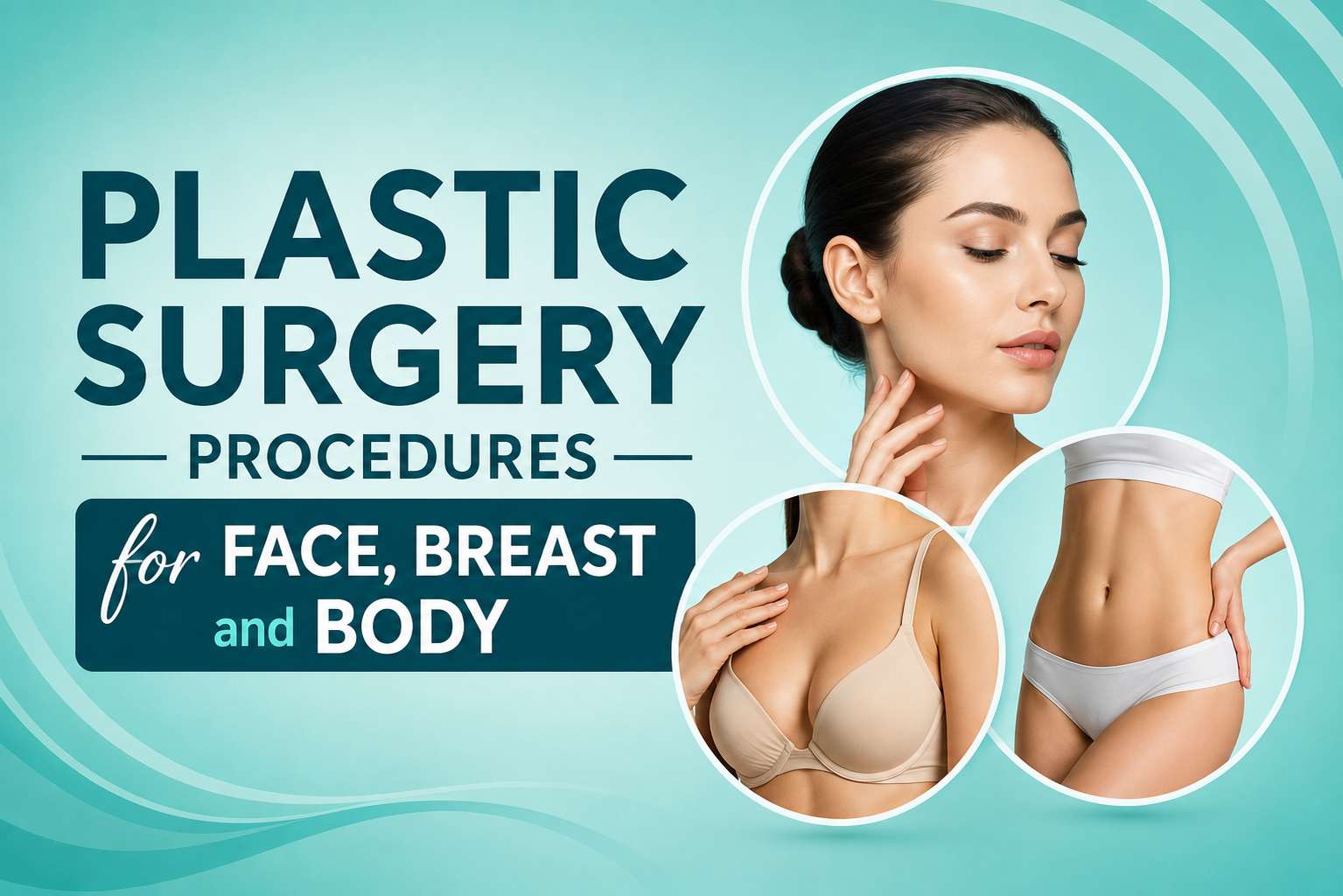
Plastic surgery can help address concerns related to appearance, body shape, tissue changes, and physical features after injury, aging, pregnancy, weight changes, or other life events. Plastic Surgery Procedures for Face, Breast and Body include a wide range of surgical techniques designed to improve, restore, or reshape different areas of the body. In Thrissur, patients considering these procedures can benefit from understanding what each treatment involves, who may be suitable, and what recovery may look like.
The right procedure depends on individual goals, anatomy, health status, and expectations. Some procedures focus mainly on appearance, while others may also restore function or correct changes caused by trauma, surgery, or congenital differences.
Understanding Plastic Surgery Procedures for Face, Breast and Body
Plastic Surgery Procedures for Face, Breast and Body can be broadly divided into facial, breast, and body procedures. Each category includes several treatment options with different purposes.
Facial procedures may focus on improving facial contours, reducing visible signs of aging, or changing the shape of specific features. Breast procedures may enhance, reduce, lift, or reconstruct breast tissue. Body procedures can address excess skin, localized fat, abdominal changes, or uneven contours.
Although cosmetic goals are common, plastic surgery can also have reconstructive purposes. For example, reconstructive surgery may help restore tissue after burns, accidents, cancer treatment, or significant weight loss.
A detailed consultation helps determine whether surgery is appropriate and which technique best matches the patient’s needs.
Types of Plastic Surgery Procedures for Face
Facial surgery includes procedures designed for different parts of the face and neck. The choice depends on the specific concern being addressed.
Facelift
A facelift is designed to improve visible signs of facial aging by repositioning tissues and removing or tightening excess skin. It may help improve loose facial skin, jowls, and reduced definition along the jawline.
Rhinoplasty
Rhinoplasty reshapes the nose to improve its appearance, proportions, or, in some cases, breathing function. The procedure can involve changing the nasal bones, cartilage, or soft tissue.
Blepharoplasty
Blepharoplasty, or eyelid surgery, addresses excess skin and tissue around the upper or lower eyelids. It may create a more refreshed appearance and can sometimes improve vision when excess upper-eyelid skin interferes with the visual field.
Brow Lift
A brow lift raises or repositions the forehead and brow area. It may reduce the appearance of a heavy or drooping brow and improve the overall balance of the upper face.
Chin and Facial Contouring
Chin augmentation and facial contouring procedures can improve facial proportions by altering the shape or projection of specific areas. These treatments may be performed alone or alongside other facial procedures.
Types of Plastic Surgery Procedures for Breast
Breast surgery includes procedures designed to increase volume, reduce excess tissue, improve breast position, or restore the breast following treatment or injury.
Breast Augmentation
Breast augmentation increases breast volume using implants or, in selected cases, fat transfer. Patients may consider augmentation when they want more fullness, improved symmetry, or restoration of breast volume after pregnancy or weight changes.
Breast Reduction
Breast reduction removes excess breast tissue, fat, and skin to reduce overall breast size. It may help people experiencing discomfort associated with heavy breasts, including shoulder pressure, neck pain, or difficulty with physical activity.
Breast Lift
A breast lift, also known as mastopexy, improves breast position by removing excess skin and reshaping the breast tissue. It can address breast sagging related to aging, pregnancy, breastfeeding, or changes in body weight.
Breast Reconstruction
Breast reconstruction is usually performed after mastectomy or significant breast tissue loss. The aim is to rebuild the breast shape using implants, the patient’s own tissue, or a combination of techniques.
These Plastic Surgery Procedures for Face, Breast and Body vary considerably, so treatment planning should be personalized.
Types of Plastic Surgery Procedures for Body
Body procedures focus on improving shape, reducing excess skin, and addressing changes that may not respond sufficiently to diet and exercise.
Abdominoplasty
Abdominoplasty, commonly known as a tummy tuck, removes excess abdominal skin and may tighten separated or weakened abdominal muscles. It can be considered after pregnancy, major weight loss, or significant changes in abdominal tissue.
Liposuction
Liposuction removes localized deposits of fat from selected areas such as the abdomen, thighs, hips, arms, or chin. It is primarily a body contouring procedure rather than a weight-loss treatment.
Body Lift
A body lift may be considered after major weight loss when there is significant excess or loose skin around the abdomen, waist, hips, and other body areas.
Arm Lift
An arm lift, or brachioplasty, removes excess skin and may improve the contour of the upper arms. It is often considered when loose skin remains after substantial weight loss or with age-related tissue changes.
Thigh Lift
A thigh lift reshapes the thighs by removing excess skin and, where appropriate, repositioning tissue. It may be helpful when skin laxity affects the inner or outer thigh region.
Why Do People Consider Plastic Surgery
The reasons for choosing Plastic Surgery Procedures for Face, Breast and Body vary from person to person. Common factors include changes caused by aging, pregnancy, major weight loss, injury, or inherited physical characteristics.
Some people want to improve body proportions or facial balance. Others may seek reconstruction after surgery, trauma, or tissue loss.
Common reasons may include:
- Loose or excess skin
- Changes in body shape after pregnancy
- Significant weight-loss-related skin laxity
- Facial aging and sagging
- Breast asymmetry
- Changes in breast size or position
- Localized fat deposits
- Changes following injury or cancer treatment
- Congenital differences in physical appearance
The motivation for surgery should be personal and based on realistic expectations rather than pressure from others.
Common Concerns and Symptoms Before Surgery
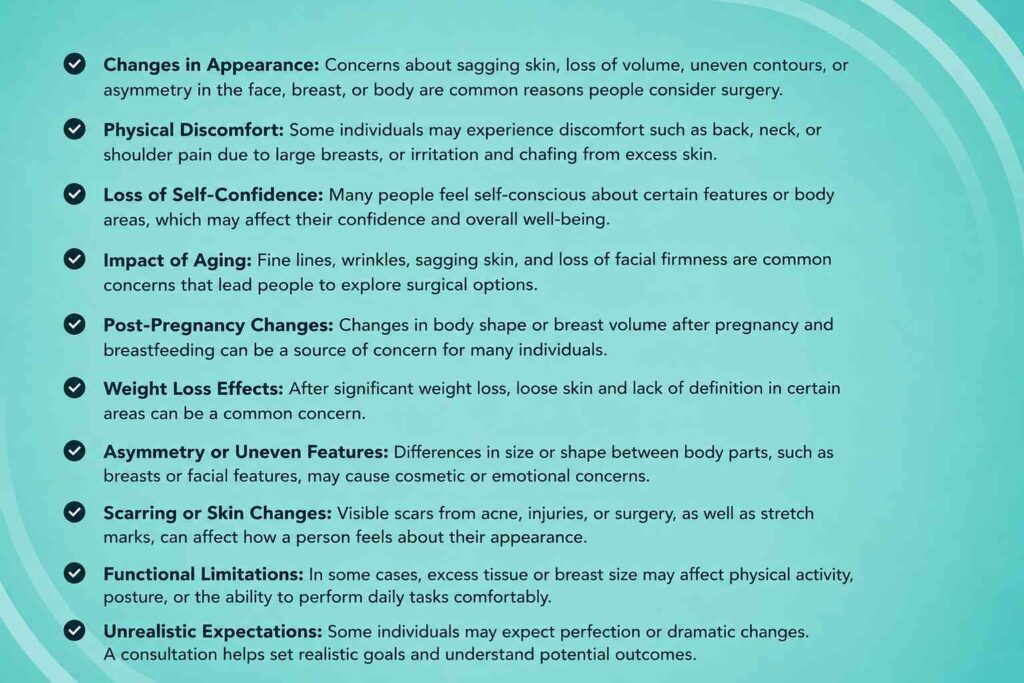
Plastic surgery is not usually performed to treat symptoms in the same way as medical treatment, but certain physical concerns may lead a person to seek evaluation.
For example, individuals considering breast reduction may experience discomfort from heavy breasts. People with excess abdominal skin may experience difficulty with clothing, activity, or hygiene. Facial procedures may be considered because of visible skin laxity, changes in facial contours, or dissatisfaction with a specific feature.
During the evaluation, the surgeon assesses the physical concern and determines whether surgery can reasonably address it.
Benefits of Plastic Surgery Procedures for Face, Breast and Body
The potential benefits of Plastic Surgery Procedures for Face, Breast and Body depend on the specific procedure and the patient’s individual circumstances.
Cosmetic Benefits
Surgery may improve body proportions, facial balance, breast shape, or skin contours. It can create a more defined appearance when the procedure is appropriately selected.
Reconstructive Benefits
Some procedures restore tissue or shape following trauma, burns, cancer treatment, or congenital differences.
Functional Improvements
Certain procedures may improve physical comfort or function. Breast reduction, for example, may reduce strain caused by excessive breast weight.
Psychological and Lifestyle Benefits
Some patients report improved confidence and greater comfort in clothing or daily activities after healing. However, expectations should remain realistic because surgery cannot guarantee a specific emotional or social outcome.
How Plastic Surgery Procedures for Face, Breast and Body Are Performed
The surgical process depends on the treatment selected.
Before surgery, the patient generally undergoes a consultation, medical history review, physical examination, and discussion of treatment goals. The surgical plan may include incision placement, anesthesia requirements, tissue reshaping, skin removal, implants, fat transfer, or reconstruction.
The duration of surgery varies significantly. Smaller procedures may take less time, while combined procedures can require longer operating times.
After surgery, patients are monitored during the immediate recovery period. Depending on the procedure, recovery may include swelling, bruising, temporary discomfort, restricted activity, and follow-up visits.
Detailed instructions regarding wound care, medication, compression garments, sleeping positions, exercise, and work restrictions should be followed carefully.
Risks and Possible Complications
Like any surgery, Plastic Surgery Procedures for Face, Breast and Body involve potential risks. The level of risk depends on the procedure, anesthesia, medical history, surgical technique, and recovery process.
Potential complications may include:
- Infection
- Bleeding or hematoma
- Swelling and bruising
- Scarring
- Changes in sensation
- Poor wound healing
- Asymmetry
- Fluid accumulation
- Anesthesia-related complications
- Need for revision surgery
Patients should discuss individual risk factors before treatment. Smoking, certain medical conditions, medications, and previous surgeries can affect healing and surgical safety.
Recovery and Aftercare Tips
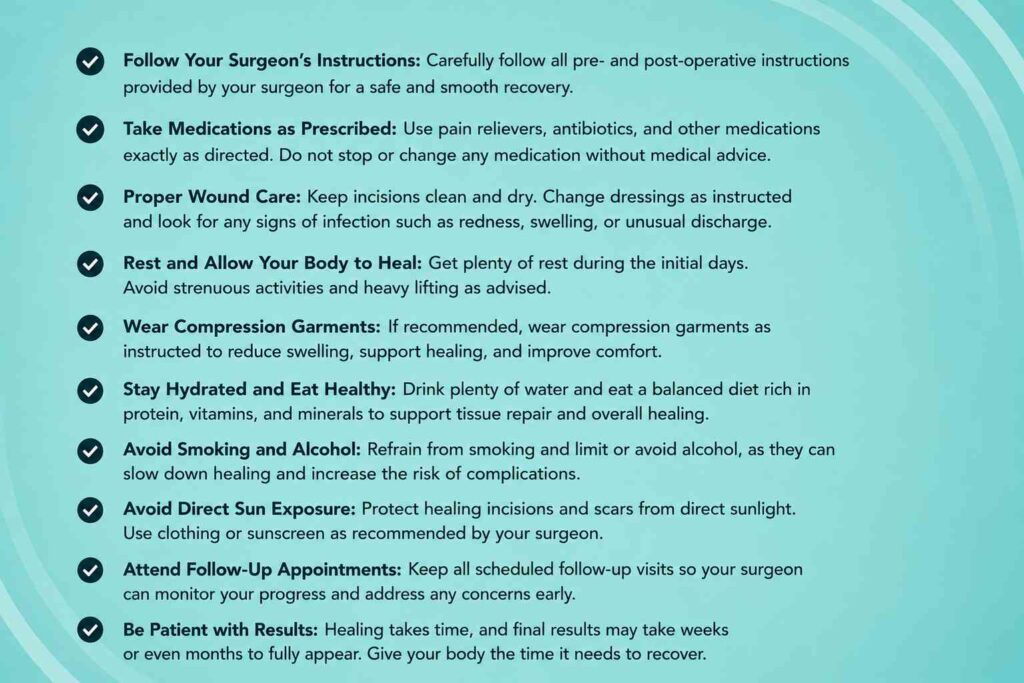
Recovery is an important part of successful plastic surgery. Following the recommended aftercare plan can support healing and reduce the risk of complications.
Important recovery tips may include:
- Follow all postoperative instructions carefully.
- Take prescribed medicines as directed.
- Keep surgical wounds clean and protected.
- Avoid strenuous activity until cleared.
- Attend scheduled follow-up appointments.
- Maintain a balanced diet and adequate hydration.
- Avoid smoking and nicotine products during the recommended recovery period.
- Use compression garments when advised.
- Protect healing scars from excessive sun exposure.
Recovery time differs from one procedure to another. Swelling may take weeks to settle, while scars can continue to mature for months.
Who May Be a Suitable Candidate
A suitable candidate for Plastic Surgery Procedures for Face, Breast and Body should generally be in stable overall health, have realistic expectations, and understand the limitations of surgery.
A consultation may consider:
- Overall physical health
- Medical and surgical history
- Current medications
- Smoking status
- Weight stability
- Skin quality
- Treatment goals
- Emotional readiness
- Ability to follow postoperative instructions
Plastic surgery is not appropriate for everyone. A thorough evaluation is necessary before deciding whether a particular procedure is suitable.
How to Choose the Right Procedure
Choosing among different Plastic Surgery Procedures for Face, Breast and Body should begin with the specific concern rather than the procedure name.
For example, someone concerned about breast sagging may require a lift rather than augmentation alone. A person with localized fat may benefit from liposuction, while someone with substantial excess abdominal skin may be evaluated for abdominoplasty.
It is also important to understand whether the desired result can be achieved with one procedure or whether staged or combined treatment may be considered.
Patients should ask about expected results, recovery time, scars, risks, anesthesia, follow-up care, and the possibility of revision surgery.
Questions to Ask Before Surgery
Before choosing any of the Plastic Surgery Procedures for Face, Breast and Body, prepare clear questions for the consultation.
Useful questions include:
- What procedure is most appropriate for my concern?
- What result can I realistically expect?
- What type of anesthesia will be used?
- Where will the incisions be placed?
- How visible may the scars become?
- How long will recovery take?
- When can I return to work and exercise?
- What complications should I know about?
- Will I need additional procedures later?
- What follow-up care will be required?
Understanding the complete treatment plan can help patients make informed decisions.
Long-Term Results and Maintenance
The results of Plastic Surgery Procedures for Face, Breast and Body can be long-lasting, but they do not stop natural aging or future body changes.
Lifestyle factors such as significant weight fluctuations, pregnancy, sun exposure, smoking, and aging can influence long-term results.
Maintaining a stable weight, following a healthy lifestyle, protecting the skin from excessive sun exposure, and attending recommended follow-up appointments may help preserve surgical results.
In some cases, additional treatment may be required years later because tissues naturally change over time.
Conclusion
Plastic Surgery Procedures for Face, Breast and Body cover a broad range of cosmetic and reconstructive treatments designed to reshape, restore, or improve different areas of the body. Facial surgery may focus on features such as the nose, eyelids, brow, or overall facial contour. Breast surgery may involve augmentation, reduction, lifting, or reconstruction, while body contouring may include procedures such as liposuction, tummy tuck, arm lift, and thigh lift.
The most appropriate procedure depends on individual anatomy, health, goals, and expectations. A detailed consultation is essential for understanding treatment options, potential benefits, risks, recovery requirements, and likely outcomes. For individuals exploring Plastic Surgery Procedures for Face, Breast and Body in Thrissur, making an informed decision should always begin with professional evaluation and realistic expectations. For reliable information about Plastic Surgery Procedures for Face, Breast and Body, you can refer to the American Society of Plastic Surgeons (ASPS) for patient-focused guidance on cosmetic and reconstructive plastic surgery.
Frequently Asked Questions
Sushrutha Institute of Plastic, Reconstructive & Aesthetic Surgery

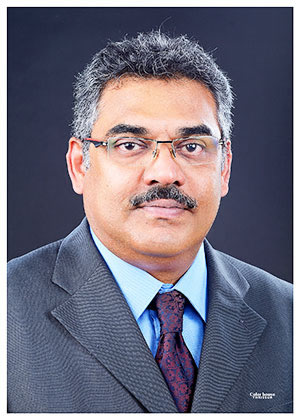
Dr Pradeep Kumar
Plastic, Reconstructive & Aesthetic Surgeon
SIPRAS, Elite Mission Hospital, Thrissur