Cosmetic plastic surgery in Kerala has become an increasingly considered option for people who want to improve specific aspects of their appearance while maintaining natural-looking results. Procedures can address facial features, body proportions, skin concerns, and changes caused by ageing or significant weight fluctuations. In Kerala, people can explore a wide range of cosmetic procedures after a proper consultation and evaluation.

The goal of cosmetic surgery is not simply to change appearance. A well-planned procedure should consider the person’s expectations, physical characteristics, overall suitability, recovery requirements, and long-term goals. Understanding the available options can help people make informed decisions.

What Is Cosmetic Plastic Surgery

Cosmetic plastic surgery refers to surgical procedures performed primarily to improve or enhance physical appearance. Unlike reconstructive surgery, which focuses mainly on restoring function or appearance affected by injury, disease, or congenital conditions, cosmetic procedures are generally elective.

Cosmetic plastic surgery can focus on different areas, including:

  • Face and neck
  • Nose and facial contours
  • Breasts
  • Abdomen
  • Arms and thighs
  • Skin and soft tissues
  • Body shape and proportions

Some procedures involve surgery, while others may be minimally invasive or non-surgical. The appropriate option depends on the individual’s concerns and desired outcome.

The purpose should be realistic improvement rather than achieving perfection. A detailed consultation helps establish what a procedure can and cannot accomplish.

Why Do People Consider Cosmetic Plastic Surgery

People consider cosmetic procedures for different personal reasons. Some may want to address changes associated with ageing, while others may be concerned about body proportions, facial features, or changes following pregnancy or substantial weight loss.

Common reasons include:

  • Improving facial balance
  • Refining certain facial features
  • Reducing excess skin
  • Improving body contours
  • Addressing changes associated with ageing
  • Restoring confidence after major body changes
  • Creating better proportion between different body areas

It is important that the decision comes from the individual rather than pressure from family, friends, social media, or unrealistic beauty standards.

A consultation should provide an opportunity to discuss expectations openly and understand whether surgery is an appropriate choice.

What Are the Common Types of Cosmetic Plastic Surgery

There are several categories of cosmetic procedures. Each has a different purpose, technique, recovery period, and potential risk profile.

Facial Cosmetic Procedures

Facial procedures may include:

  • Rhinoplasty
  • Facelift
  • Eyelid surgery
  • Brow lift
  • Neck lift
  • Facial contouring
  • Chin enhancement

These procedures can modify specific facial features or address visible signs of ageing.

Breast Procedures

Cosmetic breast surgery may include:

  • Breast augmentation
  • Breast reduction
  • Breast lift
  • Breast reshaping

The choice depends on breast size, shape, symmetry, skin elasticity, and the person’s goals.

Body Contouring Procedures

Body contouring may address areas where excess skin or unwanted fat affects body proportions.

Examples include:

  • Tummy tuck
  • Liposuction
  • Arm lift
  • Thigh lift
  • Body lift

Body contouring is not a substitute for weight-loss treatment. Maintaining a relatively stable weight is often an important part of planning.

What Concerns Can Cosmetic Surgery Address

Cosmetic plastic surgery can address a range of aesthetic concerns. However, every procedure has specific capabilities and limitations.

Facial procedures may improve concerns such as:

  • Nasal shape or proportion
  • Drooping eyelids
  • Facial skin laxity
  • Neck fullness
  • Facial asymmetry
  • Certain age-related changes

Body procedures may address:

  • Localised fat deposits
  • Loose abdominal skin
  • Excess skin after weight loss
  • Changes in body contours
  • Certain concerns following pregnancy

The objective is usually improvement rather than complete transformation. During consultation, the expected result should be explained clearly so that the patient can make an informed decision.

What Are the Benefits of Cosmetic Plastic Surgery

Benefits of Cosmetic Plastic Surgery

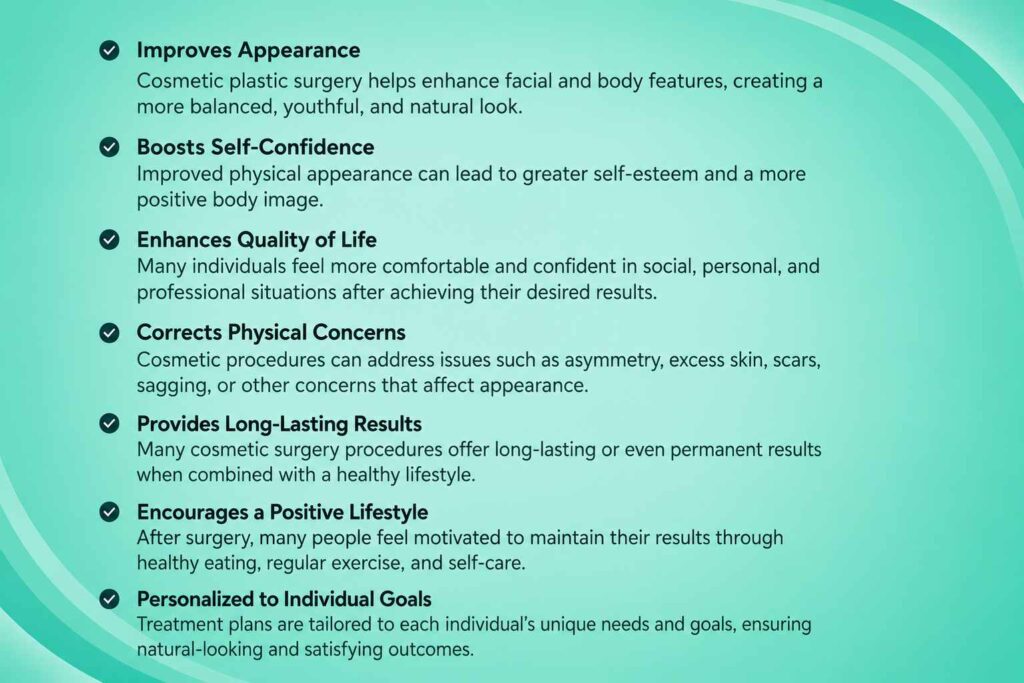
One of the main reasons people explore cosmetic plastic surgery is the potential to improve a specific aesthetic concern that has bothered them for a long time.

Potential benefits may include:

Improved Body Proportion

Some procedures can create better visual balance between different areas of the body.

Enhanced Facial Balance

Facial procedures may refine features while maintaining the individual’s overall appearance.

Reduction of Excess Skin

Body contouring procedures can remove excess skin in appropriate candidates.

Greater Confidence

When a long-standing appearance-related concern is successfully addressed, some people report greater confidence in social or professional situations.

Personalised Results

Modern surgical planning can be tailored to the person’s anatomy, expectations, and desired degree of change.

However, benefits vary between individuals. A successful outcome depends on appropriate patient selection, realistic expectations, surgical planning, and proper aftercare.

How Is Cosmetic Plastic Surgery Planned

Good preparation is an important part of cosmetic plastic surgery. The process generally begins with a consultation.

During consultation, relevant information may include:

  • Medical and surgical history
  • Current medications
  • Allergies
  • Previous cosmetic procedures
  • Lifestyle factors
  • Desired outcomes
  • Expectations regarding recovery

The surgical plan may also consider body proportions, skin quality, facial structure, and other physical characteristics.

Depending on the procedure, examination and diagnostic assessments may be recommended before surgery.

Patients should also discuss:

  • Expected results
  • Possible complications
  • Anaesthesia
  • Recovery duration
  • Activity restrictions
  • Follow-up appointments
  • Potential need for revision surgery

A clear understanding of these factors can reduce uncertainty and support better decision-making.

What Should You Know About Recovery

Recovery varies considerably depending on the procedure. A minor procedure and a major body-contouring operation should not be expected to have the same recovery timeline.

Possible short-term effects can include:

  • Swelling
  • Bruising
  • Tenderness
  • Temporary numbness
  • Tightness
  • Mild discomfort

The surgical team may provide instructions regarding wound care, medication, bathing, exercise, sleeping positions, and returning to work.

Patients should follow postoperative instructions carefully. Returning to strenuous physical activity too early can interfere with recovery.

Keeping follow-up appointments is also important because healing continues for weeks or months after some procedures. Final results may not be immediately visible.

What Are the Possible Risks and Complications

Like any surgical procedure, cosmetic plastic surgery carries potential risks. The level of risk depends on the procedure, individual health factors, anaesthesia, surgical technique, and postoperative care.

Possible complications can include:

  • Infection
  • Bleeding
  • Fluid accumulation
  • Scarring
  • Changes in sensation
  • Delayed wound healing
  • Asymmetry
  • Anaesthesia-related complications
  • Blood clots
  • Unsatisfactory cosmetic results

Some patients may require additional treatment or revision surgery.

Understanding these risks does not mean that complications will occur. Instead, it highlights why appropriate patient selection, qualified surgical care, proper preparation, and postoperative monitoring are important.

Anyone considering surgery should discuss individual risks during consultation rather than relying only on general information.

Who May Be a Suitable Candidate

Suitable candidate for cosmetic plastic surgery

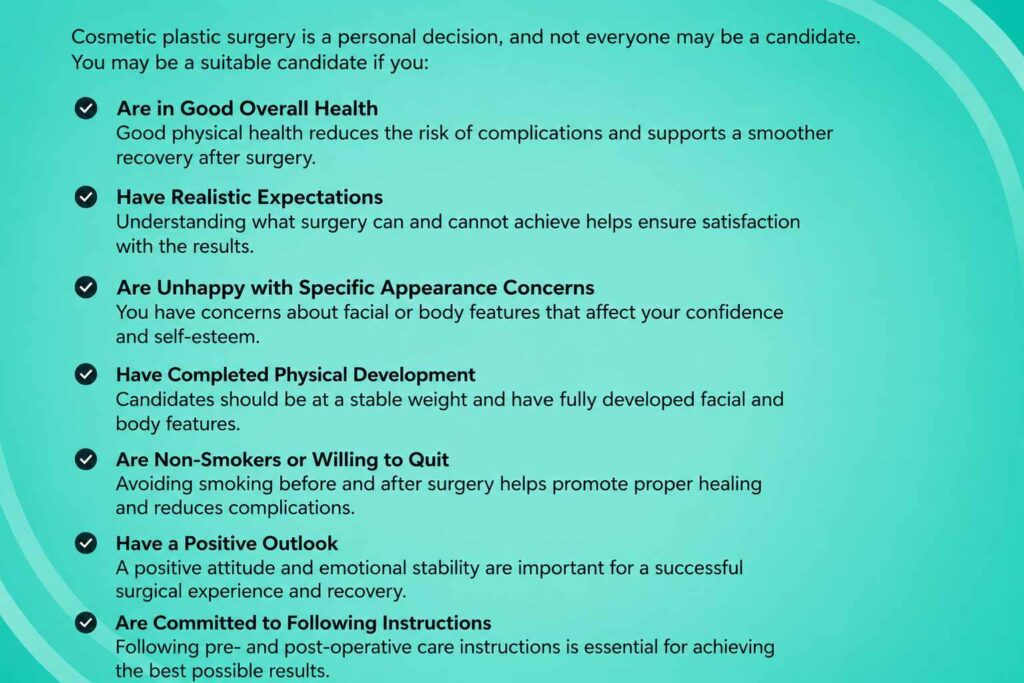
Suitability for cosmetic plastic surgery is determined individually. There is no single procedure that is appropriate for everyone.

A person may be considered a suitable candidate when they:

  • Have a specific and realistic aesthetic concern
  • Understand the limitations of surgery
  • Have realistic expectations
  • Are physically suitable for the planned procedure
  • Are prepared to follow postoperative instructions
  • Understand potential risks and complications
  • Have stable expectations about the outcome

Emotional readiness is also important. Surgery should ideally be undertaken for personal reasons rather than to satisfy another person’s expectations.

People with certain medical conditions or uncontrolled health issues may require additional evaluation before elective surgery.

How Can You Prepare for Cosmetic Plastic Surgery

Preparation can influence both safety and recovery. The exact instructions vary according to the procedure.

Before Surgery

Patients may be advised to:

  • Provide a complete medical history
  • Tell the surgical team about all medications and supplements
  • Complete recommended investigations
  • Follow instructions regarding food and drink before anaesthesia
  • Arrange transportation if required
  • Organise help during the initial recovery period
  • Prepare a comfortable recovery area at home

Smoking can affect wound healing and may increase surgical risks. Anyone who smokes should discuss this openly with the surgical team.

It is also important to understand the recovery period before scheduling surgery. Planning work, travel, exercise, and family responsibilities in advance can make recovery easier.

How Can You Choose the Right Cosmetic Procedure

Choosing a procedure should begin with identifying the concern rather than selecting a popular treatment.

For example, someone concerned about loose abdominal skin may require a different approach from someone concerned about localised fat. Similarly, a concern involving nasal shape requires different planning from an eyelid concern.

Consider the following:

  • What specific concern do you want to address?
  • Is surgery necessary?
  • What alternatives are available?
  • What improvement is realistically possible?
  • How long will recovery take?
  • What are the potential risks?
  • Could the result require future revision?
  • Are you comfortable with the recovery requirements?

A consultation can help determine whether a surgical or non-surgical option is more appropriate.

Cosmetic Surgery vs Non-Surgical Treatments

Not every cosmetic concern requires surgery. Depending on the issue, non-surgical treatments may provide an alternative.

Non-surgical options can include certain injectable treatments, skin procedures, energy-based treatments, and other aesthetic interventions.

The difference is that surgical procedures generally involve incisions, tissue manipulation, or removal, while many non-surgical treatments are performed without major surgery.

The appropriate option depends on:

  • The type of concern
  • Desired degree of improvement
  • Skin condition
  • Treatment area
  • Recovery preferences
  • Expected longevity of results

A professional assessment can help determine which approach is suitable.

How Can You Support Better Results After Surgery

Postoperative care plays an important role in the healing process. Following the surgical team’s instructions is one of the most useful steps a patient can take.

Helpful measures may include:

  • Keeping surgical areas clean as instructed
  • Taking prescribed medications correctly
  • Attending scheduled follow-ups
  • Avoiding strenuous activity until cleared
  • Maintaining adequate nutrition and hydration
  • Protecting healing scars from excessive sun exposure
  • Reporting unusual symptoms promptly

Patients should not compare their recovery with someone else’s. Healing speed differs depending on the procedure and individual factors.

Final cosmetic results may become clearer gradually as swelling decreases and tissues settle.

How Long Do Cosmetic Surgery Results Last

The longevity of results depends on the specific procedure and individual factors.

Some structural changes can be long-lasting, while the natural ageing process continues after surgery. Weight fluctuations, pregnancy, lifestyle factors, sun exposure, and changes in skin elasticity can also affect results.

For example, a body-contouring procedure may create a significant change in body shape, but future weight gain can alter the result.

Similarly, facial surgery can address certain signs of ageing but cannot stop the ageing process.

Maintaining a stable lifestyle and following appropriate skincare and postoperative advice can help preserve results.

What Should You Expect During a Consultation

A cosmetic surgery consultation should be a two-way discussion. It is an opportunity to explain your concerns and understand the proposed treatment.

You can ask about:

  • Why the procedure is recommended
  • Alternative treatment options
  • Expected improvement
  • Surgical technique
  • Type of anaesthesia
  • Recovery time
  • Scarring
  • Possible complications
  • Follow-up care
  • Potential revision procedures

It can also be useful to ask what limitations apply to the procedure.

A responsible consultation should not guarantee a perfect result. Instead, it should provide realistic information that helps you decide whether surgery is appropriate.

Conclusion

Cosmetic plastic surgery can provide an option for people who want to address specific concerns involving facial appearance, breast shape, body contours, or age-related changes. The most important part of the process is making an informed decision based on realistic expectations rather than trends or outside pressure.

Understanding the procedure, potential benefits, limitations, risks, recovery requirements, and alternatives can help you approach treatment with greater confidence. A thorough consultation is essential before making any decision about surgery.

For people exploring cosmetic plastic surgery in Kerala, choosing an appropriate procedure should always begin with personalised professional evaluation and a clear understanding of the expected outcome. For reliable information about cosmetic and reconstructive surgery, you can also refer to the American Society of Plastic Surgeons (ASPS) for detailed patient education and treatment guidance.

Frequently Asked Questions

1. Is cosmetic plastic surgery safe? +
Cosmetic plastic surgery can be performed safely in appropriately selected patients, but every surgical procedure has potential risks. Safety depends on factors such as your health, the procedure, anaesthesia, surgical planning, and postoperative care.
2. Does cosmetic plastic surgery provide permanent results? +
Some cosmetic surgery results can be long-lasting, but natural ageing, weight changes, pregnancy, lifestyle factors, and changes in skin elasticity may affect the results over time.
3. How long does recovery take after cosmetic plastic surgery? +
Recovery varies depending on the type and extent of the procedure. Some treatments may require a shorter recovery period, while major procedures can require several weeks before normal activities are fully resumed.
4. Will cosmetic plastic surgery leave scars? +
Many cosmetic surgical procedures involve some degree of scarring. Incisions are generally planned carefully to make scars as discreet as possible, but their appearance varies depending on the procedure, skin type, healing, and individual factors.
5. Can cosmetic plastic surgery improve self-confidence? +
Some people may experience improved confidence after addressing a long-standing appearance-related concern. However, cosmetic surgery should not be considered a guarantee of emotional or psychological improvement.
6. Can cosmetic plastic surgery help after major weight loss? +
Certain body-contouring procedures can help address excess skin after significant weight loss. Suitability depends on factors such as weight stability, skin quality, general health, and individual treatment goals.
7. Is cosmetic plastic surgery suitable for everyone? +
No. Suitability is assessed individually based on general health, medical history, expectations, the treatment area, and the specific procedure being considered. A consultation is important before deciding on treatment.
8. Are non-surgical cosmetic treatments an alternative? +
For some cosmetic concerns, non-surgical treatments may provide an alternative to surgery. The most appropriate option depends on the concern, treatment area, desired improvement, skin condition, and expected results.
9. How should I prepare for a cosmetic surgery consultation? +
Prepare information about your medical history, medications, allergies, previous procedures, and specific concerns. You can also prepare questions about the procedure, expected results, risks, recovery, scarring, and follow-up care.
10. Can cosmetic plastic surgery completely change my appearance? +
Cosmetic plastic surgery can create meaningful changes in specific areas, but it is generally intended to provide controlled improvement rather than an unlimited transformation. Realistic expectations are important when considering treatment.

Sushrutha Institute of Plastic, Reconstructive & Aesthetic Surgery

Dr Jyoshid R Balan

Dr Jyoshid R Balan

Plastic & Reconstructive Surgeon

SIPRAS, Elite Mission Hospital, Thrissur

Dr Pradeep Kumar

Dr Pradeep Kumar

Plastic, Reconstructive & Aesthetic Surgeon

SIPRAS, Elite Mission Hospital, Thrissur

Dr Prince H P

Dr Prince H P

Senior Consultant Plastic Surgeon

SIPRAS, Elite Mission Hospital, Thrissur

Dr Vinu Roy

Dr Vinu Roy

Plastic & Reconstructive Surgeon

SIPRAS, Elite Mission Hospital, Thrissur

Dr Ajai K S

Dr Ajai K S

Plastic & Reconstructive Surgeon

SIPRAS, Elite Mission Hospital, Thrissur