

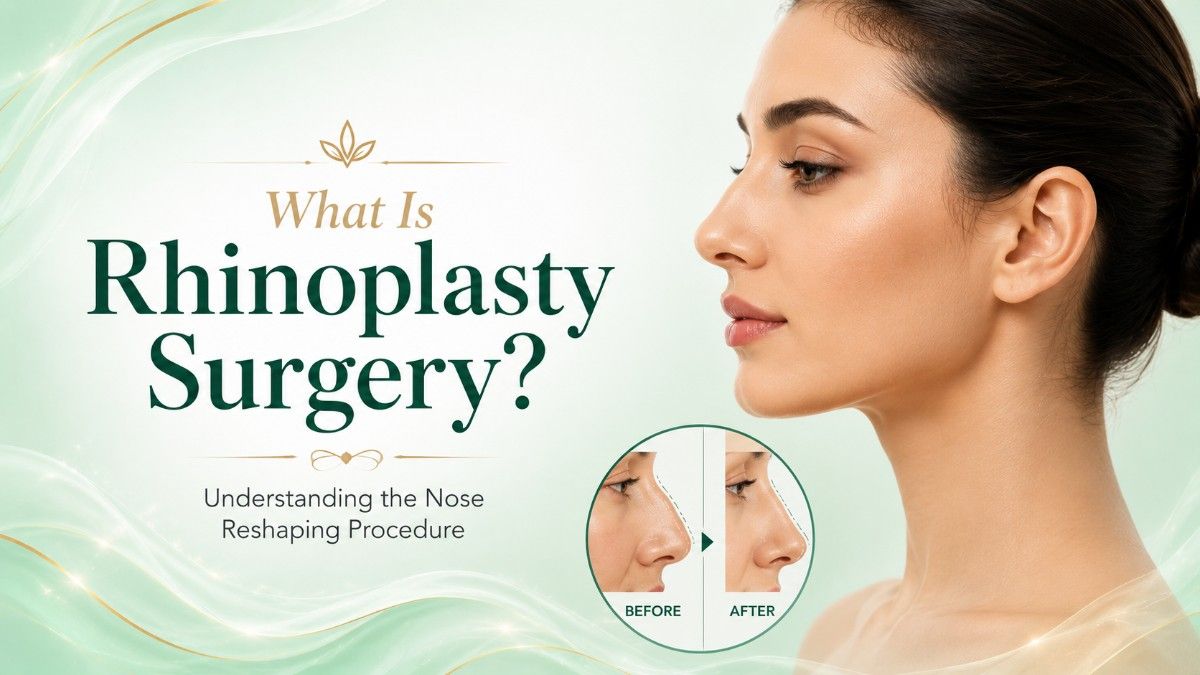
If you are wondering what is rhinoplasty surgery, it is a surgical procedure designed to change the shape, size, or structure of the nose. It can be performed for cosmetic reasons to improve facial harmony or for functional reasons to enhance breathing. Many people in Thrissur seek this procedure to address concerns related to appearance, nasal injuries, birth defects, or breathing difficulties.

Understanding what is rhinoplasty surgery can help patients make informed decisions before considering treatment. The procedure is highly personalized and can be tailored to suit individual goals while maintaining natural-looking results.

Understanding What Is Rhinoplasty Surgery

What is rhinoplasty surgery in simple terms? Rhinoplasty, commonly known as a nose job, is a surgical procedure that reshapes the nose by modifying bone, cartilage, skin, or a combination of these structures.

The surgery can help:

  • Improve nasal appearance
  • Correct asymmetry
  • Reduce or increase nose size
  • Refine the nasal tip
  • Straighten a crooked nose
  • Correct a nasal hump
  • Improve breathing function
  • Repair damage caused by injury

Rhinoplasty is one of the most commonly performed facial cosmetic procedures worldwide because of its ability to create balanced facial proportions.

Why Do People Choose Rhinoplasty Surgery

There are several reasons why individuals consider rhinoplasty.

Cosmetic Reasons

Many people seek rhinoplasty to improve facial aesthetics. Common concerns include:

  • Large nose size
  • Wide nostrils
  • Drooping nasal tip
  • Nasal hump
  • Uneven nasal shape
  • Facial imbalance

Functional Reasons

Some patients undergo rhinoplasty to improve nasal function.

Functional concerns may include:

  • Difficulty breathing
  • Deviated septum
  • Nasal obstruction
  • Congenital nasal abnormalities
  • Structural problems after injury

Reconstructive Reasons

Rhinoplasty may also be performed to reconstruct the nose after:

  • Trauma
  • Accidents
  • Burns
  • Previous surgeries
  • Congenital defects

Types of Rhinoplasty Surgery

Types of Rhinoplasty Surgery title banner on a soft mint green and white medical aesthetic background with elegant gold accents.

When discussing what is rhinoplasty surgery, it is important to understand the different types available.

Open Rhinoplasty

Open rhinoplasty involves a small incision across the columella, the tissue between the nostrils.

Benefits include:

  • Better visibility for surgeons
  • Greater precision
  • Suitable for complex corrections

Closed Rhinoplasty

In closed rhinoplasty, all incisions are made inside the nostrils.

Advantages include:

  • No visible external scar
  • Less swelling
  • Faster recovery in some cases

Functional Rhinoplasty

This type focuses on improving breathing and nasal function.

Common indications include:

  • Deviated septum
  • Nasal valve collapse
  • Airway obstruction

Cosmetic Rhinoplasty

Cosmetic rhinoplasty is performed primarily to improve the appearance of the nose.

Revision Rhinoplasty

Revision rhinoplasty is a secondary procedure performed to correct or improve results from a previous surgery.

Reconstructive Rhinoplasty

This procedure restores nasal structure after trauma, injury, or congenital defects.

Who May Be a Good Candidate

Understanding what is rhinoplasty surgery also involves knowing who may benefit from it.

You may be a suitable candidate if:

  • You are physically healthy
  • Facial growth is complete
  • You have realistic expectations
  • You want to improve nasal appearance
  • You experience breathing difficulties
  • You wish to correct a nasal deformity

A thorough medical evaluation helps determine whether the procedure is appropriate.

Common Conditions Treated with Rhinoplasty

Rhinoplasty can address several concerns.

Nasal Hump

A bump on the bridge of the nose can be reduced for a smoother profile.

Crooked Nose

Structural adjustments can help create better alignment.

Wide Nose

The width of the nasal bridge or nostrils can be refined.

Bulbous Tip

A large or rounded nasal tip can be reshaped.

Drooping Tip

The nasal tip can be lifted to improve facial balance.

Breathing Problems

Functional corrections can improve airflow through the nasal passages.

How Is Rhinoplasty Surgery Performed

A common question is what is rhinoplasty surgery and how exactly the procedure is carried out.

The process generally includes:

Consultation

The surgeon evaluates:

  • Medical history
  • Nasal structure
  • Facial proportions
  • Functional concerns
  • Desired outcomes

Preparation

Preoperative instructions may include:

  • Medical tests
  • Medication adjustments
  • Smoking cessation
  • Avoiding certain supplements

Anesthesia

The procedure is usually performed under:

  • General anesthesia
  • Intravenous sedation

Surgical Procedure

During surgery, modifications may be made to:

  • Nasal bone
  • Cartilage
  • Skin
  • Septum

The exact technique depends on the treatment goals.

Closure

After reshaping, incisions are closed and a nasal splint is often placed for support.

Benefits of Rhinoplasty Surgery

Benefits of Rhinoplasty Surgery title banner displayed on a soft mint green and white medical aesthetic background with elegant gold accents.

There are numerous benefits associated with rhinoplasty.

Improved Facial Harmony

A balanced nose can complement other facial features.

Enhanced Self-Confidence

Many patients report increased confidence after achieving their desired appearance.

Better Breathing

Functional corrections can significantly improve airflow.

Correction of Structural Issues

Rhinoplasty can address abnormalities caused by trauma or birth defects.

Long-Lasting Results

Results are generally permanent once healing is complete.

Recovery After Rhinoplasty Surgery

Recovery is an important aspect of understanding what is rhinoplasty surgery.

First Week

Patients may experience:

  • Swelling
  • Bruising
  • Mild discomfort
  • Nasal congestion

A splint is typically removed within a week.

First Month

Most visible swelling gradually decreases.

Patients can often return to normal daily activities with guidance from their healthcare provider.

Long-Term Healing

Subtle swelling may continue to improve over several months.

Final results often become more noticeable over time.

Tips for a Smooth Recovery

Following postoperative instructions can support healing.

Helpful recovery tips include:

  • Keep the head elevated
  • Avoid strenuous activities
  • Follow medication instructions
  • Attend follow-up appointments
  • Protect the nose from injury
  • Stay hydrated
  • Maintain a healthy diet

These measures can help optimize recovery and outcomes.

Potential Risks and Complications

Like any surgical procedure, rhinoplasty carries potential risks.

Possible complications include:

  • Infection
  • Bleeding
  • Scarring
  • Swelling
  • Breathing difficulties
  • Asymmetry
  • Need for revision surgery

Careful planning and appropriate postoperative care can help reduce risks.

Expected Results from Rhinoplasty Surgery

Results vary depending on:

  • Individual anatomy
  • Surgical goals
  • Healing response
  • Procedure complexity

Most patients experience:

  • Improved nasal shape
  • Better facial balance
  • Enhanced breathing function
  • Greater satisfaction with appearance

Patience is important because final results develop gradually as swelling resolves.

What to Discuss During Consultation

Before undergoing treatment, patients should discuss:

  • Desired appearance
  • Functional concerns
  • Medical history
  • Expected outcomes
  • Recovery timeline
  • Potential risks
  • Surgical techniques

Clear communication helps establish realistic expectations.

Conclusion

Understanding what is rhinoplasty surgery is important for anyone considering nasal reshaping for cosmetic, functional, or reconstructive purposes. The procedure can improve facial balance, address structural concerns, and enhance breathing function when appropriate. Whether performed for aesthetic refinement or medical reasons, what is rhinoplasty surgery involves a personalized approach designed to meet individual goals while maintaining natural-looking results. Patients considering treatment in Thrissur should seek professional evaluation to determine the most suitable treatment plan for their specific needs. Learn more about what is rhinoplasty surgery from the American Society of Plastic Surgeons Rhinoplasty Guide, which explains the procedure, benefits, risks, and recovery process in detail.

Frequently Asked Questions

Rhinoplasty surgery is a procedure that reshapes or reconstructs the nose to improve appearance, function, or both.

Most procedures take between one and four hours depending on complexity.

Patients generally experience mild discomfort rather than significant pain during recovery.

Yes, functional rhinoplasty can correct structural issues that affect airflow.

Many patients return to non-strenuous work within one to two weeks.

Closed rhinoplasty leaves no visible external scars, while open rhinoplasty may leave a small, usually inconspicuous scar.

Most swelling improves within weeks, but subtle swelling can persist for several months.

Yes, results are generally long-lasting and considered permanent.

Healthy individuals with realistic expectations and completed facial growth may be suitable candidates.

Yes, rhinoplasty can often improve nasal alignment and symmetry.

Sushrutha Institute of Plastic, Reconstructive & Aesthetic Surgery

Dr Jyoshid R Balan

Dr Jyoshid R Balan

Plastic & Reconstructive Surgeon

SIPRAS, Elite Mission Hospital, Thrissur

Dr Pradeep Kumar

Dr Pradeep Kumar

Plastic, Reconstructive & Aesthetic Surgeon

SIPRAS, Elite Mission Hospital, Thrissur
Dr Prince H P

Dr Prince H P

Senior Consultant Plastic Surgeon

SIPRAS, Elite Mission Hospital, Thrissur

Dr Vinu Roy

Dr Vinu Roy

Plastic & Reconstructive Surgeon

SIPRAS, Elite Mission Hospital, Thrissur

Dr Ajai K S

Dr Ajai K S

Plastic & Reconstructive Surgeon

SIPRAS, Elite Mission Hospital, Thrissur